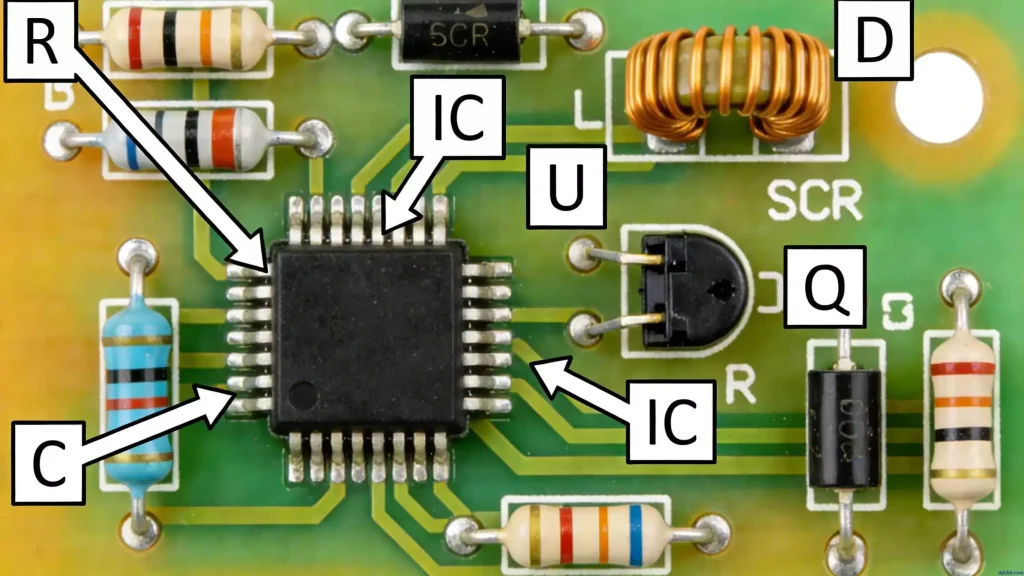
PCBA—short for Printed Circuit Board Assembly—refers to the full process of taking a blank PCB, adding components via SMT mounting, and supplementing with DIP insertion if needed. It’s a highly integrated electronic manufacturing process, relying heavily on specialized machinery to deliver consistent quality.
In real production, Double-Sided PCB Assembly Machines are the backbone of efficient, high-yield PCBA manufacturing. As equipment and processes have matured, we’ve seen steady improvements in both throughput and product reliability. For a complete overview of the full PCBA assembly and welding workflow, check out our guide: PCB Assembly & Welding Technology | PCBA Process Guide (OPCBA) Below is a breakdown of the key equipment that powers double-sided PCB assembly lines.
Printing Machines: The Starting Point of SMT Lines
Printing machines sit at the front of the assembly line, tasked with applying solder paste or chip adhesive to PCB pads. The process involves aligning the machine’s steel mesh stencil with the PCB’s pads, then using a squeegee to push solder paste or adhesive through the stencil onto the board.
This step is critical—even small misalignments here can cause component placement issues later. We often check stencil alignment manually for small batches, while high-volume lines use automated vision systems to ensure precision.
Dispensing Machines: Flexible Application for Small Batches
Dispensing machines apply solder paste or chip adhesive directly to PCBA components, using vacuum pump pressure to deliver a precise amount to the required location. Their biggest advantage is flexibility.
Unlike printing machines, they don’t require stencil changes between product runs, which cuts down on setup time. This makes them ideal for small-batch, multi-product manufacturing—common in custom or prototype PCBA work.
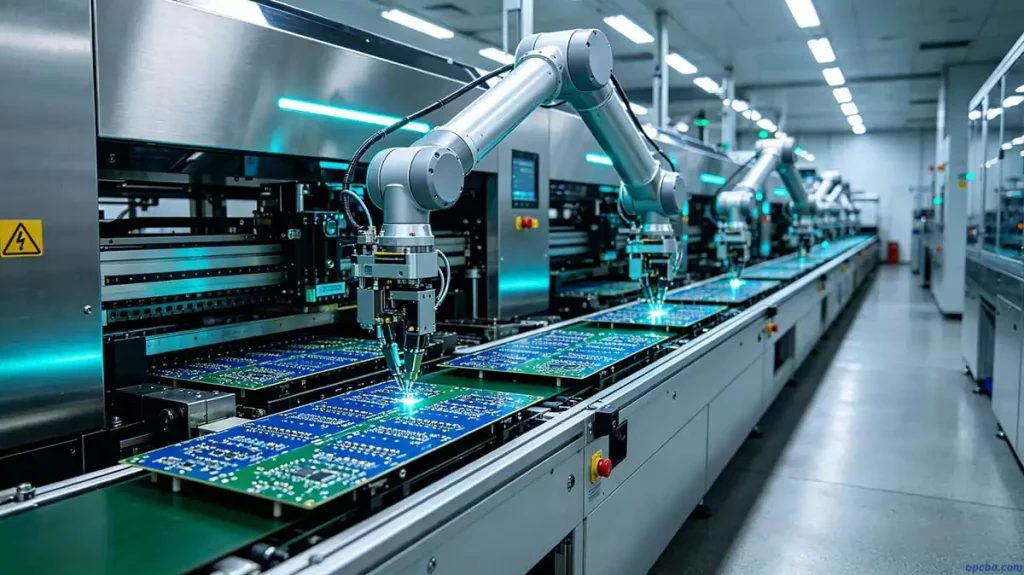
SMT Placement Machines – The Heart of Double-Sided Assembly
The SMT placement machine (often called a pick-and-place machine) is the most critical piece of PCBA assembly equipment in any double-sided line. It’s responsible for picking surface-mount components from their packaging and placing them accurately on both sides of the PCB.
A line’s production capacity and component density limits depend largely on the placement machine’s speed and precision. These machines are also the most complex and expensive—fully automated models integrate precision mechanics, optics, and computer sensing to handle tiny components at high speeds.
Reflow Ovens: Bonding Components Reliably
Reflow ovens provide a controlled heating environment to melt the solder paste applied earlier, creating a strong bond between surface-mount components and PCB pads. Temperature profiling is key here; too much heat can damage components, while too little leaves weak solder joints.
In double-sided assembly, the second side often requires a lower-temperature reflow cycle to avoid re-melting the solder on the first side—a detail we’ve learned to manage through careful oven calibration.
Testing Equipment: Catching Defects Early
Testing equipment verifies the quality of assembled PCBs, checking for assembly errors and short circuits. Common tools include microscopes, automatic optical detectors (AOD), online testers (ICT), X-ray systems, and functional testers.
Their placement in the line varies by testing needs—AODs often sit right after reflow to catch placement issues, while functional testers come at the end to ensure the PCB works as intended.
Repair Equipment: Fixing Defective Boards
Repair equipment handles rework on PCBs that fail testing. Tools like soldering irons, hot air stations, and BGA repair benches let technicians fix misplaced components, bridge short circuits, or replace damaged parts.
This step is essential for reducing waste, especially in high-value or low-volume double-sided PCB assembly. We prioritize repair training for our technicians to minimize rework time and maintain quality.
At OPCBA, we have hands-on experience with all types of Double-Sided PCB Assembly Machines, helping clients select, optimize, and maintain their assembly lines. If you have questions about equipment selection or PCBA manufacturing, feel free to reach out for expert guidance.