Every month, we work with dozens of LED lamp manufacturers—and one question comes up time and again: what’s the best PCB material for our project?
Most of them default to aluminum substrates first, and for good reason. They’re solid for heat dissipation, hold up well electrically, and are easy to machine—critical for LEDs that put off steady heat.For a full breakdown of this go-to material, explore our dedicated product page: Aluminum PCB.
Of course, there are other options too. Copper substrates for high-heat setups, FR4 for low-power, budget jobs, and PI flexible materials for light bar PCBs that need to bend around fixtures.
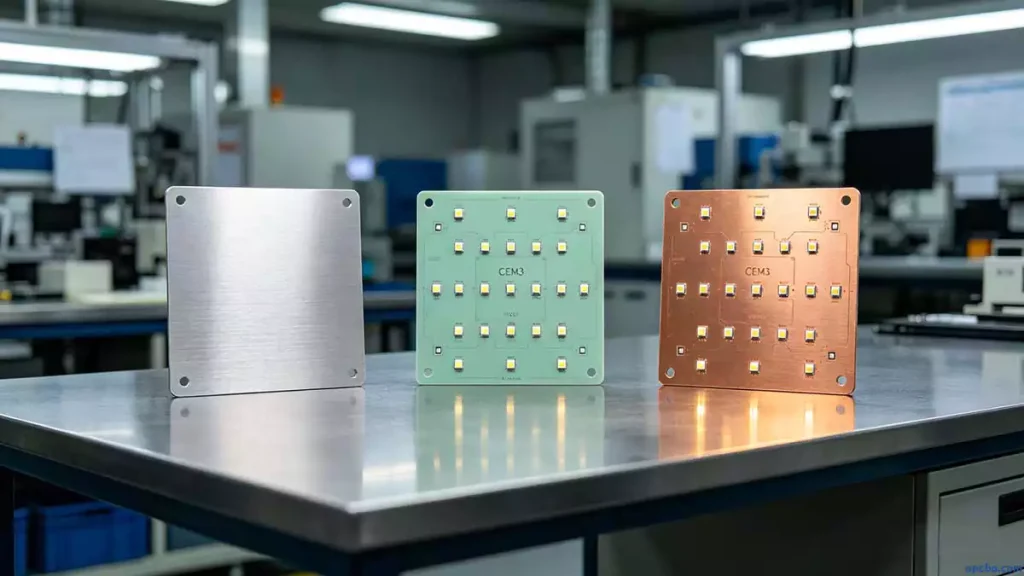
But here’s the thing: it’s not always about picking the “best” material—sometimes it’s about picking the right one for your budget and needs. That’s why we often recommend CEM3 LED PCB board to customers who want quality without overspending.
Our Recommended CEM3 Material: KB-7150T
At OPCBA, we’ve used CEM3 KB-7150T material in hundreds of LED projects—its consistency and reliability make it a staple in our lineup. It’s not the flashiest option, but it gets the job done reliably, which is why our customers keep coming back for it.
Where We Use KB-7150T (CEM3 LED PCB Applications)
The CEM3 LED PCB applications cover a wide range of LED products, from household lighting to automotive displays. We’ve seen it perform well in:
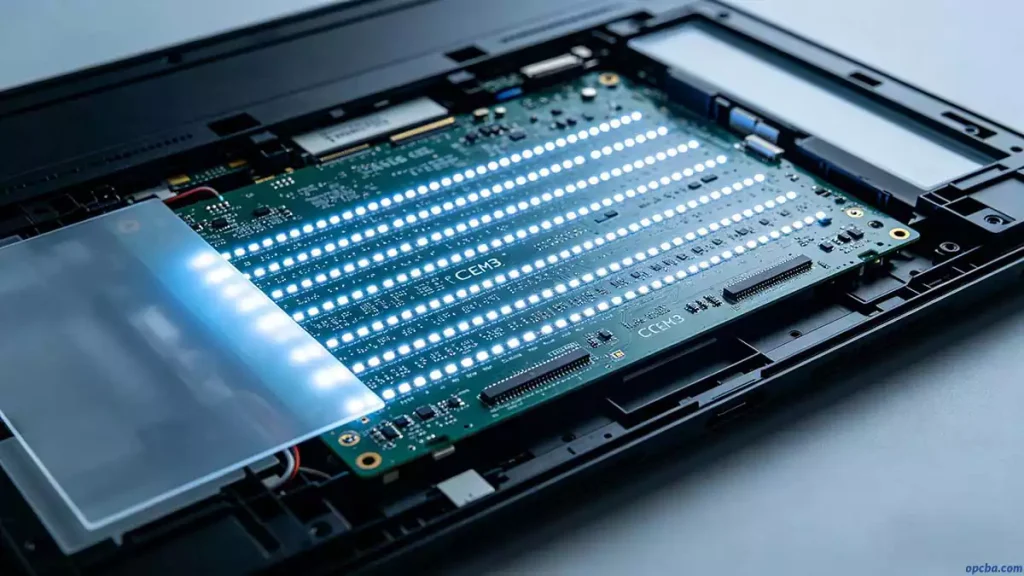
- LED backlights (for TVs, monitors, and mobile devices)
- Residential and street LED lamps (where cost and durability matter most)
- Car display lamps and instrument panels (needs stable performance in harsh environments)
- DC-AC converters (paired with LED drivers for consistent power delivery)
In practice, it’s especially popular for mid-range LED products—where you don’t want to cut corners on quality, but need to keep production costs in check.
Key Features of KB-7150T CEM3 Material
What makes KB-7150T stand out among other CEM3 options? We’ve tested its performance firsthand, and these features make it a reliable choice:
- High thermal conductivity: Keeps LED components cool, preventing overheating and extending lifespan.
- High CTI value: Resists electrical tracking, critical for long-term safety in LED circuits.
- Excellent heat resistance: Handles the continuous heat generated by LEDs without warping or degrading.
- Low Z-axis expansion: Minimizes soldering defects during assembly—we rarely see issues here.
- Low moisture absorption: Reduces the risk of short circuits in humid environments.
- Excellent Anti-CAF performance: Prevents conductive anodic filament formation, a common failure point in PCBs.
- Complies with IPC-4101E/81 specifications: Meets industry standards, so you don’t have to worry about compatibility.
Get More Details on KB-7150T
Want to dive deeper into KB-7150T? Click to download its specification PDF and SGS report—all the technical details you need to make an informed decision.
If you’re considering aCEM3 LED PCB board for your LED project, we’re here to help. OPCBA fabricates LED PCBs using a range of materials—aluminum, copper, FR4, and of course, CEM3—to match your project’s needs and budget. Reach out to our team to discuss your requirements.