What Isola 370HR is
Isola 370HR is a high-Tg FR-4 laminate and prepreg system made by Isola Group. It was developed for multilayer printed circuit boards that see more heat than standard FR-4 can handle.
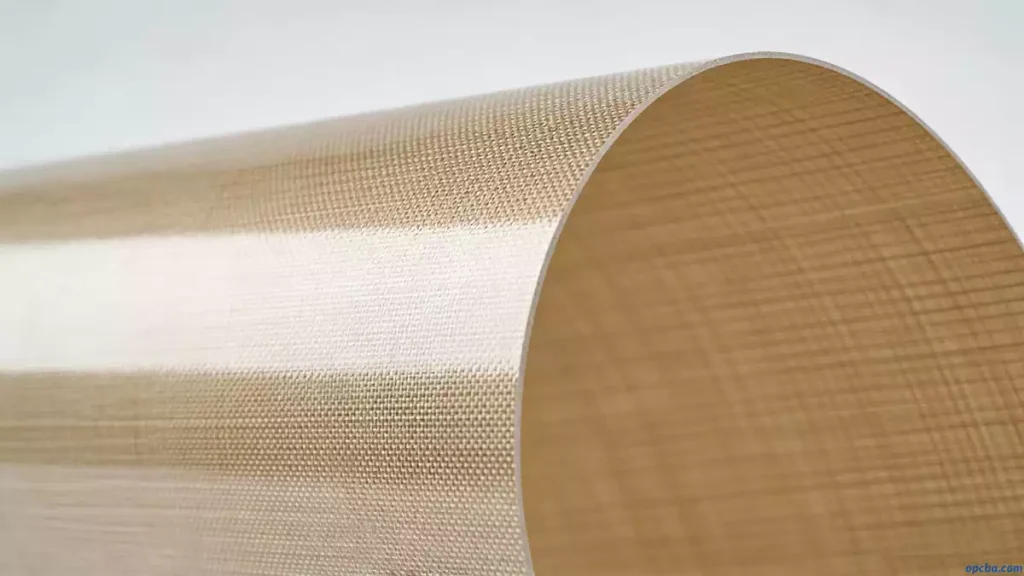
The material pairs a multifunctional epoxy resin with E-glass fabric. That combination gives it better thermal stability and long-term reliability than a conventional FR-4, while staying close enough to standard processing that fabricators can run it on existing equipment.
What the Tg rating means
Tg is the glass transition temperature: the point at which the resin stops being rigid and starts to soften. Standard FR-4 sits around 130 to 140°C. 370HR is rated at 180°C.
The higher number buys headroom during assembly and in service. Whether a given board needs that headroom is a separate question, and it depends on layer count, board thickness and how many reflow passes the assembly will see.
Key features
This material is built for high-reliability electronics:
- High glass transition temperature: 180°C
- Low coefficient of thermal expansion
- Resistance to conductive anodic filament growth
- Mechanical, chemical and moisture resistance
- Runs on standard FR-4 process equipment
- UL 94 flame retardant certification
Every figure has a test method and a tolerance behind it. Our breakdown of 370HR substrate performance characteristics lists the published datasheet values.
Where it is used
You will find it in equipment that runs hot or cannot fail:
- Telecommunication equipment
- Data networking devices
- Industrial control boards
- Automotive electronics
- Military and aerospace products
How it is supplied
370HR comes as a system rather than a single product. Laminate cores carry the copper layers, and prepreg sheets bond them together under heat and pressure. Specifying both from the same resin system keeps the stack-up electrically and mechanically consistent.
Cores are available across a range of thicknesses and copper weights, and with different foil profiles. Which combination suits a board depends on impedance targets, current carrying and how much Z-axis expansion the design can tolerate.
How it differs from standard FR-4
Both are epoxy and E-glass systems. The differences show up in Tg, Z-axis expansion and long-term reliability under heat, and they carry a cost premium.
Where that premium pays for itself, and where it does not, comes down to the build. Our guide to choosing between 370HR and standard FR-4 covers the decision.
Deciding whether your board needs it
Knowing what 370HR is does not settle whether your board needs it. Layer count, reflow cycles and how much thermal margin the design has are what move the answer. If you are still working out which class a material belongs to, our overview explains how laminate systems are classified. Our multilayer PCB fabrication team builds with both, so the comparison is not a theoretical one.