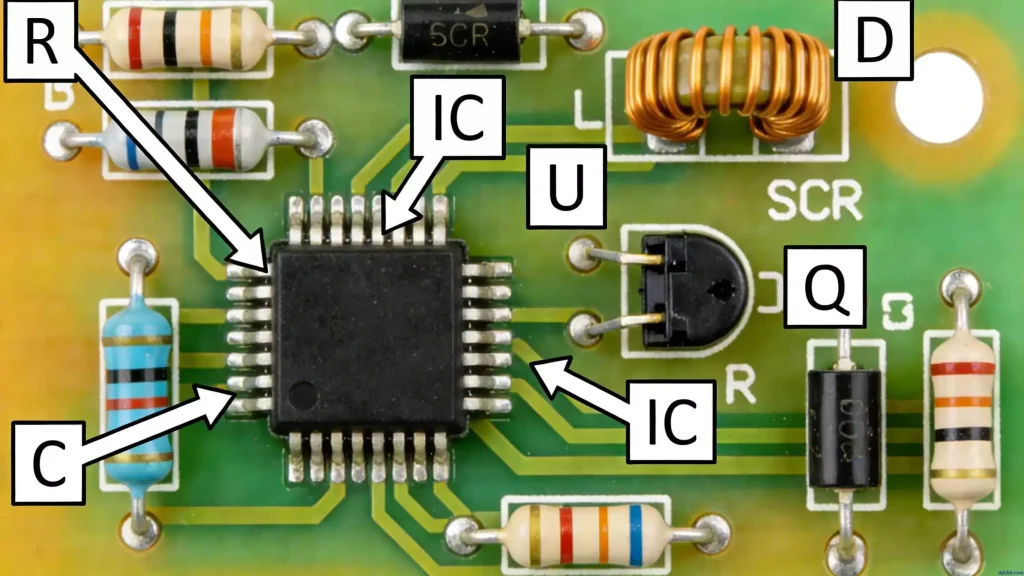
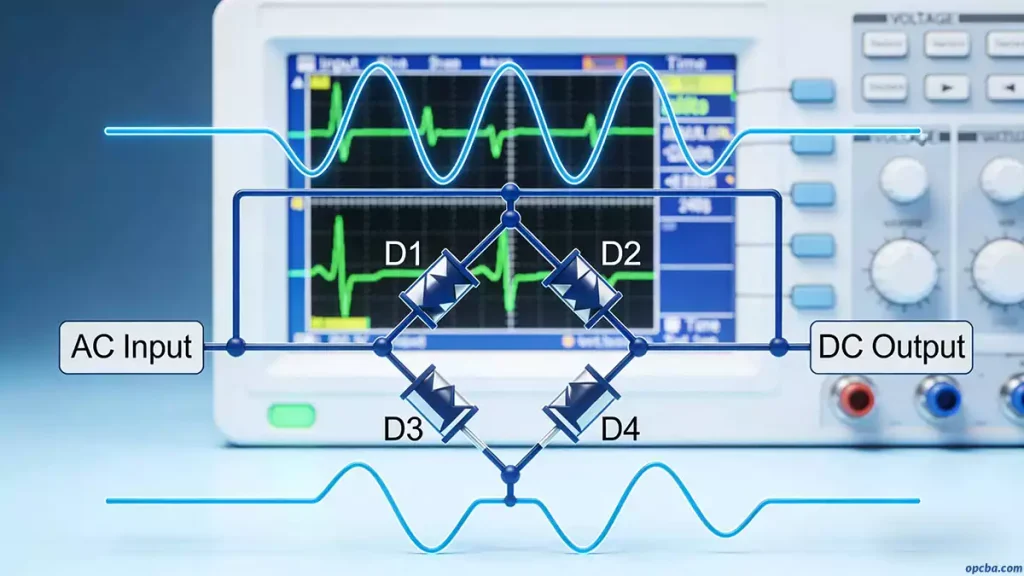
Not all FR-4 is created equal. That’s a lesson you absorb quickly once you’ve ordered the cheapest sheet available and watched the board warp during the first reflow pass. FR-4 isn’t a material name—it’s a flammability rating, which means the epoxy-glass laminates carrying that label can vary widely in resin content, filler type, and thermal performance. Knowing which FR-4 PCB parameters to look at saves a lot of rework and finger-pointing with the fab.
The Stuff That Makes FR-4 Tick
FR-4 is built from epoxy resin loaded with fillers and reinforced with electronic-grade glass fiber cloth. It forms both the bonding sheets and the core laminates in multilayer PCBs. The reason it’s everywhere comes down to flatness, consistent thickness, and stable electrical insulation. The surface is smooth, pit-free, and holds tight thickness tolerances. That matters when you’re stacking up ten layers and need controlled impedance across a 500 mm span.
Still, I’ve seen designers treat all FR-4 as interchangeable, which works until the application touches high frequency or prolonged heat. For drilling back-up plates, FPC stiffeners, or potentiometer panels, the mechanical side of the spec matters even more than the electrical. Cutting and machining FR-4 PCB parameters become just as critical—too much frictional heat during routing, and a dull bit can scorch the edge and leave hairline cracks. Using sharp tools and managing feed rate goes a long way toward keeping the glass fibers intact.
Decoding the A1-to-B Grade Ladder
Suppliers break FR-4 into tiers, and not all of them work for every product. Here’s what the FR4 material grades look like in practice:
- A1 grade sits at the top. It meets military, telecom, and industrial instrumentation specs. If the board is going into a satellite or an engine control unit, this is where you start. Performance hits world-class levels, and the price follows.
- A2 grade is the workhorse for standard computers, meters, and premium home appliances. I use this tier for mid-range industrial products where the numbers still need to pencil out. The performance-to-cost ratio is solid, and supply is steady.
- A3 grade covers consumer appliances, PC peripherals, and toys. It meets basic requirements and is priced aggressively. It’s a sensible choice when the product life is short and the environment is benign.
- A4 grade pushes cost competitiveness further. It works for general electronics that don’t tax the board thermally or mechanically. I wouldn’t trust it for anything routing dense BGAs, but for a simple remote control it does the job.
- B grade is the budget tier. Quality stability can wobble from batch to batch, and large panel designs (above 100 mm × 200 mm) are best avoided. The price is tempting, but I’ve seen boards crack under mild mechanical load when the fiber distribution was inconsistent.
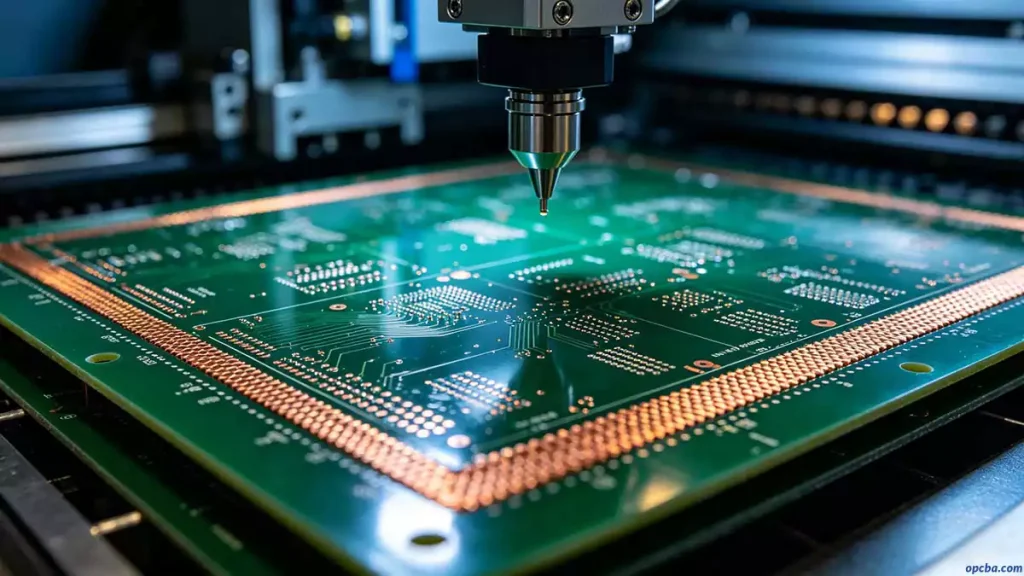
Knowing the FR4 material grades ahead of BOM selection keeps you from overpaying for performance you don’t need—or, worse, under-specifying and dealing with field failures. When a client asks me why two FR-4 quotes are a factor of three apart, the grade is usually the invisible difference.
The Electrical Trio: DK, DF, and TG
When it comes to signal behavior, three FR-4 PCB parameters dominate.
Dielectric constant (DK) controls how fast signals travel. FR-4 typically lands between 4.2 and 4.7 relative to air. The catch is it changes with temperature: across 0–70°C, DK can shift up to 20%, which throws off line delays by 10% or more. The hotter the board, the slower the edge. Frequency also pulls DK downward; by the time you’re in the GHz range, the classic 4.4 assumption needs a reality check. I’ve had to tighten timing budgets because a design team used a fixed DK model and didn’t account for real temperature swings. For more on designing with these parameters at high frequencies, see our full guide: Microwave PCB Design | High-Frequency RF PCB Guide (OPCBA)
For FR4 dielectric constant sensitive designs, I always ask the laminate supplier for a DK-versus-frequency chart instead of a single number.
Dissipation factor (DF) is the energy lost as heat inside the dielectric. Standard FR-4 sits around 0.02, rising with frequency. That becomes meaningful in high-speed digital or RF paths where every fraction of a decibel counts.
Then there’s FR4 TG value—the glass transition temperature. Common TG ratings are 130°C, 140°C, 150°C, and 170°C. Choose a TG of 130°C for a lead-free reflow process and you’re courting delamination. I specify 150°C or 170°C TG for any board that will see multiple reflow cycles or prolonged hot operating conditions. The cost uplift is modest compared to the cost of a blister in the middle of a 12-layer board.