In our SMT factory, we use solder paste every day—it’s the backbone of mounting SMD components to PCBs. If you’re new to SMT, you probably have questions: What is solder paste, and how do you use it effectively?
We’ll break this down simply, with real‑world insights from our production line—no overly technical jargon, just what you need to know about solder paste in SMT. To learn the complete framework of assembly processes, check our full overview: Surface Mounted Technology(SMT)
What Exactly Is Solder Paste?
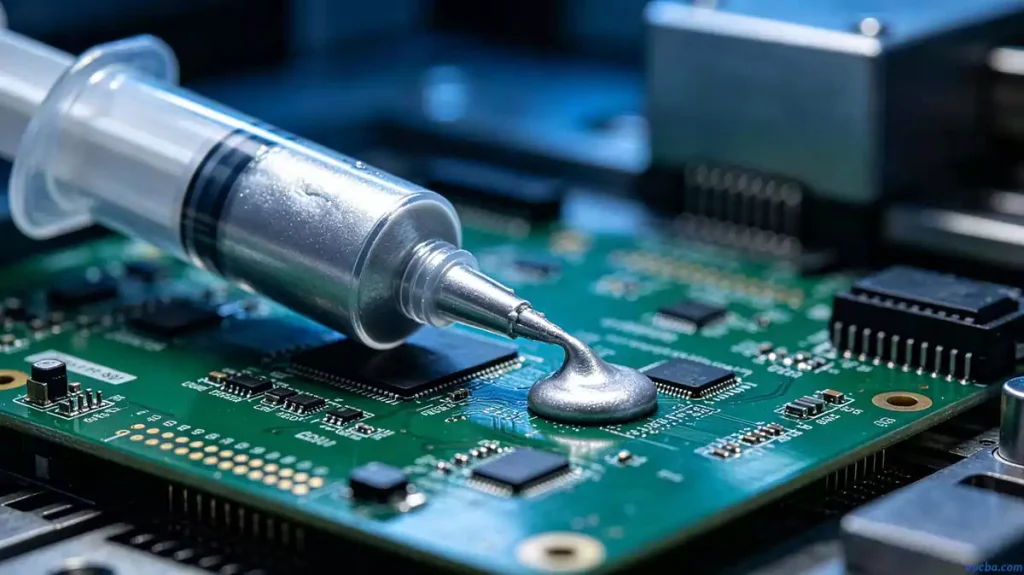
Put simply, solder paste is a suspension of fine solder particles mixed with flux. It’s the “glue” that bonds SMD electronic components to printed circuit boards in SMT manufacturing.
We tweak its composition all the time—adjusting particle makeup to get the right melting range, adding other metals for special applications. Particle size, shape, metal content, and flux type all change the paste’s viscosity, suiting different SMT needs.
Lead-Free Solder Paste: A Must-Know for Compliance
With RoHS (Restriction of Hazardous Substances) enforced in the EU and most countries, nearly all electronic companies have switched to lead-free options. Lead-free solder paste and wire use different compositions than traditional leaded versions.
The most popular blend we use (and see industry-wide) is SAC: 96.5% tin, 3.0% silver, and 0.5% copper. It’s reliable, but there’s a catch—its melting point is higher than traditional 63/37 or 60/40 tin-lead solder, and the solder joints aren’t as shiny.
Choosing the Right Screen Printer for Solder Paste
Picking a screen printer for solder paste isn’t just about size. We focus on three key features: maximum SMT PCB size it can handle, accurate stencil alignment, and repeatable printing control.
The PCB pressing mechanism matters too—it keeps the board stable during printing. We’ve seen big improvements in solder paste dispensers, sieving, and templating over the years, but screen printing is still the most widely used method for mass production (and rework).
Solder Paste Stencil: Methods & Tools
For a deep dive into stencil production and material choices, explore our guide: Manufacturing process and material selection of SMT steel mesh.
There are three main ways to make them, each with pros and cons:
- Chemical etching: The oldest, most common, and cheapest option—we use this for most standard projects.
- Laser cutting: More precise than etching, good for tighter tolerances.
- Electroforming: The most precise of the three—ideal for high-precision SMT applications.
Scraper type matters too. We almost always use metal scrapers—they need less maintenance than rubber ones, which saves time in daily production.
Solder Paste Types: What’s Available?
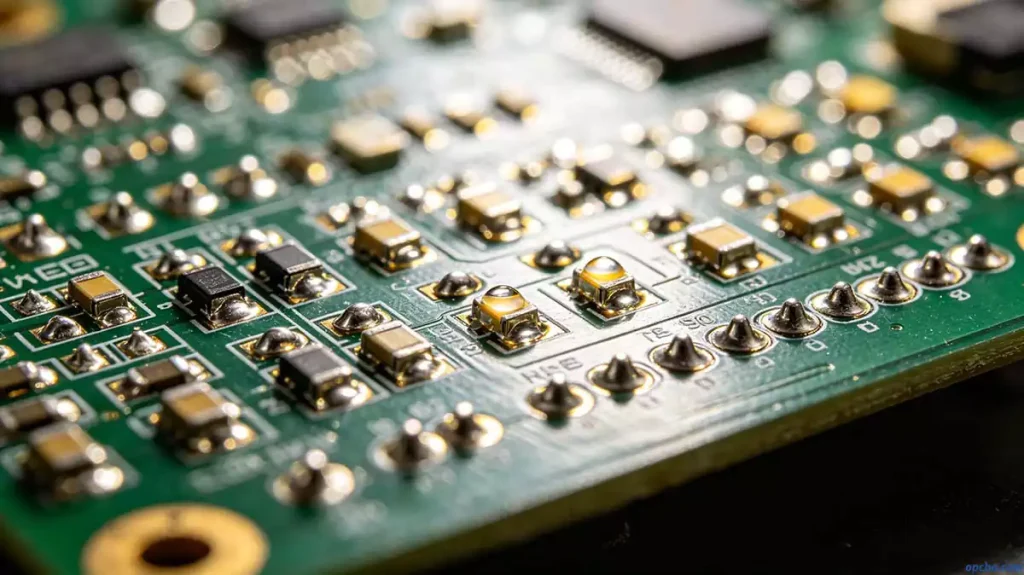
Solder paste comes in two main forms: leaded and lead-free. Beyond that, there are wash-free and water-soluble options—we pick based on the project’s requirements.
Wash-free paste is our go-to for most jobs—no need to clean the PCB after soldering, which cuts down on production time. Water-soluble paste dissolves easily in water and is non-toxic, great for projects with strict environmental standards.
How to Get the Best Solder Joints
Perfect solder joints aren’t luck—they’re a combination of the right materials, tools, and process. In our experience, skipping any of these leads to issues like cold joints or bridging.
Start with quality solder paste (matching your PCB and components), use a well-made stencil, and follow proper printing and reflow parameters. That’s how we consistently get clean, reliable solder joints in our factory.