Product overview
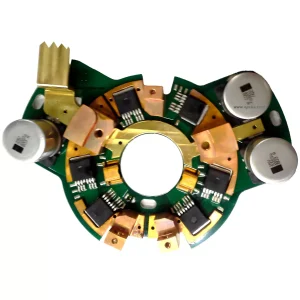
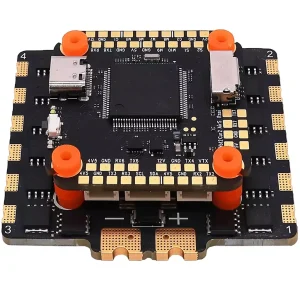
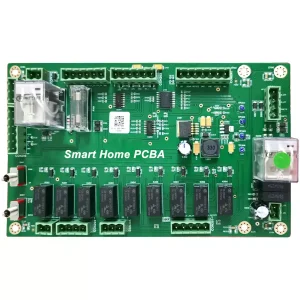
Automotive PCBA (Automotive Printed Circuit Board Assembly) is a vehicle-specific functional unit built for on-board scenarios. It covers the soldering, assembly, and testing of automotive-grade components on a dedicated PCB base, and it directly determines the safety and long-term reliability of all automotive electronic systems in real-world driving conditions.
Definition and positioning
- Full Name and Essence: Automotive Printed Circuit Board Assembly (Automotive PCBA), a PCBA variant built to meet automotive industry standards and environmental adaptability requirements.
- Difference from General PCBA: General PCBA is designed for stable, mild indoor environments, while Automotive PCBA withstands the high temperatures, constant vibration, and high humidity of vehicle operation.
- Core Value: It is the “electronic nerve center” of modern vehicles, unifying signal transmission and functional control across separate vehicle systems and simplifying assembly and maintenance workflows for automakers.
Core components
- Basic Carrier: Automotive-spec PCB (single/double/multi-layer/rigid-flex) with higher thermal and mechanical strength. It provides stable physical installation and electrical interconnection for all components. For more on how that substrate is built, see printed circuit board construction.
- Core Components: AEC-Q qualified electronic parts, from passive components like automotive-grade resistors and capacitors to active components such as high-reliability chips, sensors, and ruggedized connectors.
- Auxiliary Materials: Vehicle-grade soldering and fixing materials, including lead-free solder paste for high-temperature resilience, thermal conductive glue for heat dissipation, and anti-vibration insulating glue, all selected to match the long-term durability needs of Automotive PCBA.
Production process
Automotive PCBA follows stricter quality control than general PCBA, across 8 production stages:
- PCB Incoming Inspection: Screen PCB substrates for circuit continuity, hole diameter precision, and surface treatment quality to catch defects early.
- Component Preparation: Verify the AEC-Q certification and model parameters of each component, then classify and label materials in line with automotive production traceability regulations to prevent mismatches.
- Solder Paste Printing: Stencil printing applies lead-free automotive solder paste on PCB pads, with close control of paste thickness and uniformity for reliable soldering.
- SMT Assembly: High-precision placement machines mount miniaturized automotive components onto designated pads. This step demands tighter tolerance control than consumer PCBA assembly.
- Reflow Soldering: A temperature profile optimized for automotive components melts the solder paste. The reflow and wave soldering comparison covers how those profiles are set.
- DIP Insertion Welding: For large components incompatible with SMT, use manual or automated insertion welding and add anti-vibration reinforcement to the solder joints for road durability.
- Cleaning and Repair: Aqueous cleaning agents remove flux residues and contaminants, after which minor defects like cold soldering or short circuits are inspected and repaired.
- Final Inspection and Packaging: Finished boards go through electrical performance testing, high-low temperature aging, and vibration testing. Qualified units are packed in anti-static, moisture-proof bags.
Application areas
Automotive PCBA appears in nearly all modern vehicle electronics, across 5 functional areas:
- Intelligent Driving: ADAS controllers, millimeter wave radar, and camera modules, where printed circuit board assembly and testing handles real-time, low-latency signal processing for safe assisted driving.
- Power Control: New energy vehicle BMS, motor controllers, on-board chargers (OBC), and traditional engine ECUs, which rely on it for stable high-current power management.
- Body Control: Vehicle body control modules (BCM), electric window systems, and smart seat controllers, where it keeps daily vehicle functions running consistently.
- Infotainment: Central control screens, in-car navigation, and 5G communication modules, where it supports human-vehicle interaction and cloud connectivity.
- Safety Systems: Airbag controllers, anti-lock braking systems (ABS), and electronic stability programs (ESP). This is the application area most directly linked to passenger safety.