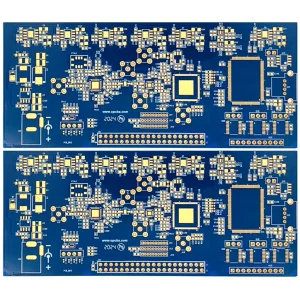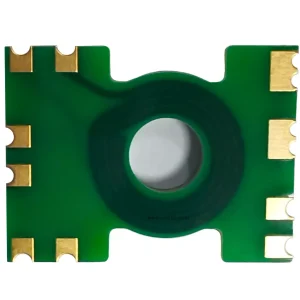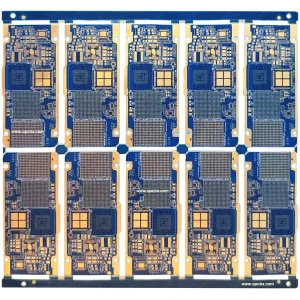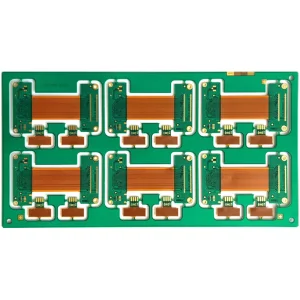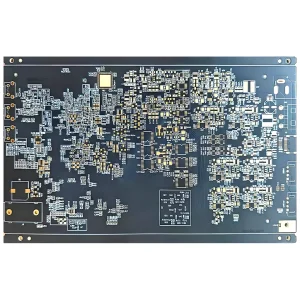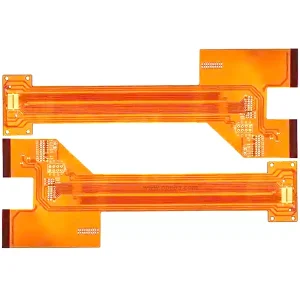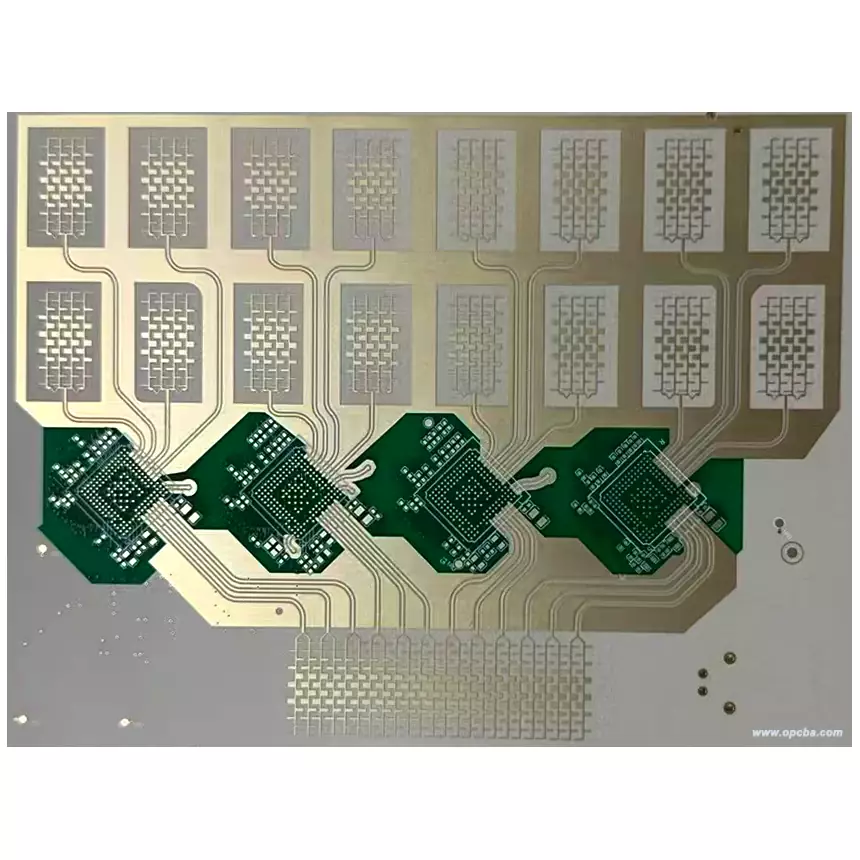
When your design operates above 500 MHz, the PCB stops being a passive platform and starts behaving like a component in the signal path. Dielectric loss, dissipation factor, and thermal stability go from datasheet footnotes to primary design constraints. This is where a high frequency PCB built on the right substrate makes the difference between a clean eye diagram and a failed compliance test.
We fabricate custom RF PCB boards across a range of low-loss materials. The standard offering covers Rogers 4350B, Rogers 5880, Taconic TLY-5, F4B, and Isola I-Tera MT—substrates chosen for low dielectric constant, low dissipation factor, and consistent performance across frequency and temperature.
What We Build With
The choice of high frequency PCB materials depends on your frequency range, power level, and thermal environment. Here’s what we stock and work with daily:
-
Rogers 4350B — A hydrocarbon-ceramic laminate with a Dk of 3.48. Good balance of low-loss performance and ease of fabrication. Works well for power amplifiers, couplers, and phased-array feed networks where cost and reliability both matter. For a full breakdown of its performance characteristics and design benefits, check out our guide: Rogers 4350B: High-Frequency Laminate Performance & Benefits
-
Rogers 5880 — A PTFE-glass composite with a Dk of 2.20. One of the lowest-loss flexible laminates available. Common in millimeter-wave modules, satellite transceivers, and airborne antennas where every fraction of a decibel counts.
-
Taconic TLY-5 — A PTFE-based laminate with a Dk of 2.20, closely matching 5880 in performance. Often selected as a drop-in alternative with slightly different processing characteristics.
-
F4B — A glass-reinforced PTFE with a Dk around 2.65. Used in domestic RF designs and high-frequency antenna boards where availability and lead time are priorities.
-
Isola I-Tera MT — A low-loss FR-4 replacement with a Dk of 3.45. Suitable for high-speed digital and mid-range RF applications where a full PTFE stackup would be overkill on cost but standard FR-4 can’t handle the insertion loss budget.
Don’t see your laminate here? We also process other Rogers 4000 and 3000 series, Taconic RF-series, and select Arlon materials. Send us your stackup requirements, and we’ll confirm availability.
Production Capabilities
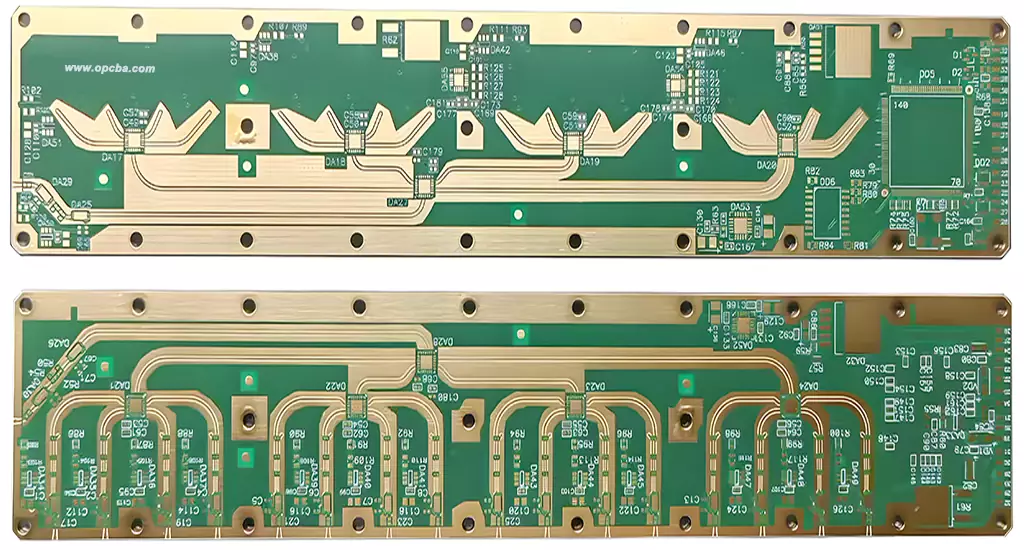
The real-world performance of an RF PCB comes down to fabrication precision. At a given operating frequency, trace width and spacing directly determine impedance—and impedance mismatch translates straight into signal reflection and power loss.
For mixed-stackup designs—where the RF layer uses a high-frequency laminate and the digital section runs on standard FR-4—we handle the hybrid lamination process, managing the different thermal expansion rates of each material during pressing and curing. These high-complexity jobs are routine for us.
Applications
Our high frequency PCB boards are used in RF communication modules, microwave backhaul equipment, patch antennas and antenna arrays, radar front-end assemblies, wireless base station transceivers, and general high-frequency electronic products where signal integrity at frequency matters. For more details on our full range of related services, see our product page: RF radio frequency PCBA
Ordering
This is a customized product. No two RF PCB designs share the same stackup, material mix, or impedance targets. To get a quotation, send your Gerber files, preferred material specifications, target impedance values, and required quantities to sales@opcba.com. We’ll return a formal quote with a lead time as soon as the engineering review is complete.