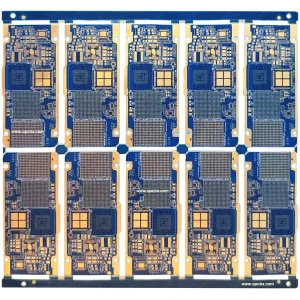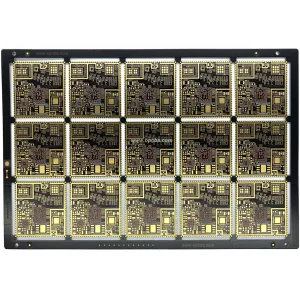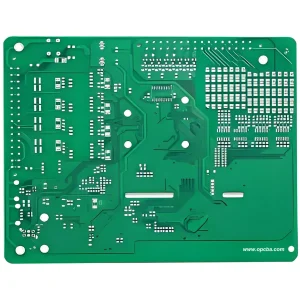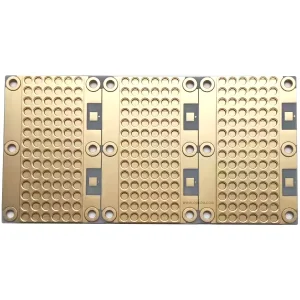
Product Overview of High Speed PCB
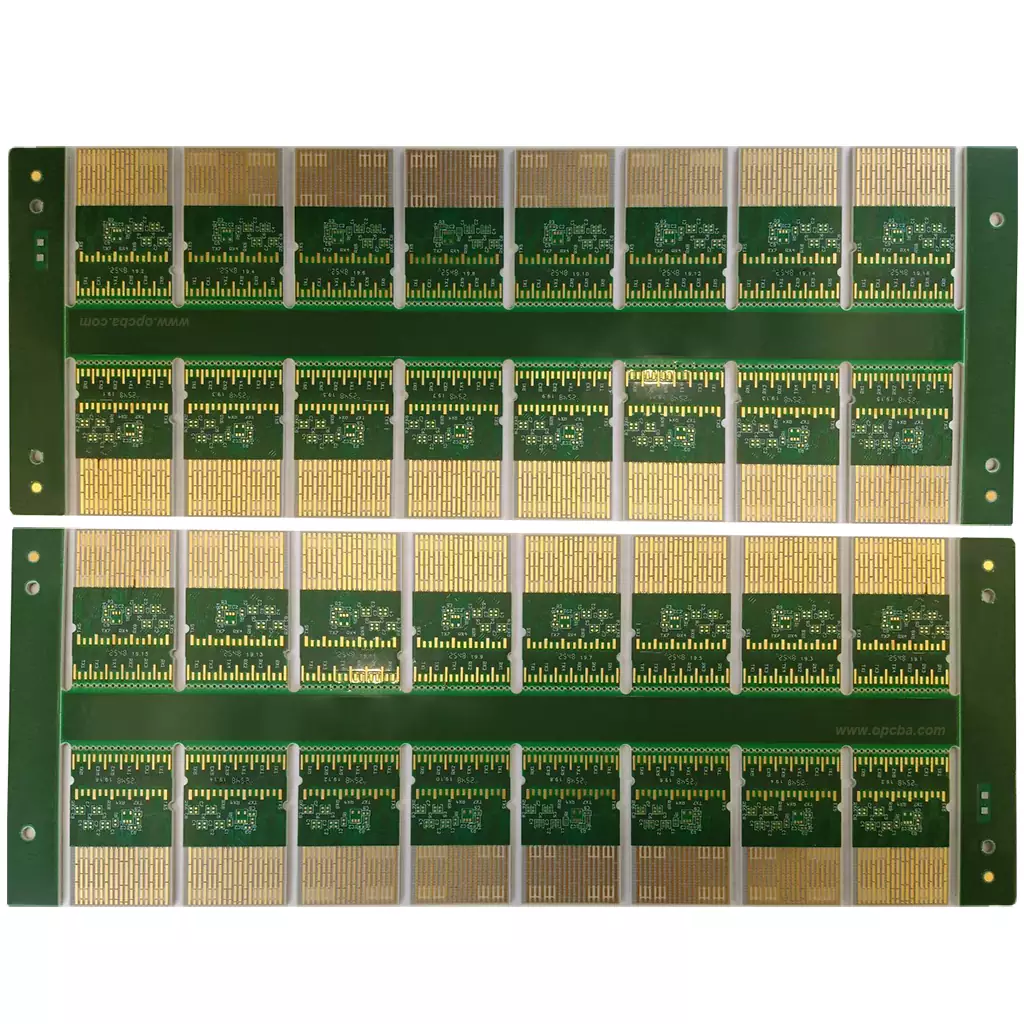
High Speed PCB is engineered for ultra-fast signal transmission and stable high-frequency operation. Unlike standard PCBs, it minimizes signal loss, interference and delay drastically. Consequently, it perfectly meets the core signal integrity demand of modern high-performance electronics.
It is a key branch of printed circuit board technology. For this reason, you can explore the full spectrum of PCB types and manufacturing fundamentals at https://opcba.com/pcb/. Moreover, high speed circuit boards power 5G, data centers and high-performance computing with precise timing control.
Structural Composition of High Speed PCB
Every High Speed PCB has a layered structure optimized for high-frequency performance. Above all, each layer plays a critical role in preserving signal quality.
Signal layers carry high-speed data. Specifically, their routing eliminates cross-talk for clean waveforms. In contrast, dielectric layers dictate signal speed and loss—low-loss materials are mandatory here.
Ground and power layers offer stable power and electromagnetic shielding. Simultaneously, they actively cut down noise for high-speed signals. Additionally, copper traces have precise dimensions. This means they enable accurate impedance matching, a must for reliable transmission.
Key Design Considerations for High Speed PCB
Designing a High Speed PCB demands focus on critical engineering factors. In fact, each directly impacts signal performance and reliability.
Impedance control is non-negotiable. To achieve this, designers calibrate trace and dielectric properties to match target values. As a result, this stops signal reflection cold. Signal integrity needs strict layout rules: short traces, no sharp bends, and analog-digital separation. For example, these steps minimize overshoot and jitter effectively.
Noise reduction relies on solid ground planes and shielding. Thus, this blocks external and adjacent trace interference. Thermal management is vital too. Since high-speed components generate more heat, effective dissipation boosts longevity.
Ultimately, align designs with modern SMT assembly standards. For further insights, learn about the latest SMT equipment trends at https://opcba.com/2026-global-high-speed-smt-equipment-market-analysis/.
Material Selection for High Speed PCB
A High Speed PCB’s performance depends entirely on smart material choices. Essentially, every selection targets high-frequency transmission needs.
Dielectric substrates use low Dk/Df laminates like Rogers or Megtron. For instance, these cut signal attenuation at ultra-high frequencies. Copper foil is low-roughness and high-purity. Likewise, it minimizes the skin effect and improves conductivity.
Laminate structures favor multi-layer designs with thick ground/power layers. Furthermore, this enhances shielding and anti-interference capabilities. Surface treatments like ENIG or immersion silver protect traces. Also, they ensure reliable soldering and consistent conductivity.
Application Areas of High Speed PCB
High Speed PCB is irreplaceable for fast, reliable data transmission across advanced industries. Clearly, its signal performance sets it apart from standard boards.
In data centers, routers and servers use it for low-latency massive data handling. As a result, this powers cloud computing and big data analysis. In 5G, base stations rely on it for high-frequency, high-bandwidth signals. Therefore, it enables fast mobile and IoT connectivity.
In automotive ADAS, it enables real-time sensor-computer data exchange. Notably, this is critical for smart driving. In consumer electronics, it supports fast computing and 4K streaming in premium devices.
In aerospace and medical fields, it delivers ultra-stable signals. Even so, extreme environments won’t compromise its performance in satellites or precision medical gear.