RF Signal Board | Custom High-Frequency RF PCB Assembly
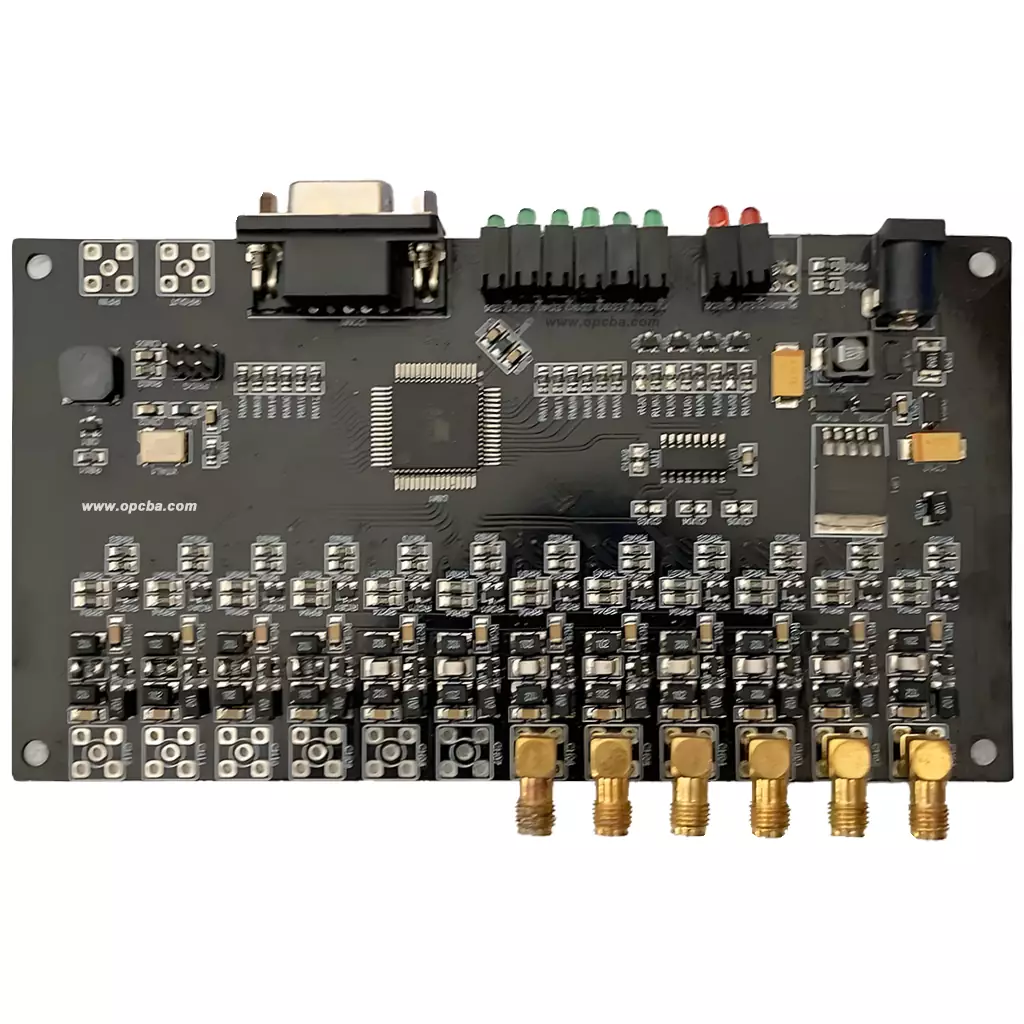
If you’re designing RF products, you already know: the RF signal board isn’t just another PCB. It’s where your signal lives or dies. Whether you’re working at 100MHz or 40GHz, the board dictates your insertion loss, your return loss, your isolation, and whether your product actually works when it leaves the lab.
We’ve been building custom RF signal board solutions across the frequency spectrum—from low-band telemetry to millimeter-wave radar. Here’s how we approach RF board design, manufacturing, and testing, organized the way RF engineers think: by frequency.
Low-Frequency RF Signal Board Design (Sub‑1GHz to 2.5GHz)
If your application is in the sub‑GHz ISM bands, LoRa, ZigBee, or narrowband industrial links, your RF signal board requirements are different from high-frequency designs. You have more margin, but that doesn’t mean you can ignore the rules.
What Matters at This Range:
-
Impedance control is still required, but tolerances are looser (±10% is often acceptable)
-
Material selection is less critical—standard high‑Tg FR‑4 with stable Dk works for most designs
-
Trace length is more forgiving, but keep RF paths short and away from noisy digital lines
How We Build Them:
We still follow strict RF design rules, but we optimize for cost‑effectiveness at this range. You don’t need Rogers material for 900MHz if the layout is clean. We’ll recommend the right material for your specific frequency and budget, and still deliver 100% impedance‑tested boards with full RF performance validation.
Typical Applications:
-
Remote keyless entry systems
-
Industrial telemetry
-
Smart meter RF boards
-
Sub‑GHz wireless sensors
High‑Frequency RF Signal Board Design (2.5GHz to 10GHz)
This is where things get serious. Wi‑Fi, 5G sub‑6, broadcast, and many communication systems live here. Your RF signal board at these frequencies demands precision.
What Matters at This Range:
-
Strict impedance control (±5% or better) is non‑negotiable
-
Material choice becomes critical: Rogers, Taconic, Isola, or high‑performance FR‑4 hybrids
-
Via transitions must be modeled and minimized—every via is a discontinuity
-
Ground plane integrity is essential: continuous, no splits under RF
-
Shielding often required to isolate sensitive sections
How We Build Them:
We select materials matched to your frequency and environmental requirements. Our RF engineers review your stackup, via placement, and transmission line structures before we build. Every board gets 100% impedance testing and full RF parameter validation.
Typical Applications:
-
Wi‑Fi 6/6E/7 access point boards
-
5G small cell RF front‑ends
-
Broadcast transmission equipment
-
Radar detectors and automotive radar (lower bands)
Millimeter‑Wave RF Signal Board Design (10GHz to 40GHz+)
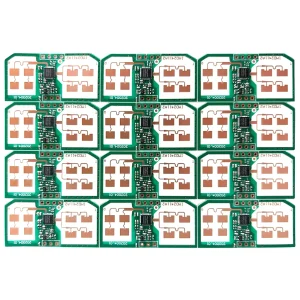
At these frequencies—think 24GHz radar, 28GHz 5G mmWave, 77GHz automotive radar—your RF signal processing board becomes a precision instrument. Every micron matters.
What Matters at This Range:
-
Extreme impedance precision: ±2% or better required
-
Specialized materials: Rogers 3000/4000 series, PTFE‑based laminates, ceramic‑filled substrates
-
Surface finish impacts performance: immersion silver or gold, never HASL
-
Via structures must be back‑drilled or stacked with precision
-
Launch structures and transitions must be simulated and optimized
-
Package interactions: chip attach, wire bonding, or flip‑chip all affect RF performance
How We Build Them:
This is where our experience separates us. We work with your design team early—before layout is locked—to optimize material stackup, transition structures, and manufacturing tolerances. Our fab processes are qualified for millimeter‑wave production, with specialized plasma treatment for PTFE materials, precision back‑drilling, and controlled‑depth laser vias.
Typical Applications:
-
24GHz industrial radar
-
28GHz/39GHz 5G mmWave arrays
-
77GHz automotive radar
-
Point‑to‑point microwave links
-
Satellite communication terminals
Our Approach: Frequency‑Matched Manufacturing
We don’t treat all RF signal board projects the same. Your frequency dictates everything: material, tolerances, test requirements, and cost drivers.
|
Frequency Range
|
Typical Materials
|
Impedance Tolerance
|
Key Test Requirements
|
|---|---|---|---|
|
Sub‑1GHz to 2.5GHz
|
High‑Tg FR‑4
|
±10%
|
Basic RF performance, insertion loss
|
|
2.5GHz to 10GHz
|
Rogers/FR‑4 hybrids, high‑performance laminates
|
±5%
|
Full S‑parameters, isolation, VSWR
|
|
10GHz to 40GHz+
|
PTFE, ceramic‑filled, millimeter‑wave grades
|
±2% or better
|
Vector network analysis, time‑domain reflectometry
|
Testing: Frequency‑Appropriate Validation
Generic PCBA testing won’t cut it for RF. Our test philosophy matches your operating frequency:
For all RF boards:
AOI, X‑Ray, ICT, FCT — baseline quality checks
For 2.5GHz and above:
-
100% impedance testing on critical traces
-
Vector network analyzer (VNA) testing for insertion loss, return loss, isolation
For 10GHz and above:
-
Full 2‑port or 4‑port VNA characterization
-
Time‑domain reflectometry (TDR) for impedance profile validation
-
Temperature‑controlled RF testing for stability verification
Custom RF Board Services by Frequency
We don’t do off‑the‑shelf. Every high‑frequency RF circuit assembly is built to your exact requirements:
-
Material selection assistance: We’ll recommend the right substrate for your frequency, environment, and budget
-
Design review: Our RF engineers review your layout for frequency‑specific issues before fab
-
Rapid prototyping: 10‑50 pieces for validation, with full RF test reports
-
Production scaling: From pilot runs to high‑volume, with consistent RF performance batch‑to‑batch
-
Compliance support: Pre‑compliance guidance for FCC, CE, and other regional requirements
Why Work with OPCBA?
There are a lot of PCBA manufacturers. Few organize their thinking the way RF engineers do—by frequency.
At OPCBA, we’ve been building RF signal board solutions across the spectrum for years. Our in‑house RF team speaks your language. Our fab processes are qualified from sub‑GHz to millimeter‑wave. And our testing is frequency‑appropriate, not one‑size‑fits‑all.
Whether you’re designing a simple 900MHz link or a complex 77GHz radar array, we’re set up to build your boards right—the first time, and every time.
Need a second pair of eyes on your RF layout? Trying to decide between Rogers 4350B and something cheaper? Wondering if your 28GHz via structure is going to kill your yield? Talk to us.
Contact OPCBA with your frequency, your requirements, or just your questions. We’ll get back to you with a design review, a custom quote, or a straight answer from engineers who’ve built RF signal board from MHz to mmWave. No pressure, just real talk.