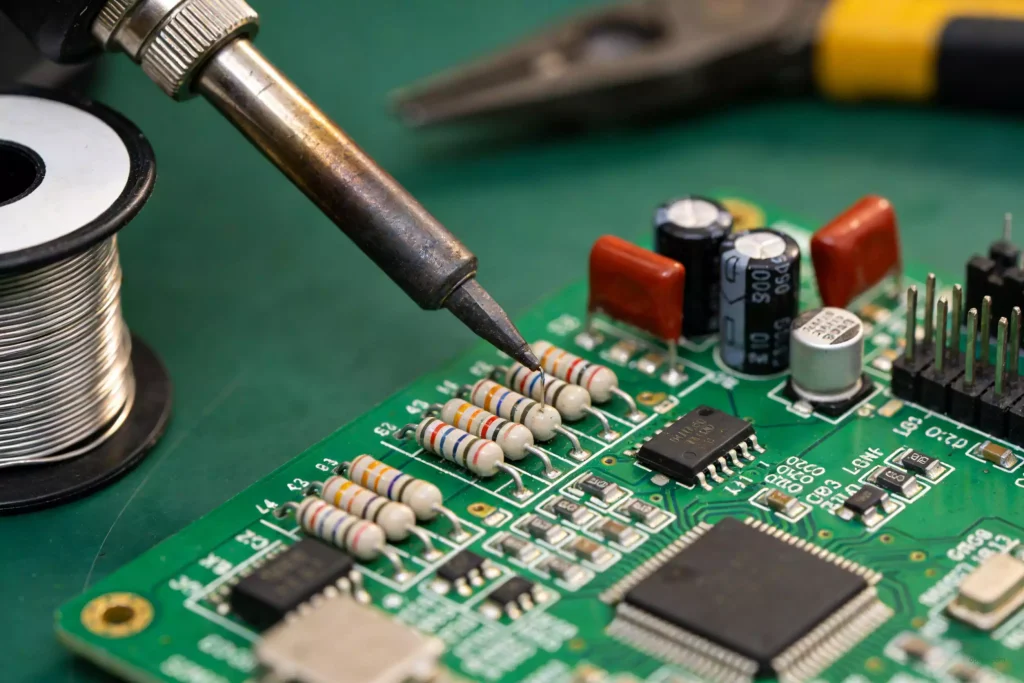
Capacitor selection for switching power supply is a critical step in electronic design—getting it right ensures stable performance, prevents component failure, and reduces maintenance costs. This guide covers core capacitor types, key parameters, application tips, and filter capacitor choices for effective power supply design.
Key Capacitor Types for Switching Power Supplies
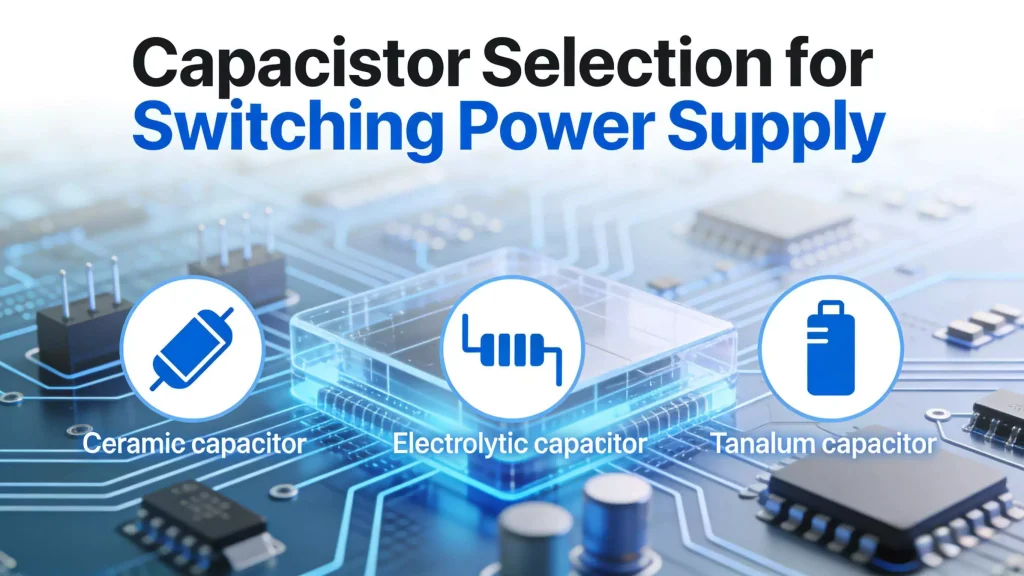
When making capacitor choices for switching power supplies, you’ll focus on dielectric-based categories, each tailored to specific circuit needs:
- Ceramic Capacitors: Ideal for high-frequency circuits—small capacitance (nF-µF range), wide temperature tolerance (-55°C to +125°C), low ESR, and non-polarity.Ceramic Capacitors: Ideal for high-frequency circuits—small capacitance (nF-µF range), wide temperature tolerance (-55°C to +125°C) (compatible with [SMT surface mounting technology]low ESR, and non-polarity.
- Electrolytic Capacitors: Suited for low-frequency filtering—large capacitance (µF-mF range), narrower temperature range, higher ESR, and distinct polarity (reverse connection risks failure).
- Tantalum Capacitors: Used for precision designs—ultra-low ESR, mid-range capacitance, but note polarity and fire risk if exposed to overvoltage or overcurrent.
Core Parameters for Capacitor Selection for Switching Power Supply
Every capacitor selection for switching power supply relies on 5 non-negotiable parameters to ensure compatibility:
- Capacitance Value: Matches the power supply’s filtering, decoupling, or voltage stabilization needs (e.g., large values for low-frequency smoothing).
- Voltage Rating: Must exceed the circuit’s maximum operating voltage (1.5–2x safety margin) to avoid dielectric breakdown.
- Equivalent Series Resistance (ESR): Lower ESR reduces heat and power loss—critical for high-frequency circuits (performance order: tantalum < ceramic < electrolytic).
- Tolerance: Tighter ±5% tolerance is preferred for precision switching power supply designs.
- Temperature Range: Aligns with the power supply’s working environment (e.g., -40°C to +105°C for industrial applications).
Application Environment Tips for Capacitor Choices
Capacitor decisions for switching power supplies depend on both internal circuit conditions and external surroundings:
Internal Circuit Factors
- Frequency: Use ceramic or tantalum capacitors for high-frequency (kHz–MHz) circuits; electrolytic capacitors for low-frequency (50Hz–1kHz) needs.
- Voltage/Current: Higher operating voltages require higher-rated capacitors; high-current circuits demand low-ESR options to prevent overheating.
- Function: Pair electrolytic (low-frequency filtering) and ceramic (high-frequency filtering) capacitors for comprehensive smoothing.
External Environment Factors
- Temperature: Choose wide-range ceramic capacitors for high-heat scenarios (e.g., automotive power supplies).
- Safety: Avoid tantalum capacitors in safety-critical designs (e.g., medical devices) due to their combustion risk under stress.
Filter Capacitor Selection for Switching Power Supply
Filter capacitors smooth DC output by suppressing AC ripples—here’s how to choose them for capacitor selection for switching power supply:
Low-Frequency Filter Capacitors
- Use Case: Mains power or post-transformer rectification (operating frequency: 50Hz).
- Needs: Large capacitance (hundreds of µF to thousands of µF) to handle millisecond-level charge-discharge cycles.
- Top Pick: Aluminum electrolytic capacitors (cost-effective and high-capacitance).
High-Frequency Filter Capacitors
- Use Case: Post-switching rectification (operating frequency: kHz–MHz).
- Needs: Low equivalent impedance to suppress high-frequency spikes.
- Top Pick: Four-terminal high-frequency electrolytic capacitors or X7R ceramic capacitors (reduces inductance, a limitation of standard electrolytic options above 10kHz).