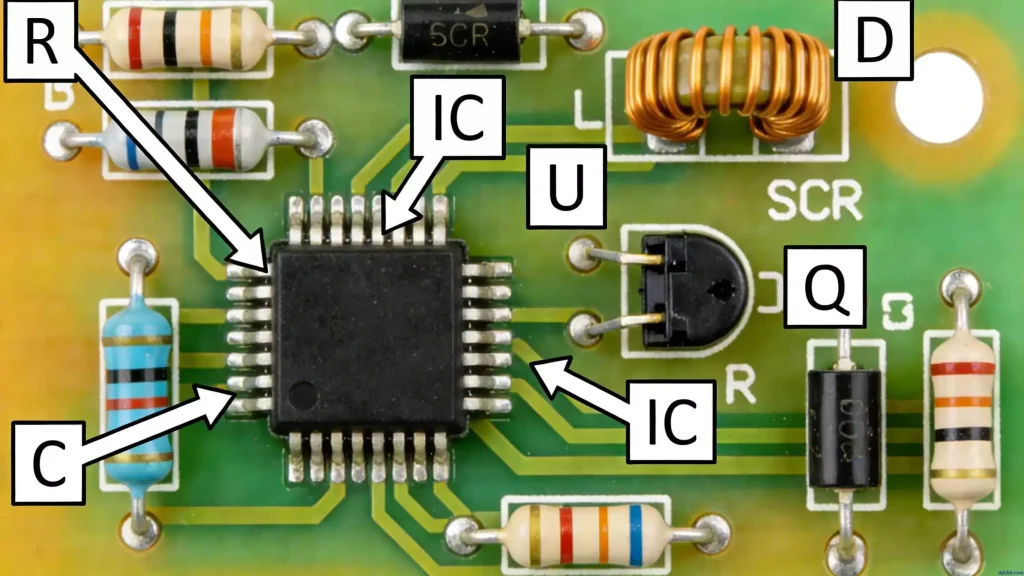
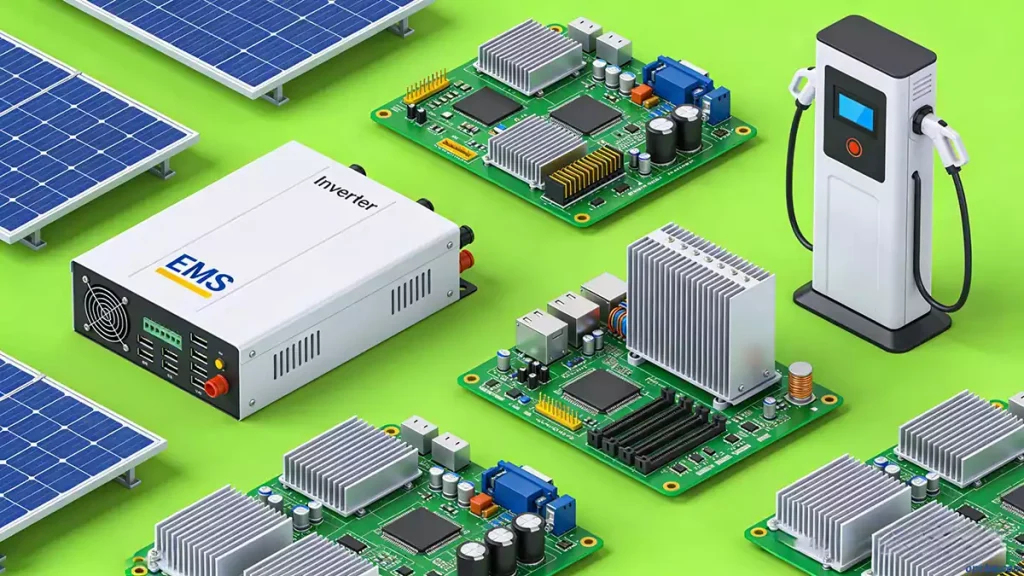
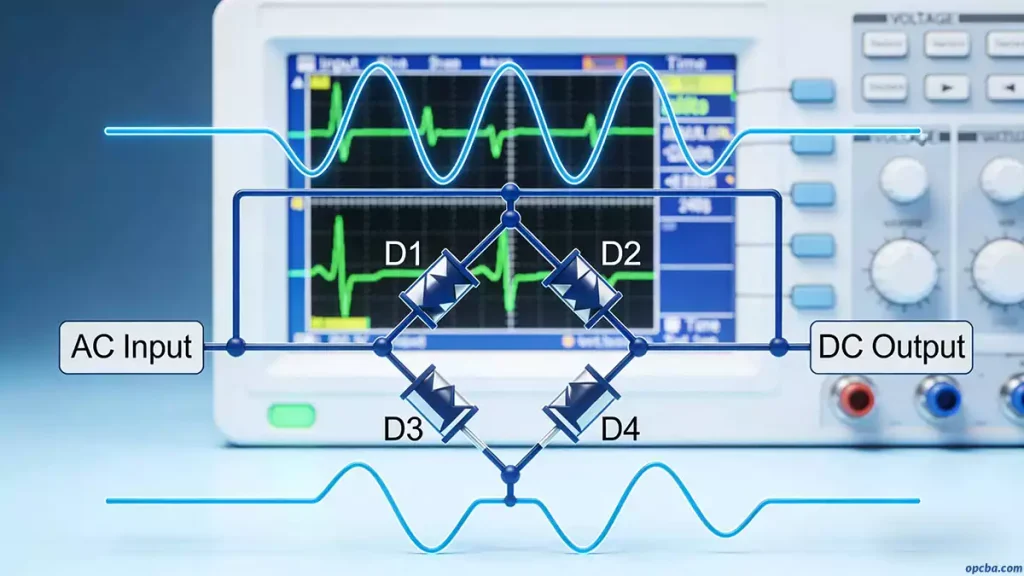
Consumer drone is a mainstream recreational unmanned aerial vehicle (UAV). Its core performance — including flight stability, miniaturization and functional integration — all depends on high-precision PCB/PCBA manufacturing. We are a professional one-stop electronic manufacturing service provider focusing on PCB and PCBA customization. We tailor high-reliability circuit board solutions for its core modules, such as flight control, power management and aerial photography transmission. Our solutions match the lightweight, high-frequency and anti-interference requirements of the UAV hardware.
The industry is trending toward greater miniaturization, longer battery life and more multi-functionality. This puts strict technical requirements on PCB/PCBA design and manufacturing. The flight control board is the “brain” of a consumer drone. It needs ultra-dense wiring and stable impedance control. The power management PCB must bear high current and achieve low power consumption. The aerial photography module PCBA needs anti-electromagnetic interference to ensure clear signal transmission. Our mature electronic manufacturing technology and strict quality control system meet all these core demands perfectly.
Core PCB Design Requirements for Consumer Drone Core Modules
The internal space of a consumer drone is extremely compact. Each core module’s PCB must be designed according to the UAV’s functional characteristics. We integrate miniaturization, high-frequency performance and mechanical strength into every design. All our products fully comply with IPC-A-610 high-reliability circuit board design standards.
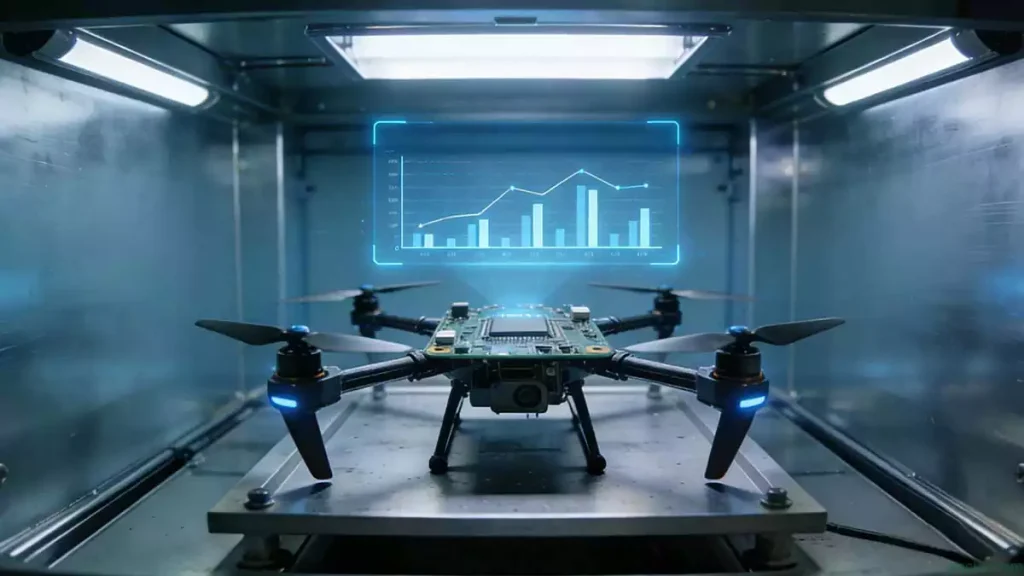
Flight Control Module PCB: High Precision & Anti-Interference
The flight control PCB is the core control unit of a consumer drone. It is responsible for receiving and processing various sensor signals and issuing flight instructions. We adopt HDI board design for flight control PCBs. We use microvia and blind/buried via technology to realize ultra-dense wiring, saving internal UAV space. We also carry out strict impedance matching (50Ω/75Ω) and signal isolation design. This avoids mutual interference between internal circuits, ensuring accurate flight control instructions and stable UAV flight.
Power Management Module PCB: High Current & Low Power Consumption
The power management PCB of a consumer drone distributes power to each module and optimizes battery usage efficiency. It is directly related to the UAV’s flight time. We use high-conductivity heavy copper PCB substrates (2-4 oz/ft²) for this module. These substrates bear high current and reduce heat generation during operation. Combined with rational wiring design and low-loss material selection, we minimize circuit board power consumption. This effectively extends the continuous flight time of the UAV.
Aerial Photography & Signal Transmission PCB: High-Frequency & Low Attenuation
Aerial photography and wireless signal transmission modules need to support high-frequency signal transmission. Their PCBs must have low attenuation and anti-electromagnetic interference performance. We select professional high-frequency substrates for this type of PCB, such as Rogers 4350B and PTFE. These materials have excellent high-frequency performance and low dielectric loss. They ensure clear and stable transmission of aerial photography video signals and remote control signals. We also add metal shielding layers on the PCB to avoid signal interference from the UAV’s internal power supply and external environment.
Key PCBA Manufacturing Processes for Consumer Drone
PCBA assembly of a consumer drone has high requirements for precision and reliability. UAVs need to work in complex outdoor environments, such as vibration, high and low temperature, and strong wind. PCBA solder joints and component welding must be firm and stable. Our PCBA manufacturing for the UAV fully adopts automotive-grade manufacturing standards. We strictly control all core processes to ensure finished product quality.
High-Precision SMT Chip Mounting
PCBA features small size and dense components. It uses a large number of ultra-small chips (0201, 01005) and BGA packaged components. We use high-precision SMT mounters with a mounting accuracy of ±0.02mm. This realizes accurate mounting of ultra-small components. We also adopt reflow soldering with closed-loop temperature control. We customize the soldering temperature curve according to different component characteristics. This ensures the formation of reliable solder joints and avoids defects like false soldering and tin beads.
Strict Component Screening & Validation
All electronic components for the UAV PCBA are screened in accordance with industrial-grade standards. We select components with a wide temperature range (-40℃~85℃), anti-vibration and high reliability. These adapt to the UAV’s complex working environment. Before assembly, we test all components for electrical performance to eliminate defective ones. For key components — such as chips, capacitors and resistors — we adopt batch sampling inspection. This ensures component performance consistency and avoids UAV performance differences caused by component quality problems.
EMI/EMC Anti-Interference Processing
Electromagnetic interference is a key factor affecting the normal operation of a consumer drone. EMI/EMC anti-interference processing is an essential link in PCBA manufacturing. We adopt multiple anti-interference measures. We add EMI shielding covers on key functional modules of PCBA. We coat conformal coating on the PCBA surface to prevent dust and moisture and enhance insulation performance. We optimize the welding position of filter capacitors and inductors to suppress electromagnetic radiation and external interference signals. All these measures ensure that the UAV can work stably in complex electromagnetic environments.
Reliability Testing of Consumer Drone PCBs/PCBAs
To ensure PCBs/PCBAs withstand the harsh working conditions of a consumer drone in actual use, we carry out a full set of strict reliability tests on all finished products. The tests cover environmental adaptability, mechanical performance and electrical performance. Only products that pass all tests can be delivered.
Environmental Adaptability Testing
This test simulates the outdoor working environment of the UAV. It includes high and low temperature cycle test (-40℃~85℃, 1000 cycles), high humidity and heat test (85℃/85%RH, 500h), and salt spray test (neutral salt spray, 48h). The test verifies that PCBs/PCBAs have no deformation, solder joint cracking or component failure under extreme temperature, humidity and mild corrosion environments. This ensures the adaptability of the UAV in different regions and climates.
Mechanical Vibration & Impact Testing
The UAV generates continuous vibration during flight. It may also encounter sudden impact such as strong wind. PCBs/PCBAs must have excellent mechanical performance. We carry out random vibration testing (10-2000Hz, 10g acceleration) and drop impact testing (1.5m height, free fall) on the PCBs/PCBAs. These simulate the vibration and impact during UAV flight. We verify that solder joints and components are firmly combined, with no falling off or poor contact.
Electrical Performance Long-Term Stability Testing
We carry out 1000h continuous power-on electrical performance testing on PCBA finished products. We real-time monitor key parameters of each module, such as voltage, current and signal transmission. This ensures that PCBA electrical performance is stable without drift during long-term use. It avoids UAV flight failure caused by circuit board performance degradation.
Customized PCB/PCBA Manufacturing Solutions for Consumer Drone
The market has diversified product characteristics, such as mini pocket drones, aerial photography professional drones and racing drones. We provide one-stop customized PCB/PCBA manufacturing solutions for all these types. Our service covers PCB design optimization, material selection, component matching, PCBA assembly, testing and delivery. We meet the personalized needs of different manufacturers.
For mini consumer drone, we focus on ultra-miniaturization design of PCBs/PCBAs. We adopt HDI ultra-thin boards (0.4mm thickness) and integrated component packaging to save internal space. For aerial photography UAV, we optimize the high-frequency performance and anti-interference design of the signal transmission module PCB. For racing UAV, we strengthen the heat dissipation performance and mechanical strength of the flight control and power management PCBA. This matches the high-speed flight demand of the UAV.
We have a professional R&D and design team. They can work with manufacturers to optimize PCB/PCBA design schemes. We reduce manufacturing costs on the premise of ensuring performance. We also shorten the product development cycle, helping customers quickly launch high-performance products to the market.
As a professional electronic manufacturing service provider, we have rich experience in PCB/PCBA customization for industrial and consumer electronic products. We have a complete production and quality control system. We can provide high-reliability, high-precision PCB/PCBA manufacturing solutions for the consumer drone industry. The core competitiveness of the UAV lies in hardware performance. High-quality PCBs/PCBAs are the foundation of its stable and efficient operation. With professional technology and strict quality control, we are committed to becoming the most reliable electronic manufacturing partner for UAV manufacturers.