Consumer Electronics are the most personal and pervasive technology in our lives. From the smartphone that wakes you up to the smartwatch that tracks your health, and the TV that entertains your family, these devices are designed to fit seamlessly into daily life—yet 68% of consumers report frustration with issues like overheating, short battery life, or laggy performance. In a market where 12–18 month product cycles are the norm and brand loyalty is fragile, the difference between a bestseller and a flop often lies in the invisible technology that powers user experience: high-performance, agile PCB/PCBA solutions. As a leading electronic manufacturing partner, we help consumer tech brands turn user pain points into competitive advantages, by engineering PCB/PCBA that balances performance, cost, and speed-to-market.
The global consumer electronics market is undergoing a seismic shift, driven by two forces: user demand for smarter, more connected experiences and brand pressure to innovate faster than ever before. Today’s consumers expect devices that are slim, lightweight, and always-on—with 5G connectivity, AI-powered features, and multi-day battery life. Meanwhile, brands face margin compression, supply chain volatility, and the need to launch new products in months, not years. This dynamic creates a unique challenge: how to deliver cutting-edge user experiences at mass-market prices, without compromising quality or reliability. This article explores how agile manufacturing and user-centric PCB/PCBA design are the keys to success in the consumer electronics landscape.
1. The Consumer Electronics Paradox: User Expectations vs. Commercial Reality
Consumer electronics brands operate in a high-stakes ecosystem where user experience directly impacts revenue and market share. Understanding the core tensions between user needs and business constraints is critical to building sustainable success.
1.1 User Demand: Slimmer, Faster, More Connected Devices
Consumers today prioritize portability and performance above all else. For example:
- 72% of smartphone buyers consider device thickness a key purchase factor, driving the trend toward 6.8mm-thick flagship models.
- 58% of wearable users cite battery life as their top frustration, with 34% abandoning devices that need daily charging.
- 5G adoption is accelerating, with 45% of consumers willing to pay a premium for devices with faster connectivity.
These expectations demand electronic components that are ultra-compact, energy-efficient, and capable of handling high-speed data—requirements that fall squarely on the performance of PCB/PCBA.
1.2 Commercial Pressure: Fast Cycles, Tight Margins, and Supply Chain Risk
Consumer electronics brands face relentless commercial challenges:
- Rapid obsolescence: Products lose 30–50% of their value within 6 months of launch, requiring brands to iterate quickly.
- Margin compression: Mass-market devices operate on 5–10% profit margins, forcing brands to optimize every aspect of production.
- Supply chain volatility: Global component shortages and logistics delays can derail product launches, costing brands millions in lost revenue.
These pressures require manufacturing partners that can deliver rapid prototyping, scalable production, and cost-efficient solutions—capabilities that hinge on agile PCB/PCBA design and manufacturing.
1.3 The Hidden Bottleneck: PCB/PCBA as a Limiting Factor
While consumers focus on features like camera quality or display resolution, the performance of PCB/PCBA often determines the success of a device:
- A smartphone’s 5G modem relies on low-loss PCB substrates to maintain signal integrity, preventing dropped calls or slow speeds.
- A smartwatch’s battery life is directly impacted by the efficiency of its PCB layout, which minimizes power leakage.
- A gaming laptop’s thermal performance depends on PCB thermal vias that dissipate heat from the GPU, avoiding throttling during intensive gameplay.
In short, PCB/PCBA is the unsung hero of user experience—and the key to overcoming the consumer electronics paradox.
2. User-Centric PCB/PCBA Design for Consumer Electronics
To meet the dual demands of user experience and commercial efficiency, we engineer PCB/PCBA solutions that prioritize user value first, technical performance second. Our design approach is rooted in understanding how users interact with devices, and translating those insights into engineering decisions.
2.1 Slim Form Factor Design: Beyond Just “Thin”
Slimmer devices are not just a design trend—they are a user experience imperative. Our PCB/PCBA solutions enable ultra-compact devices through:
- HDI (High-Density Interconnect) Technology: Laser-drilled microvias (ø0.1mm) and sequential lamination reduce PCB footprint by up to 30%, enabling 6.8mm-thick smartphones and 0.3mm-thick smartwatches.
- Rigid-Flex PCBs: Flexible circuits that conform to curved surfaces, eliminating bulky connectors and improving durability in wearable devices.
- Embedded Components: Integrating passive components (resistors, capacitors) into the PCB substrate, reducing overall thickness by 20%.
2.2 Energy Efficiency: Extending Battery Life for All-Day Use
Battery life is the single biggest user frustration in consumer electronics. Our PCB/PCBA solutions improve energy efficiency by:
- Low-Power Circuit Design: Optimizing trace routing and component placement to minimize power leakage, extending battery life by 15–20%.
- Dynamic Thermal Management: Thermal vias and copper pours that dissipate heat efficiently, preventing thermal throttling and maintaining performance during heavy use.
- Power Delivery Optimization: Ensuring stable voltage to high-performance components (e.g., 5G modems, AI processors) to avoid wasted energy.
2.3 High-Speed Connectivity: Enabling 5G and AI Experiences
5G and AI are transforming how users interact with devices, but they demand PCB/PCBA that can handle high-speed data and real-time processing:
- Low-Dielectric-Loss Substrates: Rogers 4350B and Shengyi S1180 laminates that minimize signal attenuation, ensuring stable 5G connectivity and AI performance.
- Impedance Matching: Strict ±3Ω tolerance to maintain signal integrity, preventing lag in gaming or video streaming.
- EMI Shielding: Custom shielding solutions that reduce interference between components, ensuring reliable performance in noisy environments (e.g., crowded urban areas).
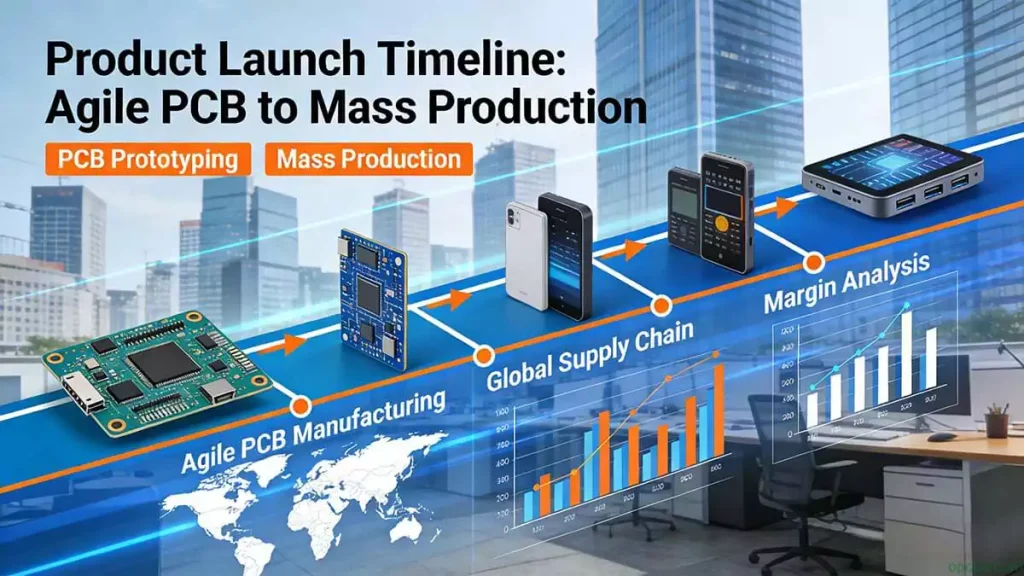
3. Agile Manufacturing for Fast Time-to-Market
In the consumer electronics industry, speed is everything. Our manufacturing processes are designed to deliver rapid prototyping, scalable production, and cost efficiency—critical for brands competing in a fast-changing market.
3.1 24-Hour Rapid Prototyping: Validating Designs in Days, Not Weeks
We offer end-to-end rapid prototyping capabilities that enable brands to iterate quickly:
- Automated PCB Fabrication: Laser drilling and high-speed lamination deliver functional PCB samples in 24 hours.
- SMT Prototyping: High-precision SMT mounters (±20μm accuracy) and closed-loop reflow soldering ensure reliable assembly of ultra-small components.
- Functional Testing: In-house labs validate performance, thermal stability, and EMI compliance, reducing time-to-market by up to 40%.
3.2 Scalable Mass Production: Meeting Demand for Global Launches
For mass-market devices, we leverage fully automated production lines to ensure consistency and efficiency:
- Capacity: 10 million PCBA per month production capacity, enabling brands to scale quickly for global launches.
- Cost Optimization: Bulk material sourcing and DFM (Design-for-Manufacturability) practices reduce production costs by 15–20%.
- Quality Control: AI-powered AOI (Automated Optical Inspection) and X-ray testing ensure zero defects, reducing warranty costs and brand reputation risks.
4. The Future of Consumer Electronics: Beyond Smart Devices
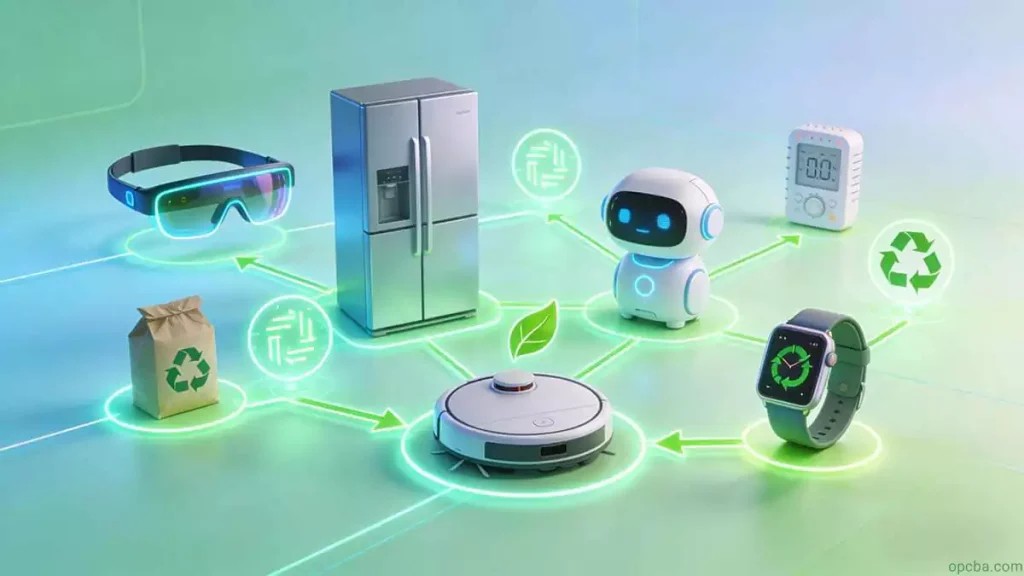
As consumer electronics evolve toward AIoT (AI + IoT) and spatial computing, the role of PCB/PCBA will become even more critical. We are investing in three key areas to support the next generation of user-centric devices:
4.1 AIoT-Enabled Devices: Connecting the Digital and Physical Worlds
We are developing PCB/PCBA with integrated AI accelerators and wireless modules, enabling devices to learn from user behavior and adapt in real time. For example, our AI-enabled PCB for smart refrigerators can analyze food inventory and suggest recipes, enhancing user convenience.
4.2 AR/VR & Spatial Computing: Immersive Experiences, Compact Design
AR/VR headsets require high-resolution displays, low-latency connectivity, and compact thermal management. Our solutions feature high-frequency substrates for 8K video transmission and embedded heat pipes to dissipate heat, ensuring smooth, immersive experiences.
4.3 Sustainable Design: Reducing Environmental Impact
We are exploring eco-friendly materials and manufacturing processes, including recyclable FR-4 substrates and lead-free solders, to reduce the environmental footprint of consumer electronics. Our sustainable solutions maintain performance and cost efficiency, while meeting consumer demand for greener products.
5. Why Partner with Us for Consumer Electronics Success
Consumer electronics brands need a partner that understands both user experience and commercial reality. Our PCB/PCBA solutions stand out because we:
- Put Users First: We start with user pain points, not technical specifications, to deliver solutions that drive brand loyalty.
- Agile by Design: Our rapid prototyping and scalable production capabilities enable brands to launch faster and stay ahead of competitors.
- Cost-Efficient: We optimize every aspect of production to deliver high-performance solutions at mass-market prices.
- Future-Ready: We invest in emerging technologies to support the next generation of consumer electronics, from AIoT to AR/VR.
Consumer electronics are more than just devices—they are extensions of our lives. By focusing on user-centric innovation and agile manufacturing, we help brands turn user frustration into delight, and build products that resonate with consumers worldwide. Whether you are launching a new smartphone, wearable, or IoT device, we have the expertise and technology to support your success in the dynamic consumer electronics market.