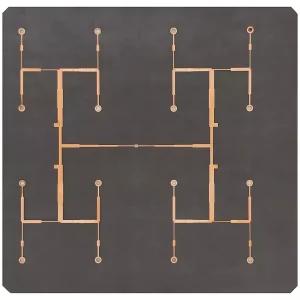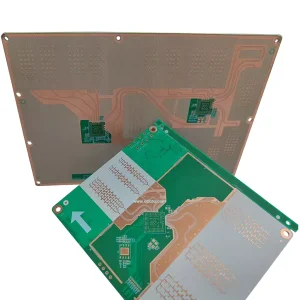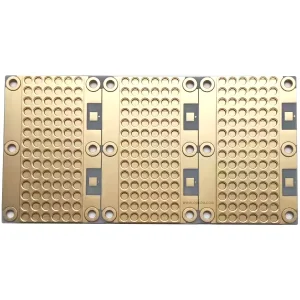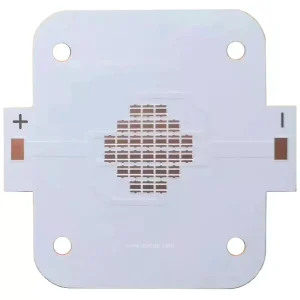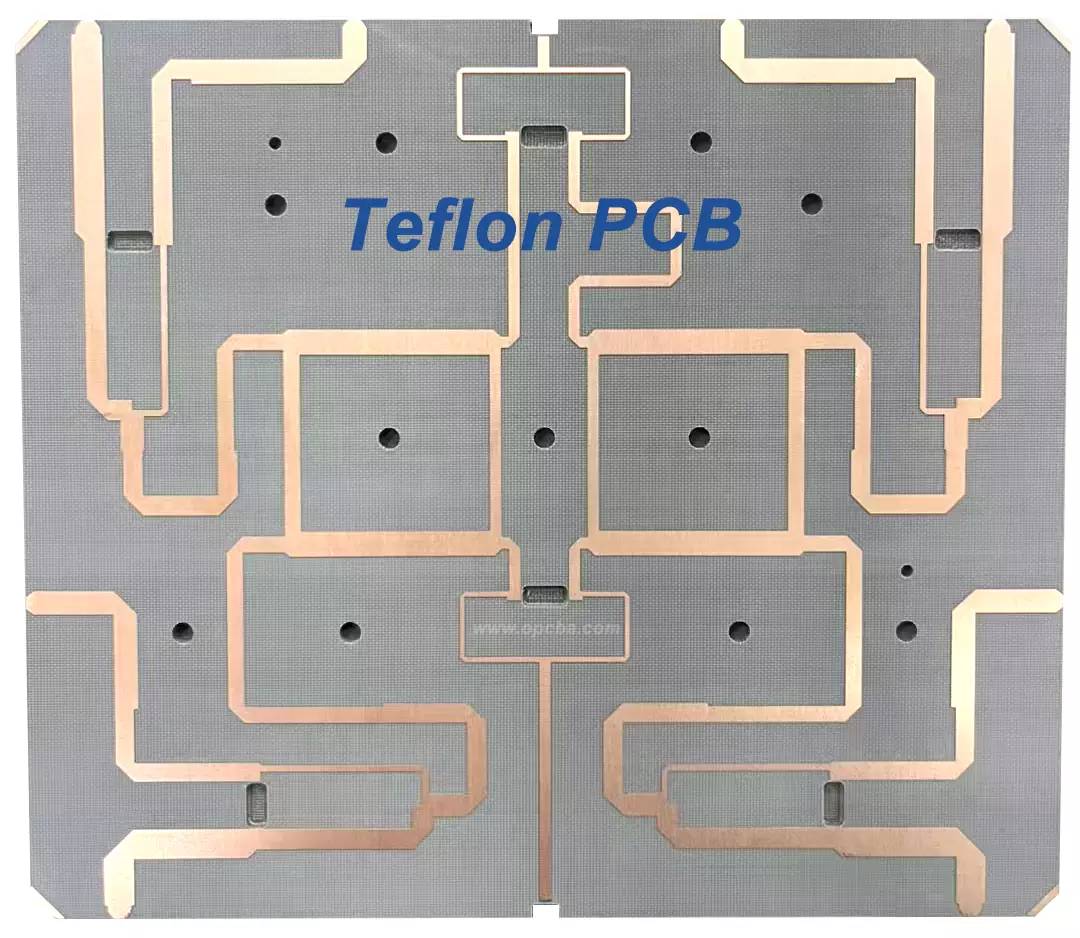
Teflon PCB | High-Frequency PTFE Printed Circuit Board
Standard FR-4 hits a wall around 1–2 GHz. Above that, signal loss climbs, impedance control gets sloppy, and your carefully designed RF circuit stops behaving. That’s why Teflon PCB exists.
Made from PTFE—the same material famous for its non-stick pans, but engineered here for microwave frequencies—Teflon PCB delivers a dielectric constant as low as 2.1 and a dissipation factor below 0.0005. Numbers that FR-4 can’t touch. At 10 GHz, a microstrip line on FR‑4 loses about 0.82 dB per inch; on PTFE it’s just 0.04 dB per inch. That’s the difference between a system that works and one that doesn’t.
At OPCBA, we specialize in precision custom Teflon PCB manufacturing, from prototype to high‑volume production, tailored to your exact frequency, layer count, and application requirements.
What Makes Teflon PCB Different
Ultra‑Low Signal Loss
PTFE’s stable low dielectric constant (Dk ≈ 2.0–2.5) and ultra‑low dissipation factor (Df < 0.001) keep signal attenuation to a minimum across frequencies all the way to millimeter‑wave ranges (>100 GHz). Your high‑frequency signals stay intact.
Extreme Thermal Stability
Your board won’t live in a lab. It’ll live in aircraft, satellites, or outdoor base stations. Teflon printed circuit board maintains its electrical properties from -200 ℃ to 260 ℃—a range that covers pretty much anywhere your product might end up.
Chemical & Weather Resistance
PTFE is chemically inert and hydrophobic. It absorbs virtually no moisture (unlike FR‑4), and it shrugs off fuels, solvents, and UV radiation. For outdoor, aerospace, or corrosive environments, this is non‑negotiable.
Built for High Frequencies
Optimized for RF, microwave, and high‑speed digital applications—5G, satellite communications, radar, and high‑speed data transmission. The low Dk also means wider traces for the same impedance, which eases manufacturability.
The Challenge: Teflon Is Hard to Work With
PTFE’s excellent properties come from the same molecular structure that makes it difficult to process. It’s soft. It’s chemically inert, so copper doesn’t want to stick. It expands with heat more than copper does.
Generic PCB factories often fail with Teflon PCB. They try to process it like FR‑4 and end up with delamination, rough hole walls, or boards that warp after lamination. We don’t.
How We Build Them: Specialized PTFE Manufacturing
Material Control: We use premium PTFE substrates from trusted suppliers—Rogers, Taconic, Isola—with full material certification and traceability. No surprises, no “equivalent” substitutions without your approval.
Surface Preparation: Before copper can bond to PTFE, the surface needs activation. We use plasma treatment to microscopically etch the surface, creating anchor points for strong, reliable copper adhesion that won’t delaminate.
Precision Drilling: Standard drills tear soft PTFE. We use laser drilling for critical vias, and specialized micro‑drills with optimized speeds and feeds for mechanical holes—clean, precise, no smearing.
Controlled Lamination: PTFE expands more than copper during heating. Without careful control, that mismatch warps boards and kills yields. Our presses follow precisely controlled heating and cooling cycles to bond layers without internal stress.
Quality Testing
Every board gets:
- 100% impedance testing (not sampling)
- AOI inspection
- Electrical continuity testing
- Dielectric performance verification
For aerospace and defense applications, we add thermal cycling and additional reliability testing as required.
Where Teflon PCBs Actually Get Used
Custom Teflon PCB Services
We offer fully customized PTFE PCB solutions:
- Layer count: from 2‑layer to 20+‑layer high‑frequency designs
- Impedance matching: custom to your frequency band and system requirements
- Material options: Rogers, Taconic, Isola, and other high‑frequency grades
- Volume flexibility: prototype to high‑volume production, with quick turnaround for prototypes
- Compliance: RoHS, REACH, and material traceability for aerospace/defense applications
- Hybrid constructions: combine PTFE layers with FR‑4 for cost‑sensitive sections
Why Work with OPCBA?
There are plenty of places that can build simple FR‑4 boards. Few specialize in the kind of precision Teflon PCB that goes into high‑frequency, mission‑critical applications.
We do. Our engineering team understands RF design and PTFE’s unique behavior. Our manufacturing process is set up specifically for high‑frequency materials. And our quality control is designed around the one thing that matters most: your board performs, consistently, at the frequencies you need.
Whether you need a high‑frequency RF Teflon PCB for 5G communication, a high‑temperature PTFE board for aerospace systems, or a custom high‑speed data transmission board, we’re here to help.
Got a design that needs a second pair of eyes? Trying to decide between Rogers and Taconic? Wondering if your stackup is optimized for your target frequency? Talk to us.
Contact OPCBA with your requirements, your stackup, or just your questions. We’ll get back to you with a free DFM review, a custom quote, or a straight answer from engineers who’ve built high‑frequency boards across dozens of industries. No pressure, just real talk.