AI servers continue to pursue greater speed, performance, and capacity. PCBs are seeing corresponding upgrades to their parameters and performance.
High-end servers typically require PCBs with high layer counts, high aspect ratios, high density, and high transmission speeds.
High-end servers demand stringent material standards. PCB manufacturers must hold rigorous certifications to qualify for prototyping and supply.
High-layer-count, high-density designs are core requirements. The industry has developed two key PCB solutions to meet them. Their technical characteristics and application requirements are outlined below.
High-Multilayer PCBs: Server platform upgrades are driving the development of PCBs towards higher layer counts. Internal and surface circuitry are designed.Drilling and in-hole plating are applied.These processes enable interlayer internal connections.
As server platforms advance, Intel’s Purley server platform uses 8–12 layer PCB motherboards, Whitley requires 12–14 layers, and Eagle Stream 16–20 layers.
Traditional server PCBs have up to 20 layers. AI server PCBs typically exceed 20 layers, leading to a far higher unit price.
HDI: HDI PCBs (High Density Interconnects) are high-density circuit boards that utilize micro-blind via technology. Internal and surface circuitry are designed.Drilling and in-hole plating are applied.These processes enable interlayer internal connections
They possess high reliability, high performance, and high-density interconnectivity, specifically: 1) Compact size, maintaining full functionality in a smaller, thinner form factor;
2) High connection density, accommodating more connections and components, achieving powerful functionality within a limited size;
3) Microvia design, enabling precise connections between layers;
4) Advanced stacking methods, utilizing space more efficiently.
The diversification and technological upgrading of end applications are driving the iteration of PCBs and core products towards “high performance, miniaturization, and flexibility”.
Below is an overview based on core fields and representative products:
Core Terminal Fields & Requirements
- Consumer Electronics:Smartphones, wearables, and similar devices pursue “miniaturization + high density”. They rely on high-end HDI for fine circuit and blind/buried via designs, while flexible printed circuits (FPC) meet the bending and lightweight needs of wearables.
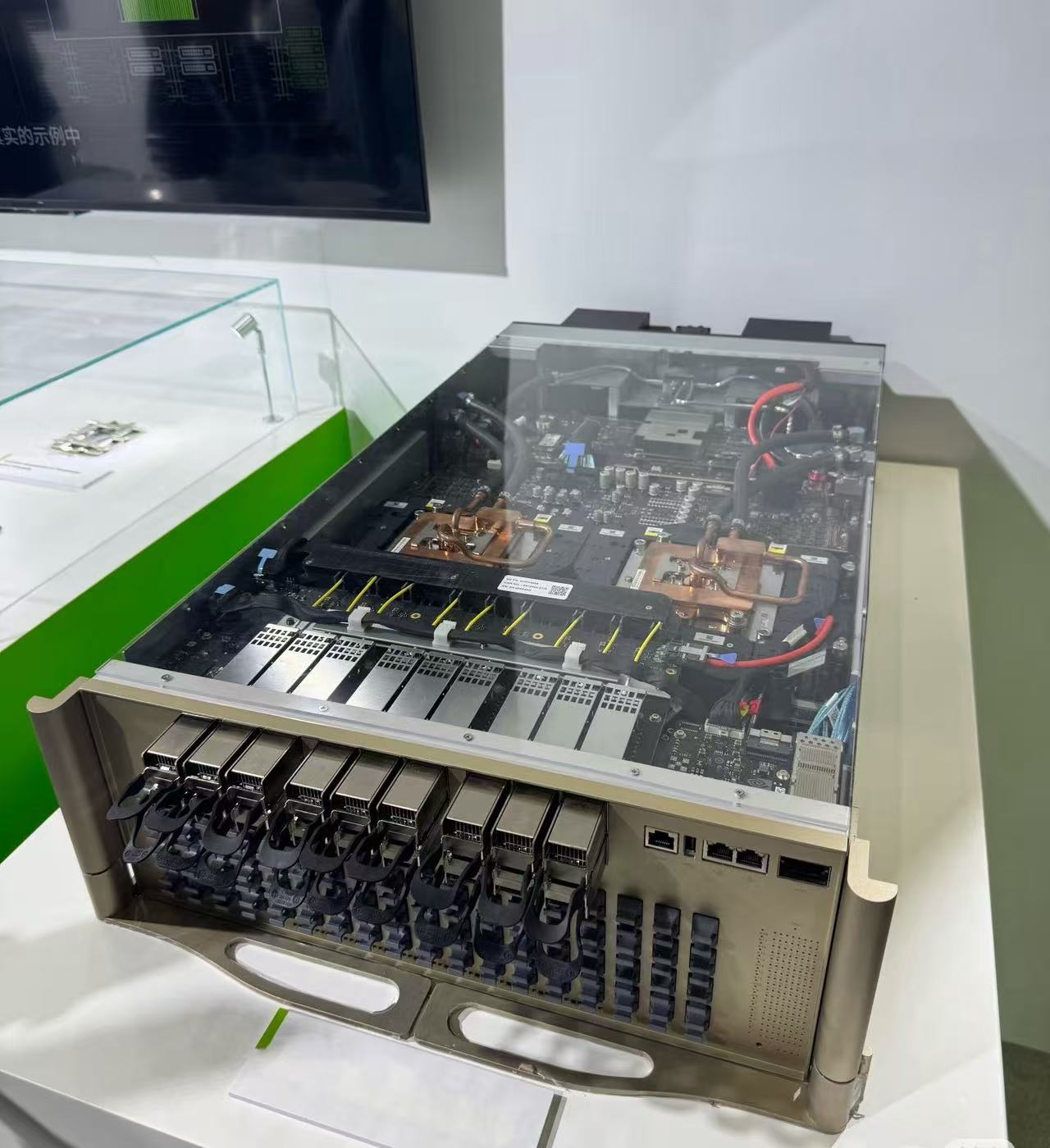
- Servers/Data Storage:AI servers and data centers have an urgent demand for “high computing power + high-speed interconnection”. They require high-layer PCBs (over 20 layers) and high-speed copper-clad laminates (CCL) to ensure stable transmission of multi-GPU and high-speed signals.
- Automotive Electronics: Autonomous driving and electrification drive PCBs towards “high reliability + complex layout”. Rigid-flex PCBs adapt to the space requirements of cockpit domain controllers, and metal-core PCBs support heat dissipation and vibration resistance for battery management systems.
AI PCB in Computing Power & Components
AI accelerator cards and servers rely on high-layer PCBs + high-speed CCL (low Dk/Df) to achieve multi-chip heterogeneous integration.
Data center switches and optical modules require high-frequency PCBs and HDI technology to ensure 400G/800G-class high-speed signal transmission.
High-density interconnection of SSD/DDR is supported by micro-via technology of high-end HDI.
Smart Terminals & Network Communications
Smart Terminals: AI PCs realize CPU/GPU/NPU heterogeneous integration through high-end HDI, while AR/VR devices use FPC to meet lightweight and form flexibility needs.
Network Communications: Millimeter-wave modules of 5G base stations adopt PTFE high-frequency PCBs to reduce signal attenuation, and optical communication equipment relies on high-speed CCL to ensure Tb-level bandwidth data transmission.
Medical Devices & Others
Medical devices (such as implantable pacemakers) use biocompatible FPC.
Joint control of industrial robots relies on rigid-flex PCBs to balance motion flexibility and circuit stability.
Value of Representative AI PCB Applications
- High-layer PCBs: Support high-computing-power interconnection of AI servers and data centers.
- High-end HDI: Promote high-density integration of consumer electronics and AI PCs.
- FPC: Adapt to the flexible form requirements of AR/VR and wearable devices.
- Rigid-flex PCBs: Solve complex spatial layout challenges in automobiles and robots.
The explosive growth of AI technology is reshaping the PCB industry’s technical landscape and market dynamics. As a core foundational component, AI PCB has become indispensable across key sectors: it meets consumer electronics’ miniaturization and high-density needs via high-end HDI and FPC, supports AI servers’ high-computing-power interconnection with high-layer designs (over 20 layers), and adapts to automotive and medical devices’ high-reliability requirements through rigid-flex PCBs and specialized materials. This validates that AI PCB’s evolution—focused on higher frequency, lower loss, and stronger reliability—drives terminal technology advancement.
Notably, the exponential AI computing power surge is spurring a new wave of server upgrades, rippling across the hardware ecosystem. Beyond AI PCB’s breakthroughs in layers, density, and transmission, memory, power supplies, and SSDs are also poised for dual gains in performance and value. Higher computing demands call for expanded memory bandwidth, more efficient power modules, and high-speed, large-capacity SSDs—all critical to unlocking AI’s full potential.
In the next article, we’ll dive into AI-driven server upgrade trends, unpacking how AI PCB, memory, power supplies, and SSDs enhance value. We’ll reveal the technical logic and market opportunities behind this hardware transformation, delivering actionable insights for industry stakeholders.