FR-4 is the workhorse of PCB substrates. It’s a thermosetting epoxy composite, reinforced with glass fiber. You’ll also hear it called “Flame Retardant Level 4”—that’s where the “FR-4” name comes from.
The “FR-4” label comes from NEMA (National Electrical Manufacturers Association) standards. Here, “FR” means “Flame Retardant,” and “4” is a performance grade. Don’t confuse “FR” with UL94 V-0 certification, though. It only means the resin will stop burning on its own once ignited.
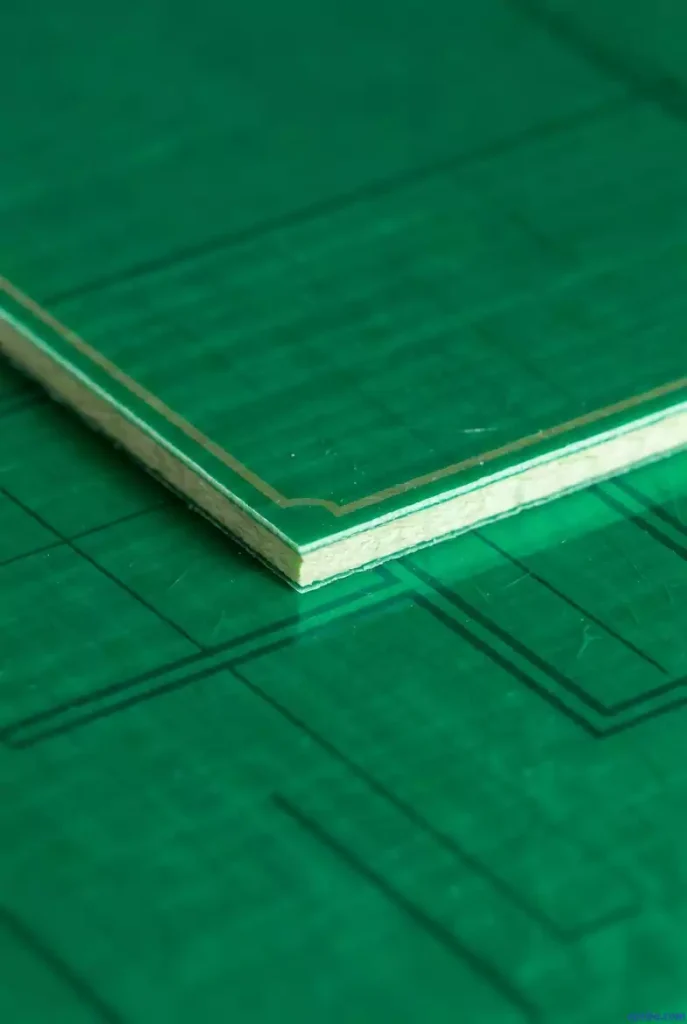
NEMA’s LI-1 standard defines FR-4 as an industrial thermoset laminate. Since 1999, it has aligned with the military spec MIL-I-24768. To call a board “FR-4,” it must hit strict mechanical, thermal, and flame-retardant targets. Other grades like FR-5 and FR-6 exist, but FR-4 is the industry default. Remember: FR-4 is a specific epoxy-glass laminate, not a “fireproof” guarantee. It got its official label in 1968, and quickly beat older materials on performance and cost. Today, it’s the global standard for PCB substrates.
FR-4 is versatile, but it’s not perfect for every job. Two big limitations stand out:
- High-frequency signals (>5GHz)
FR-4 has a high dielectric loss factor (Df ≈ 0.015–0.025). This means high-speed signals lose strength fast. For these designs, engineers usually pick pricier options like Rogers or polytetrafluoroethylene (PTFE) laminates to keep signals clear.
- High-power heat dissipation
FR-4 doesn’t conduct heat well (≈0.3 W/m·K). That’s bad for devices that run hot—like high-power LEDs, charging stations, or lasers. For these, ceramic or metal substrates (like aluminum) work better.