IC Substrate: The Critical PCB for Chip Packaging
Overview
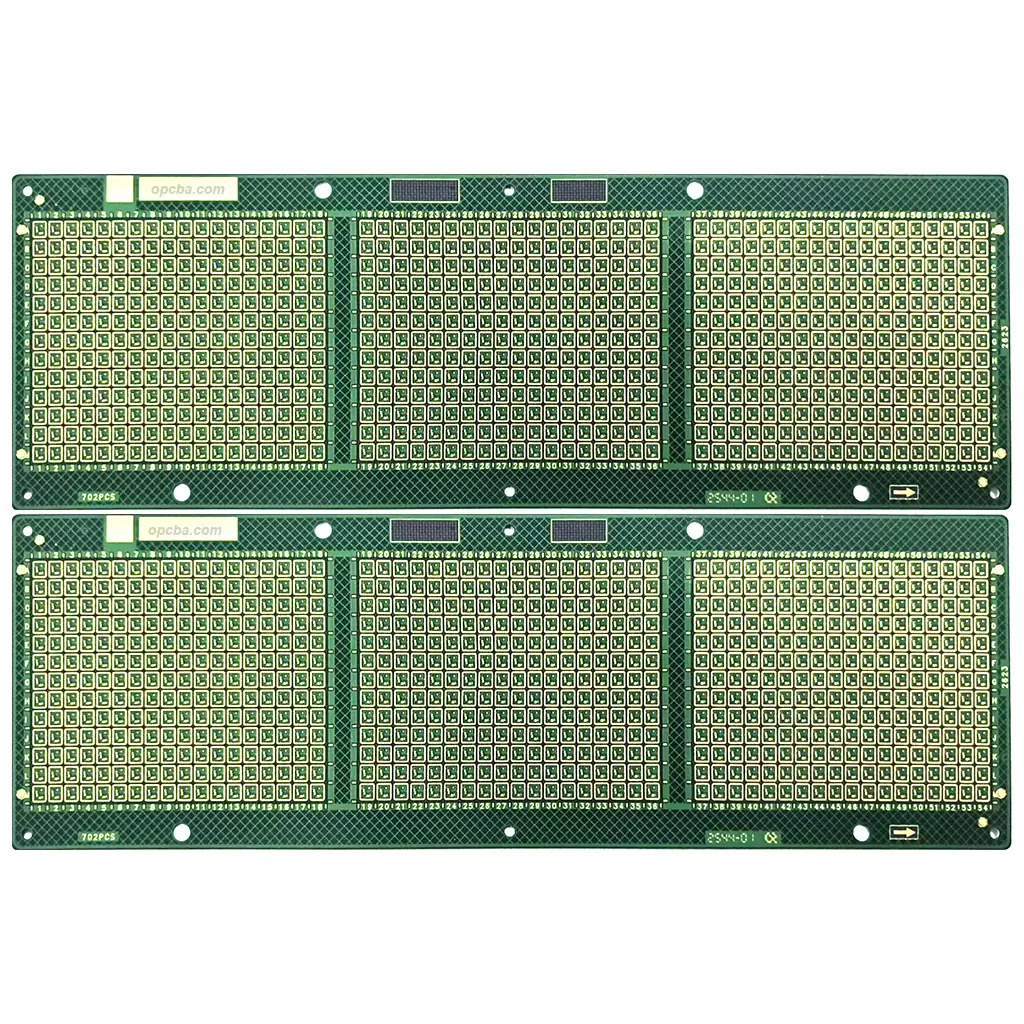
An IC substrate is a specialized PCB for microchip packaging.
It is also called an IC carrier board.
It connects the chip’s tiny connections to larger structures on conventional circuit boards.
These include motherboards and other standard PCBs.
The substrate also supports and reinforces the IC.
It provides a mechanical foundation to protect delicate circuits and components from damage.
Additionally, the substrate aids in heat dissipation.
This lets the chip run cooler and more efficiently.
Key Attributes of IC Substrate PCBs
IC substrate PCBs have unique traits that set them apart from standard PCBs.
These traits are essential for supporting advanced ICs.
They also help meet the performance demands of modern electronics.
Key attributes include:
-
Compact size
-
Ultra-thin profile
-
High-density wiring
-
Enhanced thermal management
Manufacturing Challenges
IC substrates are typically very thin.
Many are less than 0.2 mm thick.
This thinness makes them prone to warping during manufacturing.
To fix this, manufacturers use advanced lamination techniques.
They also ensure precise layer alignment and strict control of shrinkage and warpage.
Surface Finish Requirements
The surface finish of IC substrates is critical to performance.
Surfaces must be smooth and uniform.
This ensures reliable electrical connections and reduces oxidation risks.
Solder mask application must be precise.
It avoids defects that could harm substrate performance.
Industry Applications
IC substrates are fundamental to modern electronics.
They enable advanced ICs to integrate into compact, high-performance devices.
These carrier boards are critical across many industries.
They are used in consumer electronics, aerospace, and more.
They provide mechanical support, electrical routing, and thermal management.
As demand for smaller, more efficient electronics grows, high-quality PCB manufacturers play an increasingly vital role.