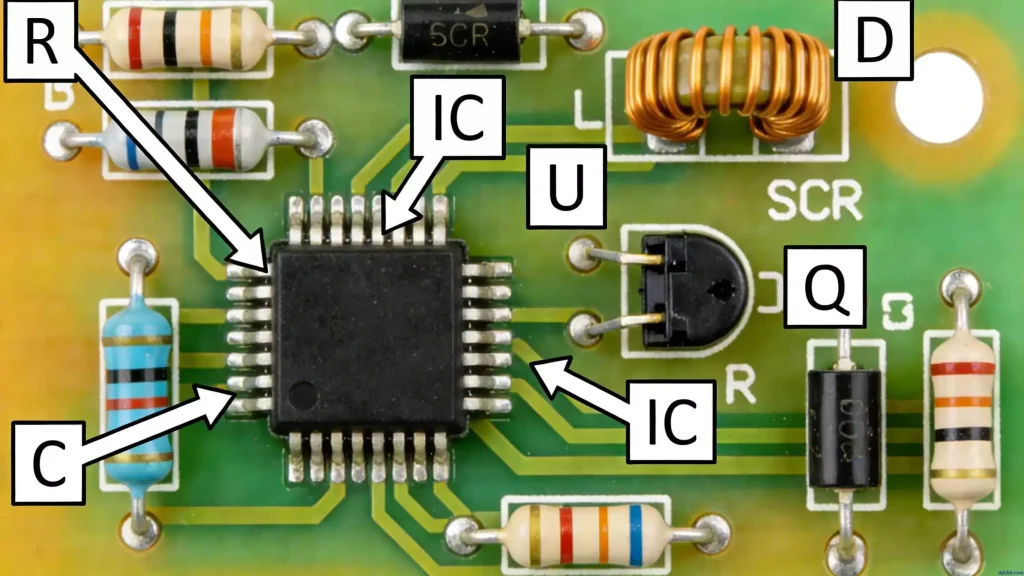
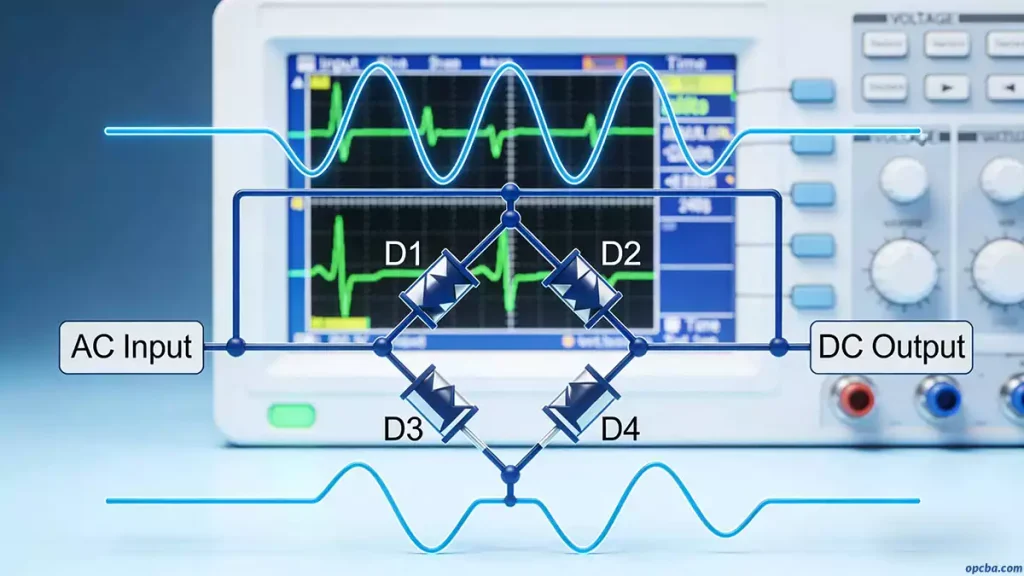
Microwave PCB Design (also known as RF PCB or high-frequency PCB design) focuses on creating printed circuit boards for wireless communication, wireless networks, satellite communication, defense, aviation, and mobile network applications. As technology advances, the demand for robust microwave PCB design continues to grow, expanding into critical sectors that demand uncompromising signal integrity and high-frequency performance. To produce reliable microwave PCBs, engineers rely on the design phase as the foundational step: it requires careful selection of high-frequency materials (based on target frequency, Tg, dielectric constant (Dk), and dissipation factor (DF) values) and expert PCB layout expertise to execute this complex task effectively. For a foundational overview of RF microwave PCBs—including core materials, design principles, and real-world use cases—explore our guide: What is RF Microwave PCB? Materials, Design & Real-World Applications
High-Frequency Material Selection for Microwave PCBs
For microwave PCB design, engineers must prioritize choosing the right substrate materials. Popular options include Rogers series, Taconic series, and other specialized high-frequency laminates, which offer stable electrical properties ideal for microwave applications. Discover why Rogers laminates stand out as the top choice for high-performance microwave designs in our deep dive: Rogers PCB laminate options. Additionally, engineers can customize materials to meet their product’s specific frequency, Dk, DF, and thermal requirements, ensuring alignment with their design goals.
Core Challenges in Microwave PCB Design
Most PCB layouts integrating RF or microwave circuits present unique design challenges, rooted in the sensitivity of high-frequency signals:
- Signal Sensitivity to Noise: Microwave signals easily suffer from noise, ringing, and signal reflection—issues that engineers must mitigate with meticulous layout practices.
- Strict Impedance Matching: Unlike digital signals (which tolerate minor variations even at high speeds), RF and microwave signals have extremely tight tolerance thresholds, especially as frequencies increase. Impedance mismatches directly degrade signal quality and performance.
- Minimizing Return Loss: Return loss stems from signal reflection or ringing, driven by the current return path. At ultra-high microwave frequencies, return signals follow inductive paths, and a solid ground plane beneath signal traces can effectively support these paths to reduce loss.
- Managing Crosstalk: Crosstalk poses a major challenge in high-frequency design, as it scales with the edge rate of active signals. Forward crosstalk (toward the receiver) and reverse crosstalk (toward the source) arise from electromagnetic coupling; reverse crosstalk combines inductive and capacitive coupling, while forward crosstalk is their difference.
Mitigating Crosstalk in Microwave PCB Design
Engineers can use several practical strategies to reduce crosstalk in microwave PCB design:
- Increase Trace Spacing: Route high-speed signals as far apart as possible; ideally, center-to-center spacing should reach at least four times the width of the signal traces, and engineers should keep parallel trace segments to a minimum.
- Optimize Dielectric & Reference Planes: Engineers can reduce the dielectric distance between signal traces and their reference ground planes, or implement coplanar structures with inserted ground planes between traces to isolate signals.
- Proper Termination: Terminating lines at their characteristic impedance can cut crosstalk by up to 50%, further stabilizing signal integrity.
Impedance Control & Laminate Considerations for Microwave PCBs
Engineers only need to control impedance in microwave PCB design when the total trace length from driver to receiver exceeds 1/16 of the signal wavelength (known as the critical length). For RF circuits, engineers must prioritize laminate characteristics:
- Dissipation Factor (DF): FR4 laminates carry a higher DF than specialized high-frequency materials (like Rogers or Nelco), leading to significantly higher insertion loss—losses that worsen as frequency increases.
- Dielectric Constant (Dk) Stability: FR4’s Dk can vary by up to 10%, which disrupts impedance consistency. High-frequency laminates offer far more stable Dk values across frequency ranges, ensuring reliable signal performance.
Final Thoughts on Microwave PCB Design
Microwave PCB design demands high complexity and meticulous attention to detail, requiring deep expertise in high-frequency materials, signal integrity, and layout best practices. Every factor—from material selection to trace routing—impacts the final performance of the PCB, making precision and experience essential.
With over 15 years of specialized experience in manufacturing microwave PCBs, opcba.com delivers reliable, high-quality production for your microwave PCB design projects. If you’re ready to bring your microwave PCB design to life, contact our team today for personalized support and manufacturing solutions.