First developed by DuPont’s Roy Plunkett in 1936, PTFE has found renewed purpose in an unexpected place: 5G infrastructure. As networks push into millimeter-wave frequencies, this decades-old fluoropolymer has become indispensable for one simple reason—signal integrity. 5G’s shift to higher bands demands materials that don’t just “work” at high frequencies, but maintain consistency when the going gets tough. For data centers, cell towers, and consumer devices alike, PTFE is the material that makes 5G’s ultra-fast, low-latency promise a reality.
PTFE: Solving 5G’s Low-Dielectric Material Challenge
5G wireless communication rises and falls on high-frequency transmission. This shift unlocks more frequency band resources, but it also creates a new set of material hurdles. Millimeter-wave signals lose strength fast—even small amounts of dielectric loss can turn a usable signal into static. That’s why 5G design teams fixate on low dielectric constant (Dk) and low dielectric loss (Df) materials.
5G typically targets a Dk range of 2.8 to 3.2 for critical components like phone antennas, circuit boards, and cover plates. The usual suspects here are PTFE, PPO, LCP, and PI (or MPI)—and in my experience, PTFE is the clear front-runner for applications where signal clarity can’t be compromised. As one of the organic materials with the lowest Dk available, it doesn’t just meet 5G’s requirements; it sets the bar for consistency across varying frequencies.
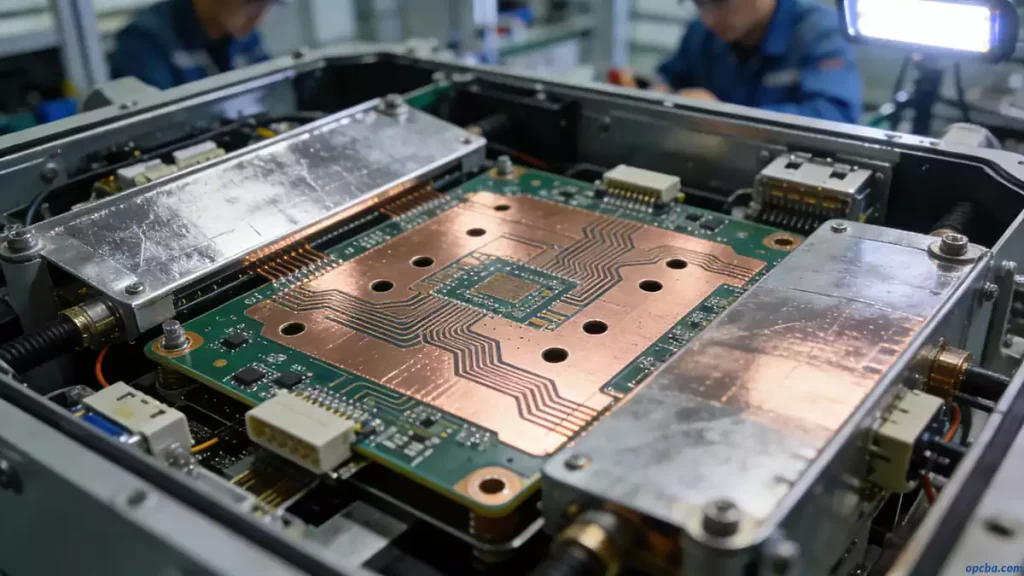
PTFE PCB: The Backbone of 5G Printed Circuit Boards
The jump from 4G to 5G wasn’t just a speed upgrade—it was a material revolution for PCBs. 4G relied on epoxy resin glass cloth copper clad laminates, which worked fine for its lower frequencies. But 5G’s micron and millimeter wave operations demand far less dielectric loss than 4G ever required.
I’ve seen this play out firsthand with a major telecom OEM upgrading their 5G AAUs (Active Antenna Units) for dense urban coverage. Their early prototypes used high-performance FR-4, but in real-world testing, the signal degradation in the millimeter wave band was unworkable—coverage gaps popped up in busy downtown areas, and handoffs between cells were spotty. Switching to PTFE-based copper clad laminates fixed the core issue: PTFE’s dielectric loss stays low enough at 5G frequencies to keep signals intact, even in the most crowded RF environments. It’s not about hitting a precise number; it’s about maintaining performance when every decibel counts.
PTFE Insulation: Making 5G RF Cables Reliable
Coaxial cables are the unsung heroes of 5G base station infrastructure, and they face some of the harshest conditions in telecom. Mounted on towers, exposed to rain, snow, and extreme temperature swings, these cables need to maintain consistent impedance and minimal attenuation—especially at millimeter-wave frequencies.
Other insulating materials start to fail here. They absorb moisture, which shifts impedance and degrades signals. They soften or crack at extreme temperatures, leading to costly maintenance. PTFE insulation holds up where others don’t: it absorbs virtually no water, maintains its dielectric properties from -55°C to 260°C, and introduces so little signal loss at mmWave frequencies that it’s become the default choice for 5G coaxial cables. Semi-flexible coaxial cables with PTFE insulation have largely replaced corrugated coaxial cables in 5G base station builds, and for good reason—installers and network engineers alike swear by their reliability.
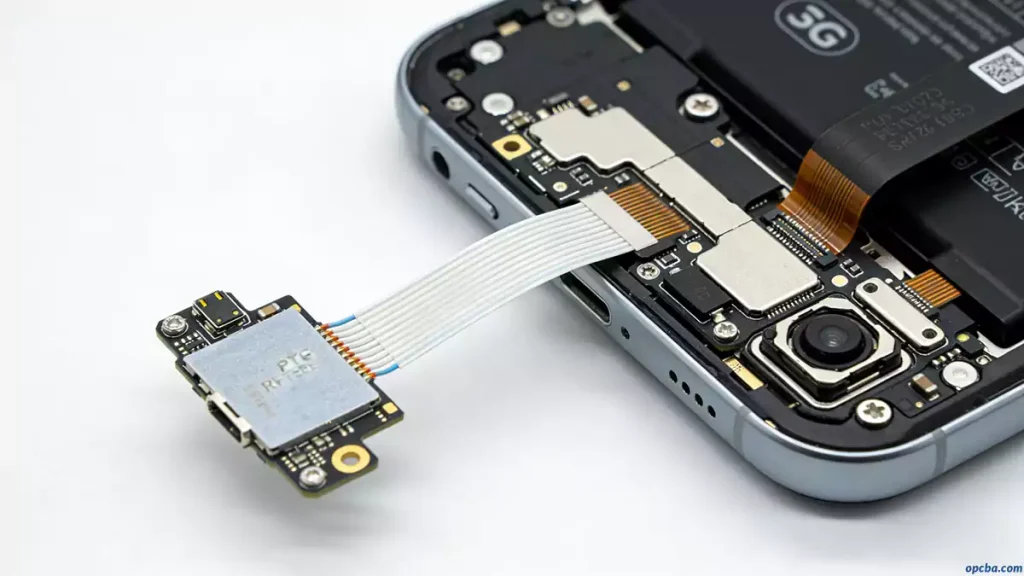
PTFE Components: Optimizing 5G Base Station Filters
Filters are the gatekeepers of 5G communication, sorting through frequencies to keep signals clean and interference-free. Most major telecom equipment makers still rely on metal cavity filters for base station RRUs (Remote Radio Units) and AAUs—they’re mature, cost-effective, and easy to scale. But 5G has forced these filters to shrink, add more internal structures, and operate at higher frequencies than ever before.
Most filter designers I work with will tell you: PTFE is non-negotiable for these miniaturized 5G filters. It’s used for support, insulation, and isolation inside the metal cavity, and the 5G era has upped the usage significantly compared to 4G. Without PTFE’s stability, these compact filters would suffer from cross-talk or dielectric breakdown under high-frequency operation. It’s a small component, but it makes a huge difference in whether a filter performs as designed in the field.
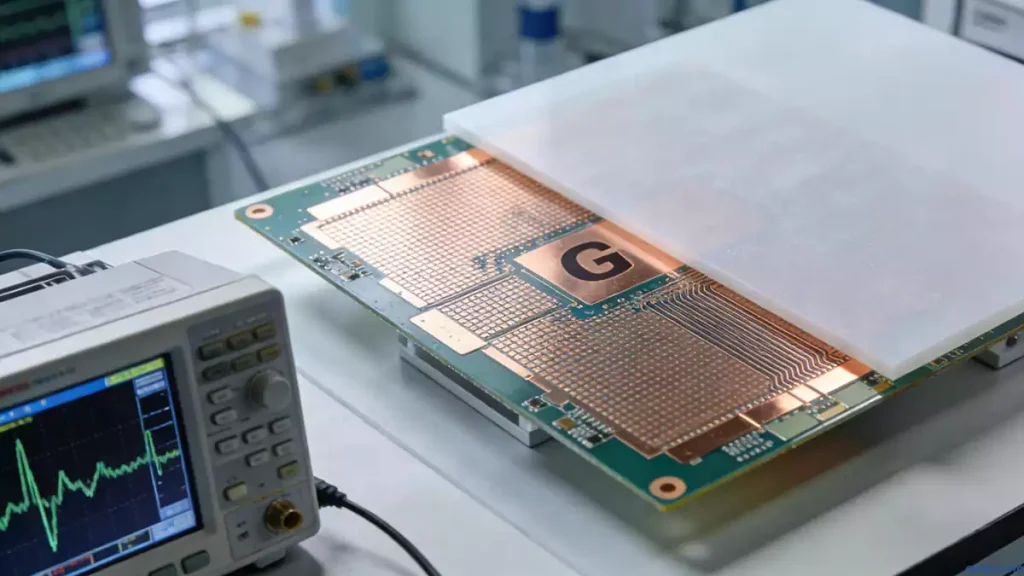
PTFE in 5G Smartphones: Tiny Fixes for Big Performance Gains
5G smartphones face the same signal integrity challenges as base stations—just on a much smaller scale. Flagship 5G phones pack RF and antenna modules into tight spaces, and every millimeter counts when it comes to minimizing signal loss.
A top smartphone brand ran into this exact problem during development a few years back. Their early 5G flagship had inconsistent data speeds and occasional dropped calls, especially in high-interference areas like stadiums or busy airports. After redesigning the RF motherboard with PTFE laminates and swapping in PTFE fine RF coaxial cables for signal transmission, the team saw a marked improvement in real-world 5G reliability. Users stopped complaining about spotty service, and the phone’s performance in crowded environments matched its marketing claims. PTFE isn’t the star of the smartphone spec sheet, but it’s the quiet enabler that makes 5G work in your pocket.
If you’re working through similar 5G signal integrity challenges, the team at opcba.com has hands-on experience with custom PTFE PCB solutions—reach out and tap into that expertise.