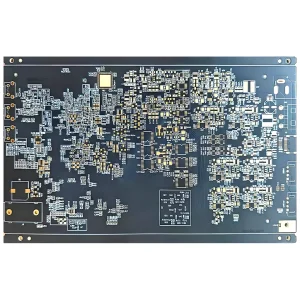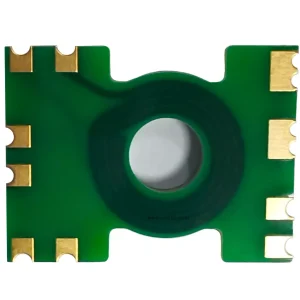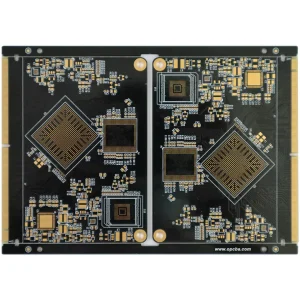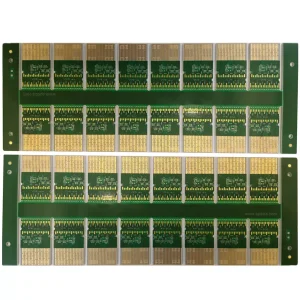
Product overview
A copper PCB (copper-based circuit board) is a metal-based printed circuit board built on high-purity copper or copper alloy. Its thermal conductivity reaches 380 to 400 W/(m·K), above that of aluminum-based PCBs and standard FR4 boards, and it combines this with strong current-carrying capacity and structural stability. It is therefore a common cooling solution for high-power, high-heat electronic devices in industrial, automotive, and new energy applications.
Composition structure
A copper PCB consists of three core layers. Together they balance heat dissipation and electrical performance.
- Copper Base: The core heat dissipation and support layer, made from oxygen-free copper or copper alloy. This material provides high thermal conductivity and mechanical strength.
- Insulation Layer: Sits between the copper base and the circuit layer and uses ceramic-filled epoxy materials. It provides high electrical insulation and efficient heat conduction, preventing electrical breakdown while transferring heat away from components.
- Copper Foil Circuit Layer: Enables circuit conduction, with 2oz to 3oz copper as the mainstream specification. It supports large current transmission and contributes to overall heat dissipation.
Design considerations
Four factors matter most when designing a copper PCB:
- Heat Dissipation Optimization: Match the copper base specification and board thickness to the device’s power consumption. Thicken the copper foil or add heat dissipation holes where more heat has to move. Avoid grouping heat-generating devices in one area, which creates hotspots.
- Insulation Layer Matching: In high-power designs, prioritize high thermal conductivity insulation layers. The insulation layer’s thermal expansion coefficient should match that of copper, which prevents delamination and cracking during thermal cycling.
- Structural Reliability: The structural strength of the copper base can simplify installation design. Plan hole positions and stress distribution carefully to avoid deformation and solder joint failure from thermal expansion.
- Signal Integrity: In high-frequency designs, control line width and insulation layer thickness closely, and apply impedance matching. Both reduce signal reflection and crosstalk for stable transmission.
Material selection
Material choices directly affect how a copper PCB performs.
- Copper Base: Oxygen-free copper gives the highest heat dissipation, so it suits the most demanding designs. Copper alloys balance strength and processability, and remain the mainstream choice for most applications.
- Insulation Layer: Ceramic-filled materials reach a thermal conductivity of 2.0 to 5.0 W/(m·K) and suit high-power requirements. Epoxy materials cost less and are used in medium and low-power designs.
- Copper Foil and Surface Treatment: For high-current applications, select 2oz or thicker copper foil. For surface treatment, ENIG and immersion tin balance solderability and oxidation resistance.
Application areas
Copper PCBs are used in demanding environments across several industries:
- Industrial Control: Frequency converters, servo drives, and high-power modules rely on it for stable operation under high-load conditions.
- Automotive Electronics: Motor controllers and BMS systems, where it withstands the temperature and vibration of vehicle environments.
- New Energy: Photovoltaic inverters, energy storage systems, and charging stations, where it improves the conversion efficiency of power devices.
- Aerospace: Radar and navigation equipment, where it provides reliable heat dissipation and electrical performance in extreme conditions.