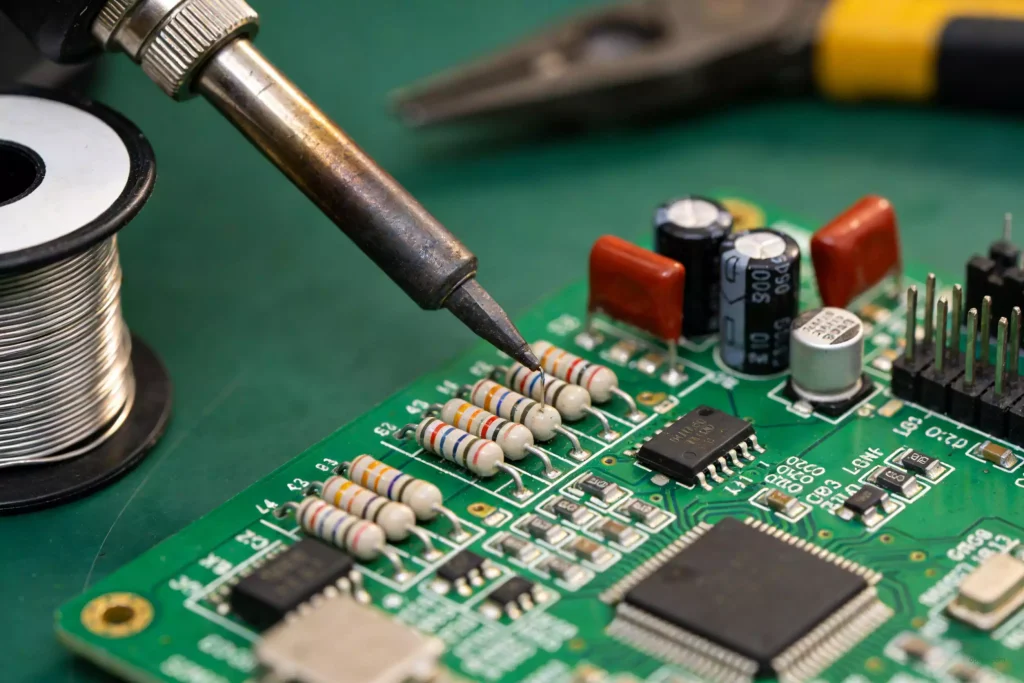
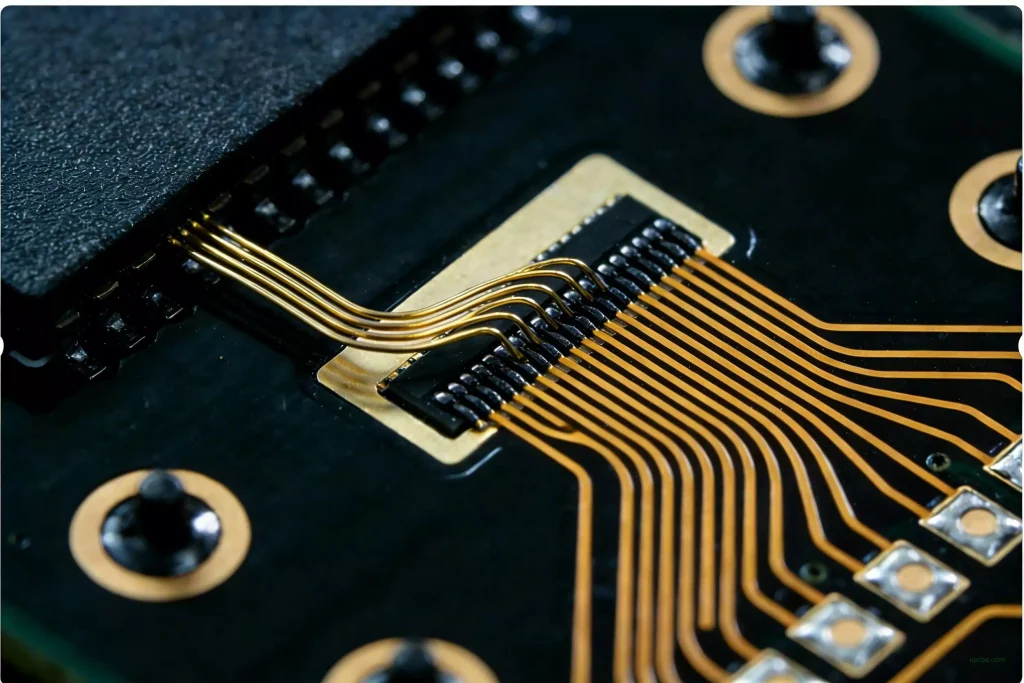
If you work with HDI PCBs, you’ve probably come across resin plug holes more times than you can count. But here’s something I’ve noticed: a lot of engineers just follow the process without really understanding why we do it, or when it’s actually necessary. This isn’t one of those theory-heavy guides—just practical insights from someone who’s dealt with resin plug holes in countless HDI projects.
First, the basics. Resin plugging is exactly what it sounds like—using conductive or non-conductive resin (applied via printing or other methods) to fill mechanical through-holes, blind holes, or buried holes. The goal? Seal those holes for better performance and manufacturability. Most of the time, we’re working with apertures between 0.1–0.8mm and board thicknesses from 0.4–8.0mm. And there are a few variations: buried hole plugging, blind hole plugging, through-hole plugging, plus insulating vs. conductive resin options.
So Why Bother with Resin Plug Holes?
I get it—adding a resin plug step increases time and cost. So it’s fair to ask: is it really necessary? Based on real-world experience, here’s why we do it:
1. Prepares for Lamination
When we fill blind or buried holes with resin, we can vacuum-laminate the board afterward without issues. No gaps, no uneven surfaces—just a smooth base for the next layers.
2. Prevents Surface Depressions
Ever had a board with dents where the lamination glue didn’t fill the holes properly? Resin plugging fixes that. And this isn’t just cosmetic—those depressions can mess up fine line routing and characteristic impedance control. In HDI, that’s a dealbreaker.
3. Maximizes 3D Space
HDI is all about packing more into less space. Resin plugging lets us use hole-stacking technology to connect layers arbitrarily—something you just can’t do with unfilled holes.
4. Enables Denser Routing
By placing components directly on top of plugged holes (patch-on-hole designs), we free up more space for traces. When every millimeter counts, this is a game-changer.
5. Protects the Holes
Resin seals the holes, keeping impurities out and preventing corrosive stuff from getting into the conduction holes. Trust me—this saves you from costly rework down the line.
Resin Plugging: When to Use It, When to Skip It
Resin plugging isn’t always the answer. Here’s when I use it—and when I skip it to save cost.
You probably need resin plugging if:
- Your design requires hole plugging, or you can’t have “red holes” (exposed copper in the hole), and there’s a pad around the hole (hole-in-disk).
- The hole sits on a BGA solder joint. This is non-negotiable in most HDI projects. I’ve seen BGA joints fail because someone skipped resin plugging here—the solder seeps into the hole, causing poor connections.
- You’re using patch-on-hole designs and need a flat surface for soldering or component placement.
The downside (no sugarcoating):
Resin plugging isn’t cheap. The production process is more complex, the equipment is expensive, and that translates to a higher unit price for your boards. It’s a premium process, so use it when necessary—not just because it sounds “advanced.”
One thing that trips people up: what counts as a hole-in-disk? Here’s the rule of thumb—any hole under a BGA is usually considered a hole-in-disk and needs resin plugging. We’ll even plate a cap over the resin to make soldering easier. Outside of BGA, if your design requires all holes to be plugged (like for patch-on-hole), those also count as hole-in-disk and need resin.
Where You’ll Actually See Resin Plug Holes (Real-World Applications)
Resin plugging is practically a staple in HDI manufacturing, especially for boards with thin dielectric layers. Based on my experience, here’s where it shows up most often:
- Inner-Layer HDI Designs: HDI boards with buried blind holes often use thin dielectric layers in the middle. To make sure those layers bond properly, we add an inner-layer resin plugging step.
- Thick Blind Hole Layers: If a blind hole’s layer thickness exceeds 0.5mm, the lamination glue can’t fill it completely. Resin plugging fixes this, preventing “no-copper” issues in the blind holes during subsequent processes.
- Stacked HDI Structures: As resin plugging technology improves (and we’ve finally figured out how to fix stubborn bubbles), it’s being used more for blind hole plugging and inner-layer buried hole VIP processes in stacked HDIs. (If you’re working with multilayer boards, our guide on PCB Layers Explained: Types, Functions & Differences breaks down how each layer works in these stacked structures.)
Beyond HDI, you’ll find resin plug holes in blind/buried hole PCBs and thick copper PCBs. These boards show up everywhere: communication devices, military gear, aerospace systems, power supplies, and networking equipment—anywhere reliability and density matter.
A Critical IPC-650 Note (Don’t Miss This!)
Here’s a gotcha I’ve seen trip up even experienced engineers: IPC-650 doesn’t specify copper thickness requirements for resin plug holes.
Sounds minor? Here’s what that means in practice: if the copper plating over the resin is too thin, there’s a real risk the laser drill will punch through it during inner-layer processing. And here’s the scary part—you won’t catch it during electrical testing. I’ve had to rework boards because of this, so always double-check your plating thickness here. Don’t learn this one the hard way.

Quick Recap (Engineer-to-Engineer)
If you’re short on time, here’s what actually matters:
- Resin plug holes seal holes for better lamination, surface flatness, and density—critical for HDI.
- Use them for BGA holes, hole-in-disk designs, and when you need patch-on-hole routing.
- They’re expensive, so don’t overuse them—only when necessary.
- Watch for thin copper over resin—IPC-650 doesn’t specify it, but it’s a real risk.
Still on the fence about whether your HDI design needs resin plug holes? Ask yourself this: Will unfilled holes cause lamination issues, signal problems, or soldering failures? If yes, go with resin. If not, you can probably skip it and save cost.
Once your design is finalized, the next step is assembly. Our SMT Surface Mount Technology: The Ultimate Comprehensive Guide covers pick-and-place, reflow, and inspection processes for HDI boards.
And if you’re stuck? We’ve all been there. Happy to weigh in if you want a second pair of eyes on your design.