Designing high-frequency automotive radar or phased-array systems? When elevated temperatures threaten material stability and signal integrity, RO4350B PCB fabrication laminate stands out as a proven hydrocarbon ceramic solution. Built for superior oxidation resistance, it outperforms many competing hydrocarbon materials in harsh thermal environments, while sharing nearly identical electrical and mechanical properties with Rogers RO4835, a long-trusted option for engineers.
As part of the RO4000 hydrocarbon ceramic laminate family, both RO4350B and RO4835 are engineered for high-frequency performance and cost-efficient fabrication. Unlike specialized microwave materials, they can be processed using standard FR-4 epoxy/glass workflows, making them accessible to mainstream manufacturers without sacrificing low-loss performance.
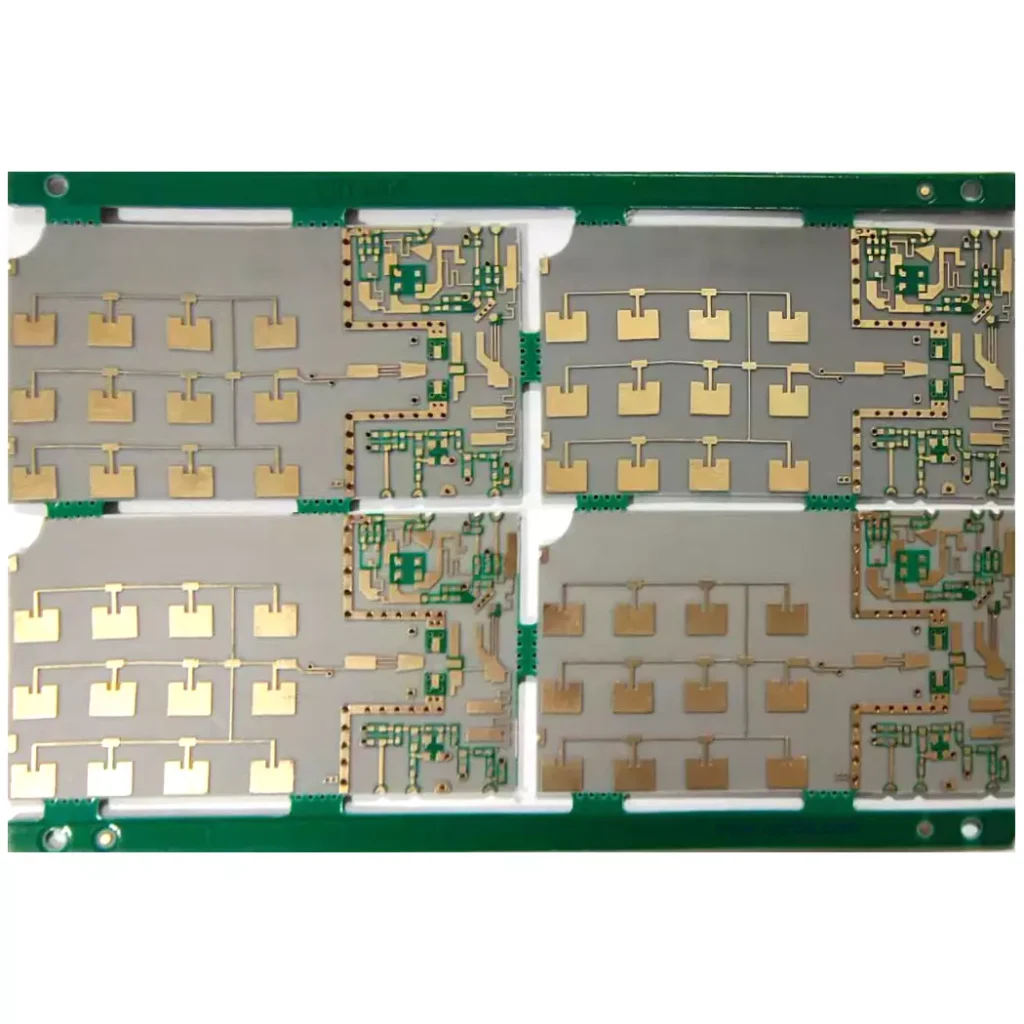
Core Features & Engineering Benefits of Rogers 4350B
Enhanced Oxidation Resistance
Rogers 4350B delivers significantly improved oxidation resistance compared to typical thermoset microwave materials. This stability makes it ideal for performance-sensitive, high-volume applications where long-term reliability in elevated temperatures is critical.
Low-Loss Signal Performance
With excellent electrical properties, RO4350B supports higher operating frequencies without signal degradation. This matters for RF components, power amplifiers, and point-to-point microwave links. Its low loss profile also aligns perfectly with automotive radar and sensor designs, where signal clarity directly impacts functional safety.
Tight Dielectric Constant Tolerance
Precise control over the dielectric constant ensures consistent impedance transmission lines, a non-negotiable requirement for high-frequency circuits where even small variations can disrupt signal integrity.
Lead-Free Process Compatibility
Fully compatible with lead-free manufacturing processes, RO4350B avoids blistering or delamination during reflow, simplifying production and meeting global environmental compliance standards.
Low Thermal Expansion Stability
A low Z-axis thermal expansion coefficient delivers reliable plated through holes (PTHs), while minimal in-plane expansion keeps circuits stable across the full range of processing temperatures, reducing stress on components and traces to extend product lifespan.
CAF Resistance
Built-in resistance to conductive anodic filament (CAF) formation prevents long-term electrical failures, boosting the reliability of high-density, high-frequency designs.
Typical High-Frequency Applications
Rogers 4350B and its sibling RO4835 are widely deployed in mission-critical high-frequency applications, including:
- Automotive radar and advanced driver assistance systems (ADAS)
- Point-to-point microwave communication links
- High-power RF amplifiers
- Phased-array radar systems
- Compact RF components for aerospace and industrial use
- Translating these applications into a reliable multilayer board starts with the right stack-up. Our high-frequency PCB stack-up design guide covers the Rogers/FR-4 hybrid approach in practice.
Expert Support for Rogers 4350B Projects
Choosing the right high-frequency laminate means balancing performance, cost, and manufacturability. At OPCBA, we specialize in Rogers 4350B and RO4835 PCB design and fabrication, with deep experience optimizing these materials for automotive, aerospace, and RF applications. If you’re sourcing Rogers 4350B for your project, reach out to our team for detailed material specs, fabrication guidelines, or custom quotes. Visit our RO4350B PCB page to start the conversation.