PCB panel design is the final step in PCB design work; while indispensable, it is often overlooked. Designers usually focus on core elements like product functions, performance, and customer needs. They think panelization design has low technical difficulty. Yet it directly influences production efficiency and manufacturing costs. A good plan supports later processes; a bad one brings hidden risks.
Hence, its importance should never be underestimated.
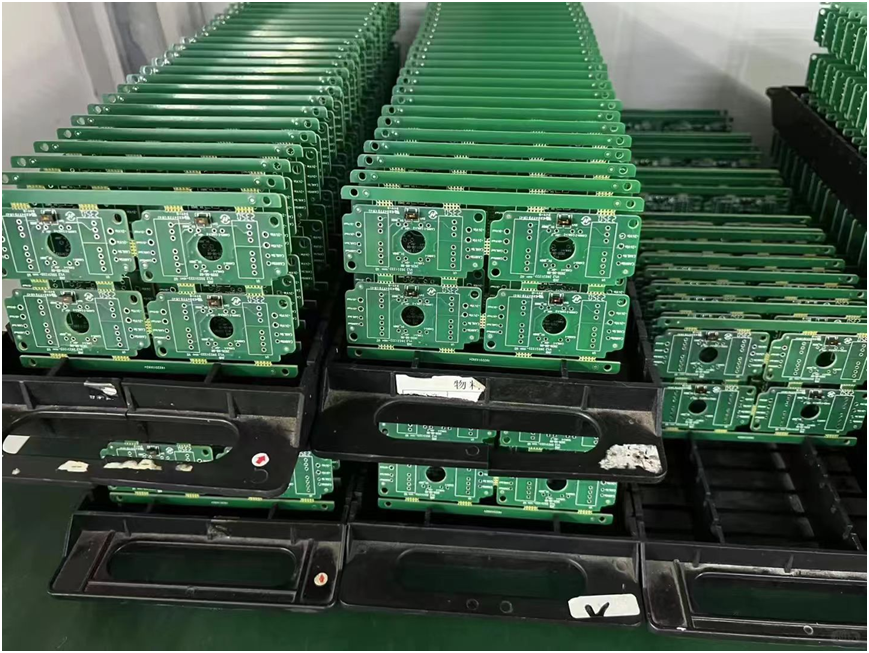
In recent years, we have adjusted our manufacturing strategy and shifted PCBA production from OEM to in-house manufacturing. This has greatly changed our production process.
As we adapted to the new model, panelization design issues gradually surfaced, and our team gained a deeper understanding of panelization.
This transition brought two key effects. First, we can now consider more factors during design and optimize the scheme accordingly. Second, more variables often make it hard for us to finalize a design.
Moreover, as we expand our evaluation criteria, engineers are more likely to disagree. The same single board may end up with several feasible panelization schemes, each supported by valid reasoning.
1. Concept, Significance and Methods of PCB Panel Board Design
1.1 Concept and Significance of Panelization Design
PCB panel board combines multiple identical or different single boards into one large panel.This method helps improve production efficiency and lower costs.
In the early days, panelization was primarily aimed at ensuring basic production feasibility. With advancements in design capabilities and processing technologies, designs that are unmanufacturable are now extremely rare. Modern PCB panelization design is essentially a manufacturing optimization strategy that achieves cost reduction and efficiency improvement through rational panel layout.
The functions of PCB panel board design include:
- Meeting production requirements: Assembling small-sized or irregular-shaped single boards into panels to meet mass production standards and facilitate volume manufacturing.
- Improving production efficiency: Enhancing SMT placement efficiency, balancing the capacity of printing, placement, soldering and other processes, increasing equipment utilization rate, and thereby boosting overall production efficiency.
- Reducing procurement costs: Especially for irregular-shaped boards, rational panelization can minimize PCB area and lower procurement costs.
- Reducing profile types: Through panelization design, single boards with different profile sizes can be integrated to reduce the number of profile types. Fewer profile types contribute to cost reduction and efficiency improvement in various processes such as production, fixture fabrication, packaging, and workstation transfer.
1.2 Main Panelization Methods and Their Characteristics
The main connection methods for PCB panelization include V-CUT, castellated holes (breakaway tabs), and bridging. Our company primarily adopts V-CUT and castellated holes for panelization design, with bridging only used in individual cases.
- V-CUT: Suitable for connecting panels with regular shapes and straight edges (see Figures 1 and 2 below).
- Castellated holes: Applied in scenarios where V-CUT is not feasible, such as irregular edges or curved connections (see Figures 1 and 2 below).
- Bridging: Mostly used for single boards with half-hole designs. Similar to castellated holes, but without drilled holes in the connecting sections (see Figures 3 and 4 below).
Each of these three connection methods has its own advantages and disadvantages. During the design phase, it is necessary to comprehensively consider factors such as PCB characteristics (component layout, stress sensitivity, etc.), PCB profile, depaneling methods, and production capacity to select the most appropriate panelization connection method.
Key Factors Influencing Panelization Design Schemes
The deepened understanding of panelization design is reflected in the recognition that it is not only constrained by internal design specifications but also closely related to external factors such as production equipment and process characteristics. The main influencing factors are as follows:
Product Stage and Panelization Design
The stage of a product directly determines the panelization design strategy.
- R&D stage: Products have numerous uncertainties and a high probability of design changes. Panelization design should prioritize meeting equipment requirements, with the number of single boards per panel kept relatively small.
- Small-batch production stage: The panelization scheme from the R&D stage can be continued, but an evaluation should be conducted from the perspectives of efficiency and cost to determine whether there is room and necessity for optimization. The design and quantity of corresponding fixtures and jigs should be based on the evaluation results.
- Mass production stage: Panelization design focuses on optimizing production efficiency and costs, aiming to achieve the optimal overall solution.
Soldering Process and Panelization Design
The soldering process is one of the key factors determining the panelization design scheme, as different soldering processes impose distinct requirements on panelization design.
In summary, PCB panelization design is a crucial optimization link throughout the entire process from product R&D to mass production, and the scientific nature of its scheme is directly related to production efficiency, cost control, and product reliability. In the future, in the process of continuously adapting to process upgrades and equipment iteration, it is necessary to further integrate multi-dimensional evaluation criteria, consolidate the consensus of the design and manufacturing teams, and optimize the design scheme of the PCB panel board with more precise strategies. Only in this way can the PCB panel board give full play to the core value of cost reduction and efficiency improvement, lay a solid foundation for the high-quality advancement of in-house PCBA production, and achieve win-win cooperation between design and manufacturing.