You just dropped your phone, and the repair shop says, “The PCB is fried, you need a new PCBA.” They look at you like you should know the difference. But these two terms, separated by a single letter, can mean the difference between a 20 repairanda 200 replacement. So, what’s the actual difference between the board and the brains?
What is PCB?
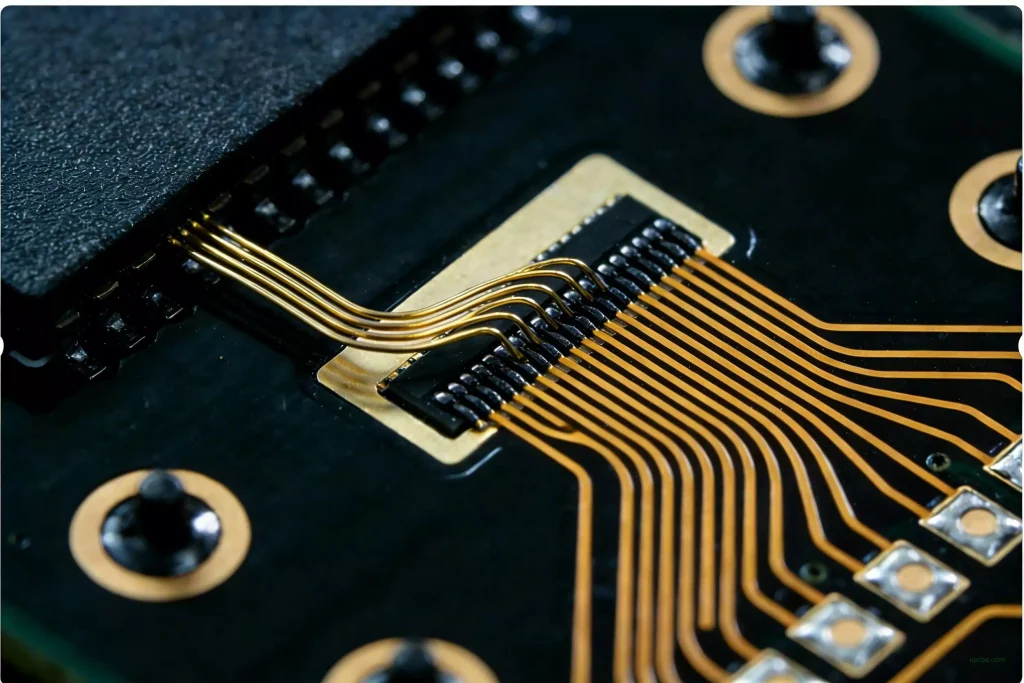
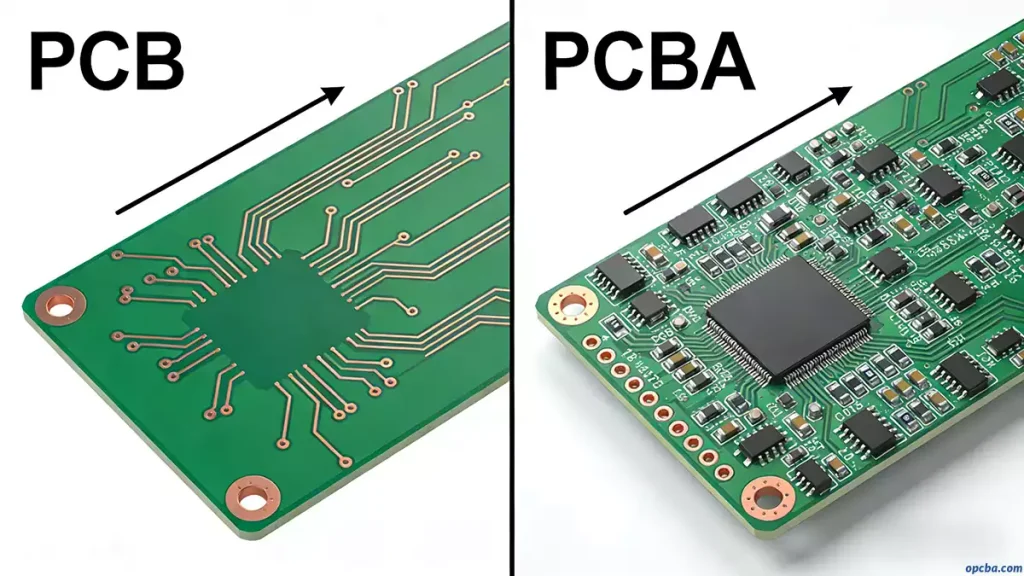
PCB stands for Printed Circuit Board, often called a “circuit board” or “PC board” in casual industry terms. At its core, a PCB is a rigid (or flexible) board with conductive copper traces printed onto a non-conductive substrate (like fiberglass or plastic). Think of the PCB as the land, roads, and foundation of a city. The fiberglass board is the ground, and the copper traces are the meticulously planned streets. Their job is to ensure traffic (electricity) and goods (data) can reach every single building (the components).
A PCB that has printed circuits but no electronic components assembled onto it is known as a bare board or empty board. This is the foundational stage of electronics manufacturing—without a PCB, there’s no way to mount or connect the components that make devices work.
Why has the PCB become the universal foundation of electronics? It’s because this manufacturing method allows for incredible miniaturization—cramming complex wiring into the slim profile of a smartwatch. Its design is highly standardized, meaning a failed board in your TV can be swapped out quickly without re-engineering the whole device. And because the production process is almost entirely automated, the cost of these intricate boards stays surprisingly low.
What is PCBA?
PCBA stands for Printed Circuit Board Assembly. If a bare PCB is a blank canvas, then a PCBA is the finished painting—a canvas brought to life with color and detail. The core difference is simple: PCBA = PCB + Component Assembly.
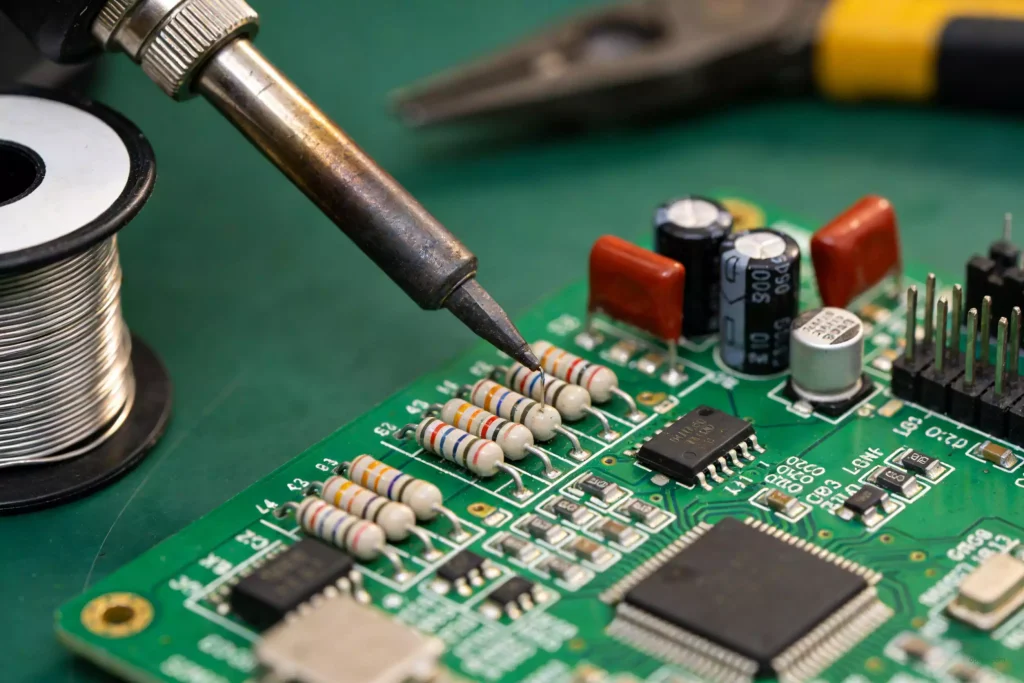
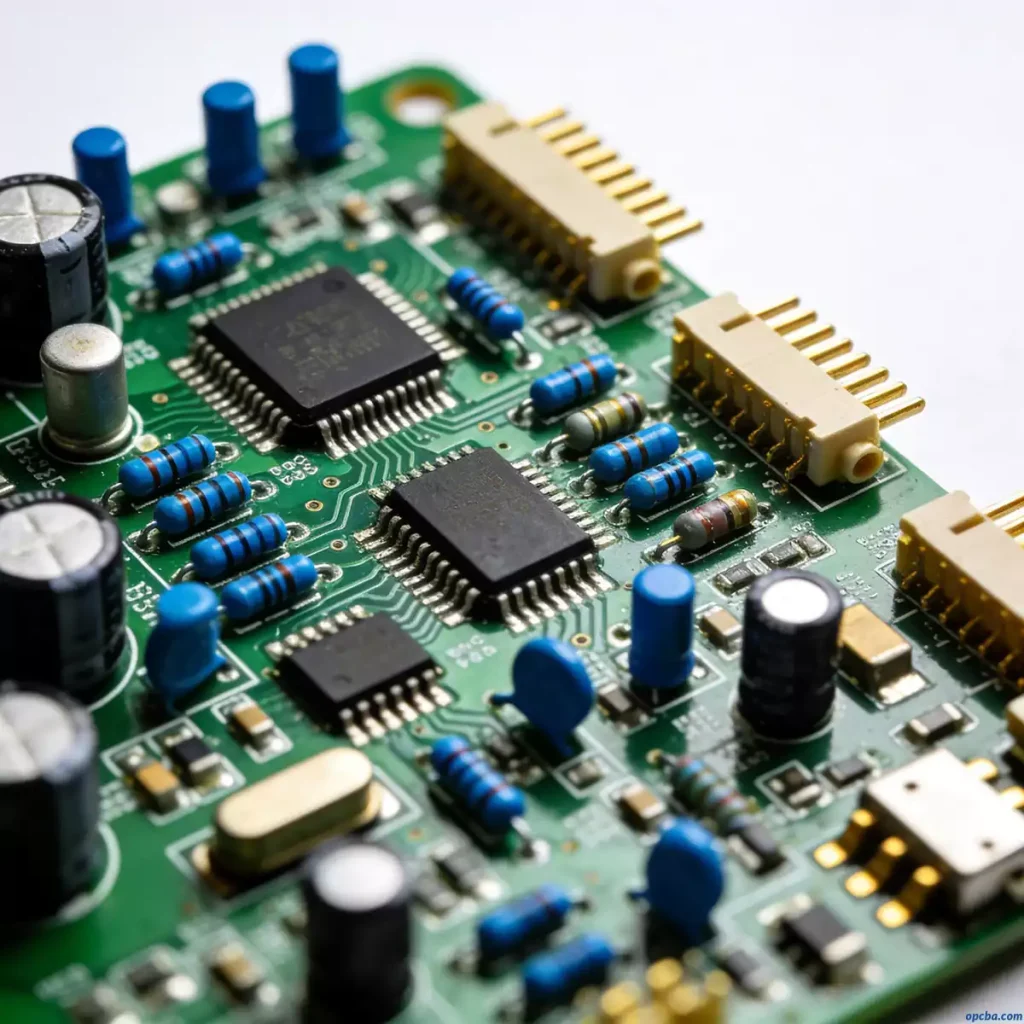
A bare PCB becomes a PCBA once electronic components (like ICs, resistors, capacitors, inductors, and connectors) are soldered onto it, turning an inert board into a functional electronic module.
In short:
- PCB: The bare, component-free circuit board.
- PCBA: The fully assembled, functional board with all components in place.
How is PCBA Assembled?
Two primary assembly methods are used to turn a bare PCB into a PCBA:
1. Surface Mount Technology (SMT)
SMT is the dominant modern assembly process, ideal for small, lightweight components. It starts with a stencil that applies precise amounts of solder paste to the PCB’s component pads. Pick-and-place machines then mount tiny surface-mount devices (SMDs) onto the paste-coated pads. Finally, the board passes through a high-temperature reflow oven, melting the solder paste to permanently attach components.
2. Wave Soldering
Wave soldering is used for through-hole components (DIP), which are larger or require mechanical stability (like power connectors). The board is passed over a wave of molten solder, which bonds the component leads to the PCB traces. Many modern PCBs use a hybrid approach, combining SMT for small components and wave soldering for through-hole parts.
If the analogy isn’t enough, here’s the cheat sheet version of how they compare at every stage:
Core Differences Between PCB and PCBA
| Aspect | PCB | PCBA |
|---|---|---|
| Definition | Bare printed circuit board | Assembled PCB with components |
| Function | Carrier for electronic components | Functional electronic module |
| Manufacturing Stage | Early fabrication | Final assembly |
| Components | No components mounted | ICs, resistors, capacitors, etc. soldered on |
| Use Case | Raw material for electronics manufacturing | Finished part for device integration |
Frequently Asked Questions (FAQ)
1. If I have a bare PCB, can I use it to fix my gadget?
Not at all. A bare PCB is just a platform. It’s like having a socket with no lightbulb. Without all the components soldered on (resistors, chips, etc.), it’s electrically dead. You need a fully assembled PCBA for anything to actually happen.
2. Why is PCBA so much more expensive than a bare PCB?
Because you’re not just paying for the board anymore. The PCBA price includes the board itself plus the cost of every tiny chip and resistor on it, plus the precision labor (or machine time) to put them there, plus the testing to make sure it all actually works.
3. SMT vs. DIP – what’s the real-world difference?
SMT is for the tiny components that sit flush on the board—think of the brains of your phone. It’s fast and perfect for mass production. DIP/Through-Hole is for the big guys that need to handle physical stress, like the USB port you plug and unplug all the time. They have legs that go through the board and are soldered on the other side for a stronger hold.
4. Can I convert a PCB into a PCBA myself?
While it’s possible for hobbyists to hand-solder simple components, professional PCBA requires specialized equipment (like reflow ovens and pick-and-place machines) for reliable, high-volume production.
5. Why is PCBA testing important?
Testing ensures the assembled board functions correctly, catches defects like solder bridges or faulty components, and guarantees the final product meets quality and safety standards before integration into a device.