Picking a PCB surface finish is one of those quiet decisions that decides whether your production run goes smooth or turns into a rework nightmare. Get it wrong and you see it later: tombstones in reflow, open joints on fine-pitch parts, or pads that oxidized before the board ever reached the line.
This post is not another spec table. Our ENIG vs HASL technical comparison page already covers the process steps and parameters in depth. Here, we give you a decision framework: a tree, real scenarios, and a checklist, so you can walk into a quote call knowing exactly which finish your board needs.
The two finishes in one line each
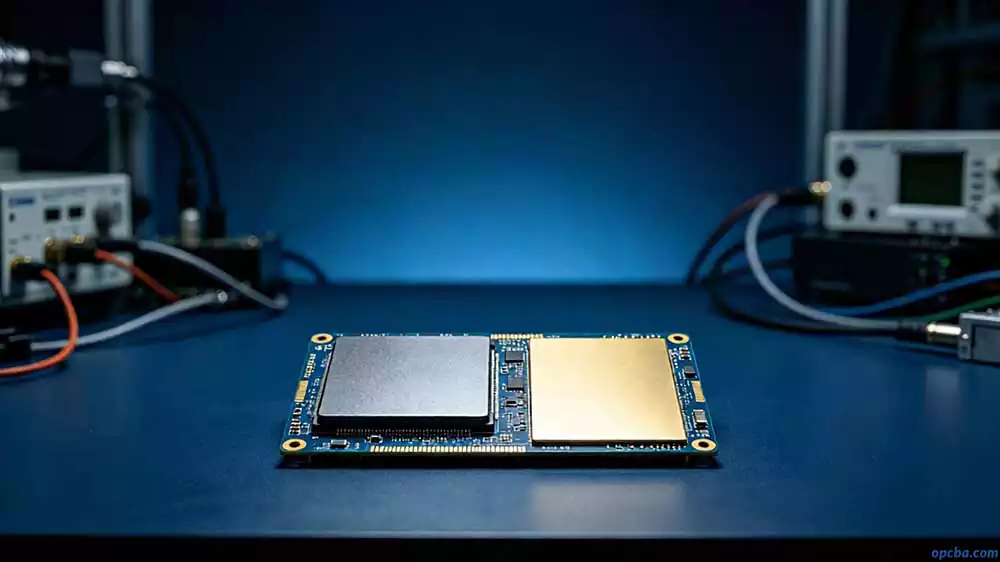
- ENIG (Electroless Nickel Immersion Gold): a plated nickel-plus-gold coating: flat, premium, wire-bondable.
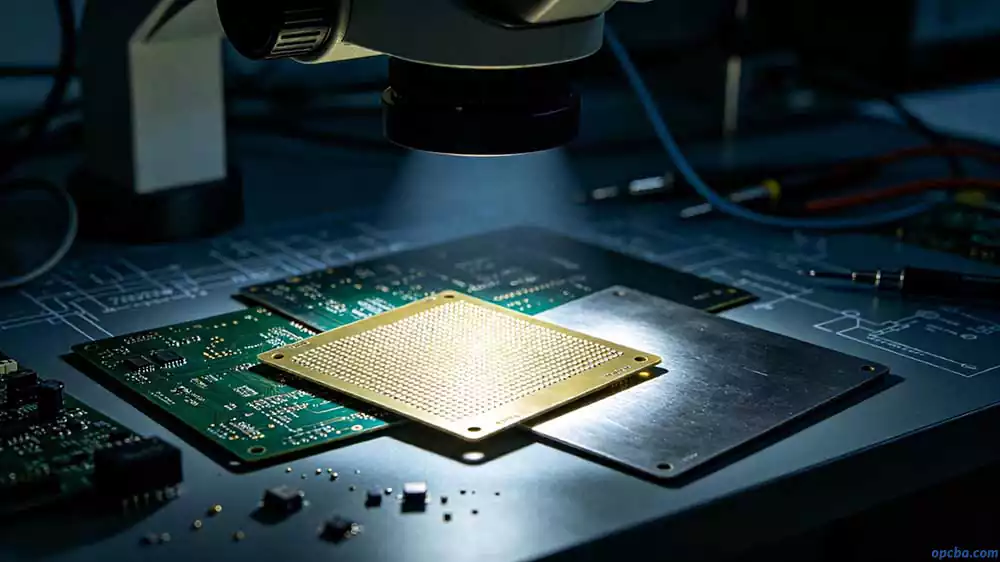
- HASL (Hot Air Solder Leveling): solder dipped and air-knife leveled: cheap, tough, forgiving.
That is all you need to know going in. For the full process and thickness detail, see the comparison page.
The surface finish decision tree
Answer the question at each fork. The first “yes” that fits wins:
- Does your board use fine-pitch parts, BGA, CSP, QFN, or wire bonding? → ENIG. Flatness is non-negotiable there; HASL’s meniscus will bite you.
- Is cost the dominant driver, with high volume and through-hole or large SMD parts? → HASL (lead-free). You trade flatness for the lowest unit price.
- Will the bare board sit in storage for months, or face multiple reflow cycles? → ENIG. Gold top layer stays solderable longest.
- Do you have exposed contacts, edge fingers, or ICT test points? → ENIG. Clean, corrosion-resistant surface.
- Is this a prototype or general-purpose build where speed beats spec? → HASL or OSP. Cheap and fast, good enough.
If none of these force your hand, fall back to the checklist below.
Scenario-based selection
Theory is easy; boards are specific. Four common cases:
Case 1: High-volume consumer control board
Think appliance controllers, LED drivers, toys. Pitch is relaxed, volume is huge, margin is thin.
Pick HASL (lead-free). You get the cheapest finish and a solder joint that wets reliably. Flatness is not your bottleneck.
For the full pros and cons of lead-free HASL, including the fine-pitch limits and thermal stress, see our dedicated guide:Advantage and Disadvantage: Lead-free HASL PCB.
Case 2: Industrial or medical reliability product
Think sensors, instruments, implants-adjacent electronics. Failure is expensive; boards may sit before assembly.
Pick ENIG. Mirror-flat pads protect fine-pitch yield, and the gold layer survives long storage and repeated reflow.
Case 3: High-speed / RF with fine-pitch
Think RF modules, high-layer-count designs. Signal coplanarity and planarity matter as much as soldering.
Pick ENIG. Plated flatness keeps impedance and placement consistent where HASL would introduce variation.
Case 4: Prototype or proof-of-concept
You need it built now, spec is still moving.
Pick HASL or OSP. Both are cheap and fast; OSP is flatter if you have a fine-pitch spin coming.
Decision checklist (quick reference)
| If your priority is… | Choose |
|---|---|
| Lowest unit cost at volume | HASL (lead-free) |
| Fine-pitch / BGA yield | ENIG |
| Wire bonding required | ENIG |
| Long pre-assembly storage | ENIG |
| Easy rework / process forgiveness | HASL |
| Exposed contacts / edge fingers | ENIG |
For the complete parameter breakdown behind this table, see our ENIG vs HASL comparison page.

How to discuss finish with your PCBA partner
A finish decision is best made with your assembly house, not in isolation. When you send a quote request, include:
- The Gerber/stack-up and BOM
- Your expected assembly process (reflow profile, volume, storage plan)
- Any fine-pitch or wire-bond parts
Then ask two questions that separate capable shops from box-checkers:
- “Can you run lead-free HASL, and what is your flatness control on fine-pitch?”
- “How do you control ENIG black pad?” (A qualified shop can show bath monitoring records.)
The right partner tells you when HASL is good enough, and pushes back when your pitch demands ENIG.

Other finishes worth a glance
ENIG and HASL cover ~80% of boards, but keep these in your back pocket:
- Immersion Silver (IAg): flat and affordable, strong for RF, but tarnishes faster in humid storage.
- OSP: very flat and cheap, ideal for prototypes, though short shelf life and limited thermal cycles.
- ENEPIG: palladium-added, maximum wire-bond flexibility (gold, aluminum, silver).
How OPCBA helps you decide
At OPCBA, finish selection is a shared engineering call, not a default. We review your Gerbers, BOM, and assembly plan, then recommend the finish that protects yield and cost together: ENIG when pitch or reliability demands it, lead-free HASL when volume economics rule.
Both processes run in-house across prototype and volume, with flatness and thickness verified per stack-up and ENIG bath chemistry monitored for black-pad control.
Note: finish recommendation above reflects OPCBA’s standard process capabilities. Exact alloys, thickness, and qualification should be confirmed against your project spec during quotation.
FAQ: ENIG vs HASL
Q1: Is ENIG more expensive than HASL?
Yes. ENIG uses nickel and gold with a tighter plating process, so it typically costs more per board than HASL. The premium is usually justified on fine-pitch or reliability-critical designs.
Q2: Can HASL be used for BGA or fine-pitch parts?
It is risky. The meniscus left by hot-air leveling hurts coplanarity, which can cause open joints or tombstones on BGAs and fine-pitch QFNs. ENIG is the safer choice there.
Q3: Which finish lasts longer in storage?
Both store well for 12+ months under proper conditions. ENIG’s gold top layer resists oxidation longest; lead-free HASL is solid but slightly more sensitive to storage humidity.
Q4: Is ENIG RoHS compliant?
Yes, ENIG is inherently lead-free. Traditional tin-lead HASL is not RoHS-compliant; you must specify lead-free HASL if RoHS is required.
Q5: What is “black pad” in ENIG?
Black pad is a brittle failure at the nickel-gold interface caused by bath chemistry drift. It is preventable with tight process control and is not inherent to ENIG when run by a qualified shop.
Conclusion
Neither finish wins everywhere; the right fit depends on your board.Run the decision tree above, match your scenario, and you will know before the quote call ends.
If you are still unsure, send us the Gerbers and we will tell you before you commit to a stack-up that costs you yield later.