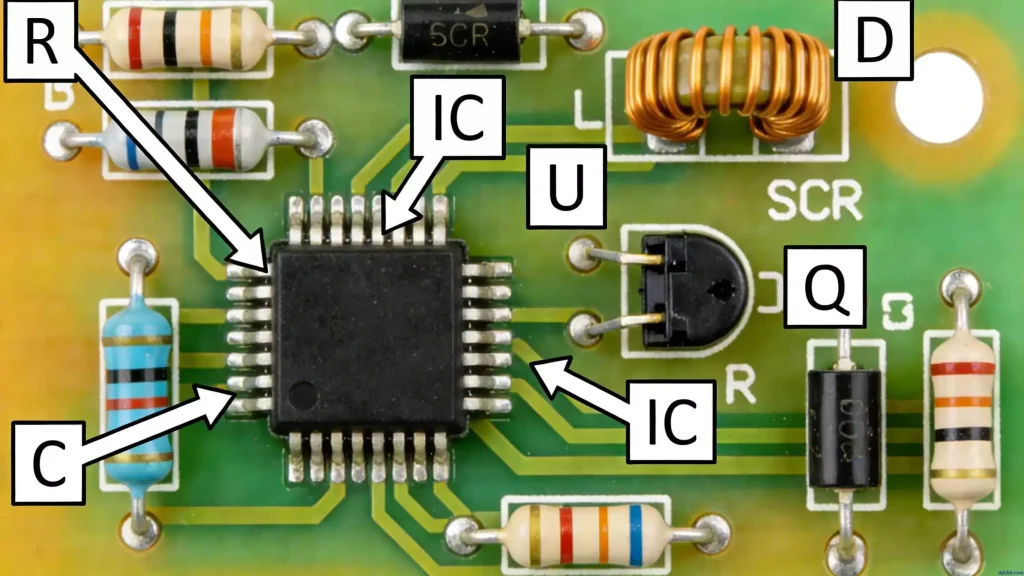
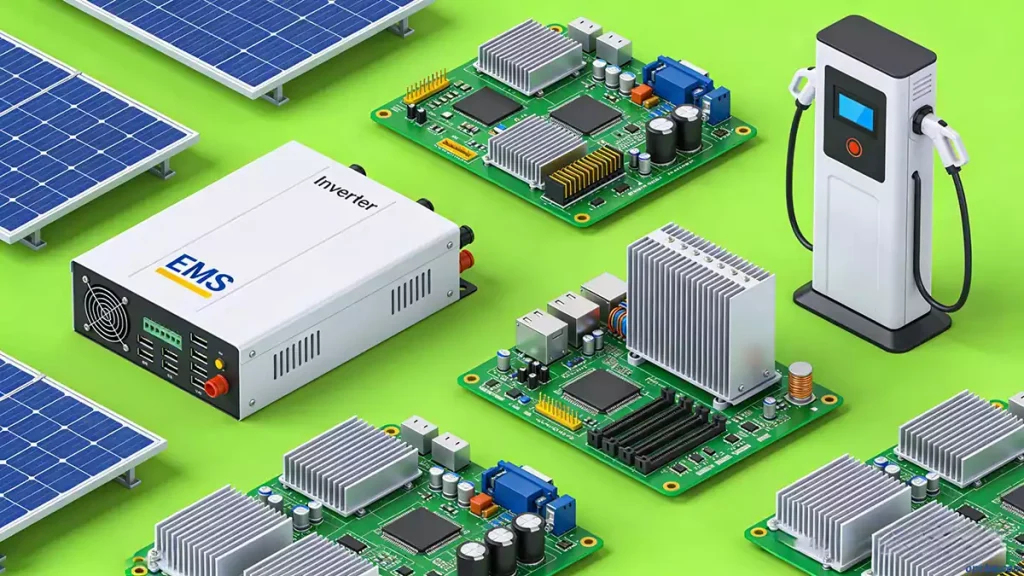
Most engineers frame the aluminum-versus-FR-4 choice as a price question. Heat is the real driver. A cheaper FR-4 board shifts its thermal problem onto a heatsink, some thermal vias, and a line in assembly labor, so the cost shows up elsewhere.
This guide gives you a decision rule for when to switch, a cost model that compares boards at the system level, and a reality check on 2026 material prices so your quote does not surprise you.
When You Should Switch to Aluminum
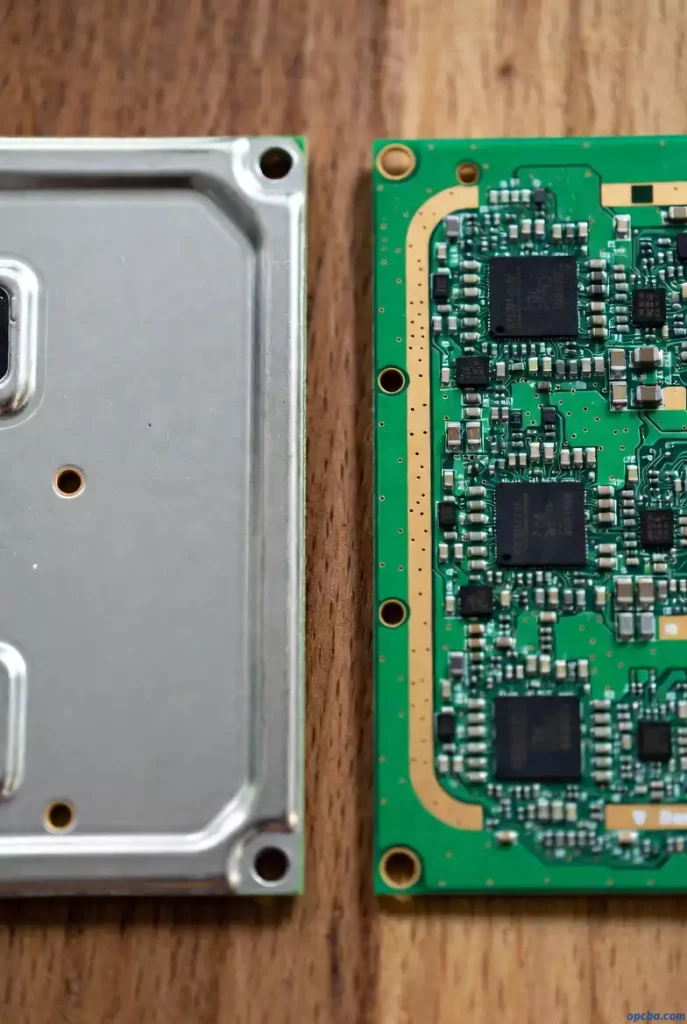
Use a metal core board when the component is dumping heat that FR-4 cannot move fast enough. Concrete triggers:
- Junction temperature is at risk. If your device runs within 10–15°C of its rated junction temp on FR-4, move to aluminum. The dielectric layer drops thermal resistance to roughly 0.5–3.0 °C/W, against 60–80 °C/W for a 1.6 mm FR-4 board.
- Power density exceeds about 2–3 W/cm². Above that, FR-4 needs oversized copper, thick heatsinks, or a fan. Aluminum spreads heat through a 200 W/m·K base and keeps the layout flat.
- Size or weight is fixed. A LED array, a headlight module, or a power converter with no room for a finned heatsink is the classic aluminum case.
- Reliability matters more than unit price. Automotive, outdoor lighting, and industrial drives pay for cooler junctions with longer life, not for a cheaper bare board.
If none of those apply, stay on FR-4. For sub-15 A logic and prototypes, the savings are real and the thermal margin is fine. For the math behind the resistance numbers, see our breakdown of how aluminum substrates move heat at the component level.
The Board Cost Comparison
At the bare-board level, aluminum costs more. A single-sided MCPCB runs about $45–$70 per square meter, and double-sided about $85–$140, at 1.6 mm, 2 oz copper, and 100-piece volume. Equivalent single-layer FR-4 sits well under that. On a small 50×50 mm board at 100 pieces, expect roughly $2.50–$4.00 for aluminum versus $0.80–$1.50 for FR-4.
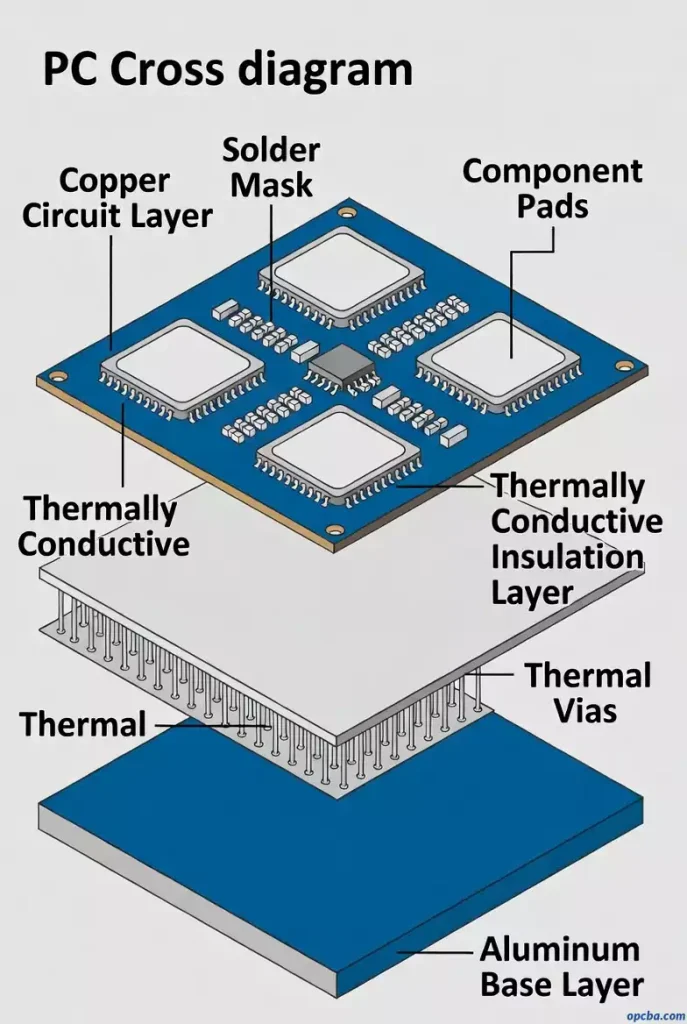
Put as a ratio, a single-sided aluminum board costs about 2–4 times the same FR-4 area. The premium comes from the aluminum base, the ceramic-filled dielectric, and a lamination step FR-4 does not need. Those layers do more than the board price suggests. For how that plays out in real hardware, see our walkthrough of metal-core advantages and the designs they suit.
Why the System Cost Often Flips
The bare-board number is misleading because FR-4 offloads its heat problem to the bill of materials. A high-power LED design on FR-4 typically needs:
- Thermal vias for drilling: about $0.20–$0.40 per board
- An external aluminum heatsink: $1.00–$5.00
- Thermal interface material: $0.15–$0.50
- Mounting hardware and assembly labor: $0.40–$1.30
Add those up and the FR-4 thermal system lands around $2.00–$7.00 per unit, which often exceeds the aluminum premium. Replace a $2–$5 heatsink plus TIM with an aluminum board that costs $0.50–$1.50 more, and you usually come out ahead, with fewer parts to buy, stock, and assemble. For the build-side view of what an aluminum board is made of, start with our aluminum PCB structure and applications overview.
What 2026 Material Prices Do to the Math
The relative gap between aluminum and FR-4 is narrower than it looks on old quotes, because the whole board market is in a price-up cycle. As of mid-2026:
- Copper traded near record highs, with LME copper around $14,100 per ton in August 2026 after a strong first half. Chilean output fell, Congolese concentrate exports were restricted, and treatment charges turned deeply negative, so copper foil stays expensive for both board types.
- Copper clad laminate (CCL), the FR-4 base material, rose roughly 50–70% year over year. Major suppliers issued multiple FR-4 price hikes through the first half of 2026, and standard FR-4 finished boards cost about 30–50% more than at the start of the year.
- Aluminum substrate itself also climbed, with high-thermal-conductivity grades up about 9% in a single week in late June 2026 and lead times stretching past 14 weeks for export.
The practical read: FR-4 is no longer the cheap fallback it was two years ago. Its 30–50% climb eats most of the gap that used to make aluminum look expensive. When you compare total system cost, aluminum is often the better value exactly when prices are volatile.
A Simple Switch Checklist
Before the next design review, ask four questions:
- Does the component approach its thermal limit on FR-4? If yes, switch.
- Is power density above ~2–3 W/cm²? If yes, switch.
- Is there no room for a heatsink or fan? If yes, switch.
- Does the volume justify the tooling, or is this still prototype validation? If prototype only, prove it on FR-4 first, then move to aluminum for production.
Price the board and the heatsink together, not separately. That single habit resolves most aluminum-versus-FR-4 arguments.
Get an aluminum PCB quote built to your thermal spec, or talk to our engineering team about a stack-up that hits your cost target.