LEO (Low Earth Orbit) satellite constellations are booming globally. So are deployable space structures and miniaturized satellite payloads. This trend has driven widespread adoption of flexible printed circuit boards (FPCs) in aerospace systems.
FPCs replace heavier rigid board assemblies and offer 3D conformability. This lets them directly address the strict Size, Weight, and Power (SWaP) constraints of modern satellite buses.
For space-grade applications, the core feasibility benchmark is non-negotiable. FPCs must deliver consistent, trouble-free operation over a full 10-year mission life in the extreme orbital environment.
This demands three core priorities: rigorous design discipline, qualified material selection, and tight manufacturing process control. These are especially critical for high-frequency telemetry, communication, and payload circuits.
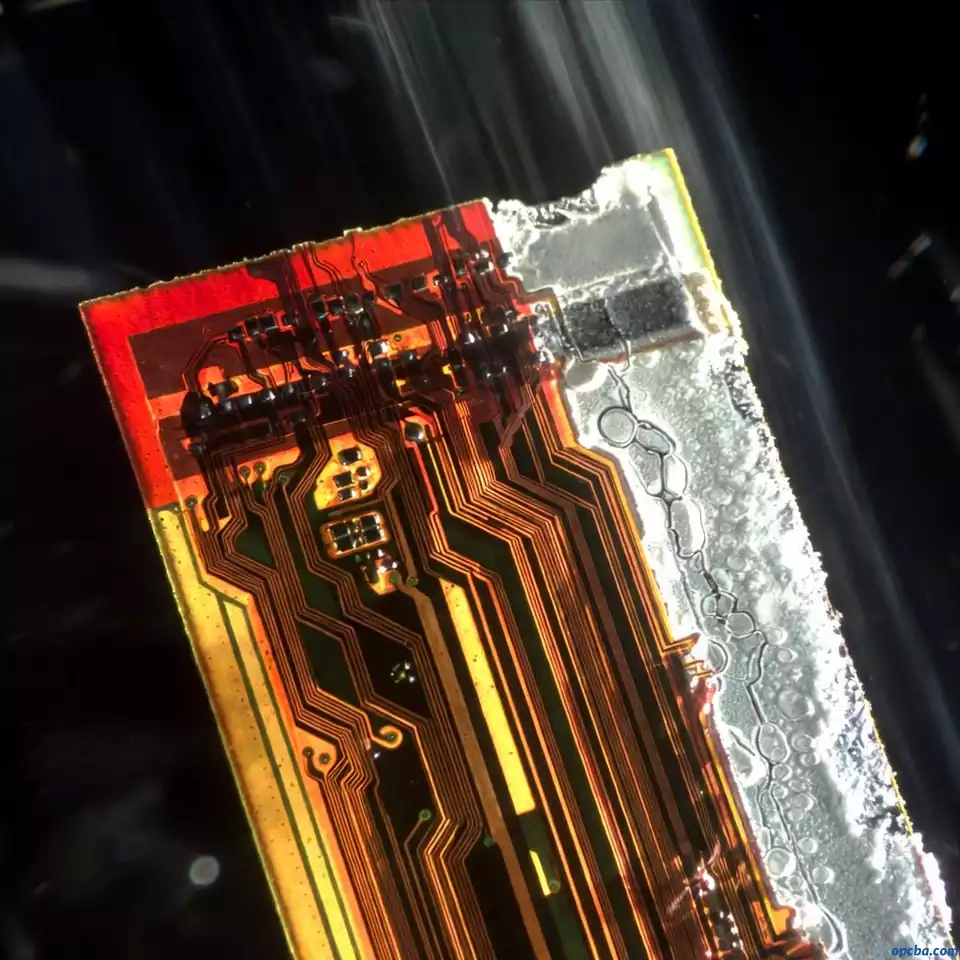
Satellite Use Cases & Targeted FPC Performance Requirements
Satellite systems rely on FPCs across three core functional chains. These include the high-frequency communication uplink/downlink, payload data processing circuits, and attitude control power distribution networks.
Notably, different mission types impose distinct, mission-critical performance requirements for on-board FPCs. These break down into three main categories:
For commercial satellite systems, the satellite acts as an in-orbit relay station, enabling long-distance data transmission that line-of-sight terrestrial communication systems cannot support. Based on orbit, ground equipment, and service type, commercial satellite systems fall into three core categories, each with unique Printed Circuit Board performance requirements:
- Fixed Satellite Service (FSS) Communication Payloads: These systems are widely used for cable TV relay and internet backbone transmission. They require FPCs with ultra-stable dielectric performance across extreme temperature swings. They also need minimal insertion loss at Ku/Ka-band frequencies, plus tight impedance control to maintain long-distance link integrity.
- Mobile Satellite Service (MSS) Systems: These systems support ship-to-shore communications, fleet vehicle tracking, and satellite-connected mobile devices. The applications demand FPCs with exceptional vibration and shock resistance. They also require mechanical robustness to withstand dynamic launch and in-orbit operational stresses.
- Broadcast Satellite Service (BSS) Payloads: These payloads handle direct-to-home TV and radio broadcasting. FPCs here must deliver consistent high-bandwidth signal integrity. They also need strict phase matching across multi-channel circuits, plus long-term stability for uninterrupted service delivery.
- Mobile Satellite Service (MSS) Systems: These support ship-to-shore, fleet vehicle, and satellite-connected mobile devices. These applications demand FPCs with exceptional vibration and shock resistance. They also need mechanical robustness to withstand dynamic launch and in-orbit operational stresses.
- Broadcast Satellite Service (BSS) Payloads: These deliver direct-to-home TV and radio broadcasting for subscribers. FPCs here must deliver consistent high-bandwidth signal integrity. They also need strict phase matching across multi-channel circuits, and long-term stability for uninterrupted service.
- Mobile Satellite Service (MSS) Systems: Supporting ship-to-shore, fleet vehicle, and satellite-connected mobile devices, these applications demand FPCs with exceptional vibration and shock resistance, as well as mechanical robustness to withstand dynamic launch and in-orbit operational stresses.
- Broadcast Satellite Service (BSS) Payloads: For direct-to-home TV and radio broadcasting, FPCs must deliver consistent high-bandwidth signal integrity, strict phase matching across multi-channel circuits, and long-term stability to support uninterrupted service delivery.
The orbital environment imposes multiple extreme stresses. These stresses can degrade FPC performance, or even cause catastrophic mission failure.
To meet 10-year mission life requirements, designers must address these core failure risks upfront:
- Extreme Thermal Cycling Fatigue: LEO satellites complete an orbit every 90 minutes. This exposes on-board electronics to full thermal cycles from -100°C to +120°C. Over a 10-year mission, this equates to nearly 60,000 cycles. FPC designs must prioritize materials with a matched coefficient of thermal expansion (CTE). They also need high-performance copper foil adhesion and flex-resistant trace layouts. These features prevent trace cracking, delamination, and electrical failure.
- Launch Vibration & In-Orbit Mechanical Risks: FPCs must survive extreme shock and vibration during launch. They also need to withstand potential micro-impacts from orbital debris in service. Robust flex circuit architecture, reinforced termination points, and vibration-resistant routing are critical. These features maintain the board’s structural and electrical integrity.
- Vacuum Outgassing Compliance: In the hard vacuum of space, non-qualified materials release trapped volatile gasses — a process called outgassing. Released gasses can condense on sensitive optics, sensors, or circuit surfaces. This causes contamination, short circuits, or even payload failure. All FPC materials must meet the strict NASA ASTM E595 space-grade standard. This requires Total Mass Loss (TML) <1% and Collected Volatile Condensable Materials (CVCM) <0.1%.
- Ionizing Radiation Damage: The vast majority of satellite FPCs are mounted within the satellite’s shielded cabin. This shielding blocks nearly all UV radiation. The primary radiation threat is ionizing radiation. This includes total ionizing dose (TID) effects accumulated over the mission life. TID can cause permanent drift in substrate dielectric properties. It can also degrade insulating materials and shift electrical performance. To mitigate this, designers must select radiation-tolerant materials and build in sufficient design margins.
- High-Frequency Performance Stability: Satellite communication and telemetry circuits have strict performance requirements. FPCs must maintain consistent dielectric constant (Dk) and dissipation factor (Df) across wide temperature and frequency ranges. Even minor performance shifts can degrade the link budget. They can also reduce communication range, or cause complete payload failure.
- Extreme Thermal Cycling Fatigue: LEO satellites complete an orbit every 90 minutes. This exposes on-board electronics to full thermal cycles from -100°C to +120°C. Over a 10-year mission, this equates to nearly 60,000 thermal cycles. FPC designs must prioritize materials with a matched coefficient of thermal expansion (CTE), high-performance copper foil adhesion, and flex-resistant trace layouts. These choices prevent trace cracking, delamination, and catastrophic electrical failure.
- Launch Vibration & In-Orbit Mechanical Risks: FPCs must survive extreme shock and vibration during launch. They also need to withstand potential micro-impacts from orbital debris in service. Robust flex circuit architecture, reinforced termination points, and vibration-resistant routing are critical to maintain integrity.
- Vacuum Outgassing Compliance: In the hard vacuum of space, non-qualified materials release trapped volatile gasses (outgassing). These gasses can condense on sensitive optics, sensors, or circuit surfaces. This causes contamination, short circuits, or payload failure. All FPC materials must meet NASA’s strict ASTM E595 space-grade standard: Total Mass Loss (TML) <1% and Collected Volatile Condensable Materials (CVCM) <0.1%.
- Ionizing Radiation Damage: The vast majority of satellite FPCs mount within the satellite’s shielded cabin. This blocks nearly all UV radiation. The primary radiation threat is ionizing radiation, including total ionizing dose (TID) effects accumulated over the mission life. TID can cause permanent drift in substrate dielectric properties, degradation of insulating materials, and shifts in electrical performance. This requires radiation-tolerant material selection and built-in design margins.
- High-Frequency Performance Stability: For satellite communication and telemetry circuits, FPCs must maintain consistent dielectric constant (Dk) and dissipation factor (Df). This stability must hold across wide temperature and frequency ranges. Even minor performance shifts can degrade link budget, reduce communication range, or cause payload failure.
Qualified, space-grade material selection is the foundation of reliable satellite FPCs. Material properties directly define long-term in-orbit performance.
For high-frequency satellite applications, the industry relies on flexible substrate systems from leading suppliers. These include Rogers Corporation, DuPont, and Panasonic. All these materials are validated for aerospace environmental requirements.
For high-frequency satellite communication circuits, two substrate types dominate the industry: Liquid Crystal Polymer (LCP) and modified low-Dk polyimide (PI) materials.
LCP is the industry standard for Ka/Ku-band and millimeter-wave applications. It delivers a stable dielectric constant (Dk) of 2.9–3.2 across wide temperature and frequency ranges. It also has an ultra-low dissipation factor (Df <0.002) to minimize insertion loss.
For lower-frequency control and power distribution circuits, space-qualified flexible PI substrates are widely used. These materials have tightly controlled outgassing performance to meet ASTM E595 requirements.
Unlike general-purpose rigid PCB materials, space-grade FPC substrates are specifically formulated for orbital use. They resist radiation-induced degradation, maintain mechanical flexibility in extreme temperatures, and deliver consistent electrical performance over the full mission life.