In the global electronics manufacturing industry, EMS and PCBA are two terms often used interchangeably—but they represent distinct, deeply interconnected parts of the production ecosystem. For OEMs (Original Equipment Manufacturers) looking to outsource production, clarifying their roles is critical to choosing the right partner for your project.
What is Electronic Manufacturing Service (EMS)?
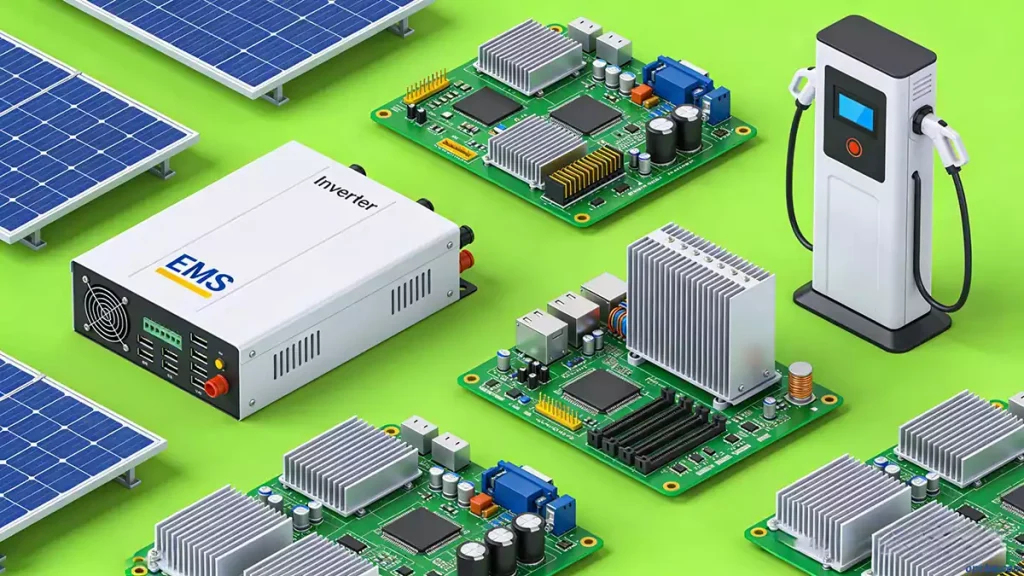
Electronic Manufacturing Service (EMS), also known as electronic contract manufacturing, is a full-spectrum end-to-end service for OEMs. EMS providers handle the entire product lifecycle beyond design: including raw material procurement, manufacturing, assembly, functional testing, product distribution, and after-sales repair and return management.
The EMS model is built on economies of scale, centralized supply chain resources, and specialized manufacturing expertise. It allows OEMs to offload inventory risk, reduce capital investment in production facilities, and focus on core competencies like product design and market development. EMS offerings typically cover both OEM (original equipment manufacturing) and ODM (original design manufacturing) services, adapting to different customer needs.
What is PCBA?
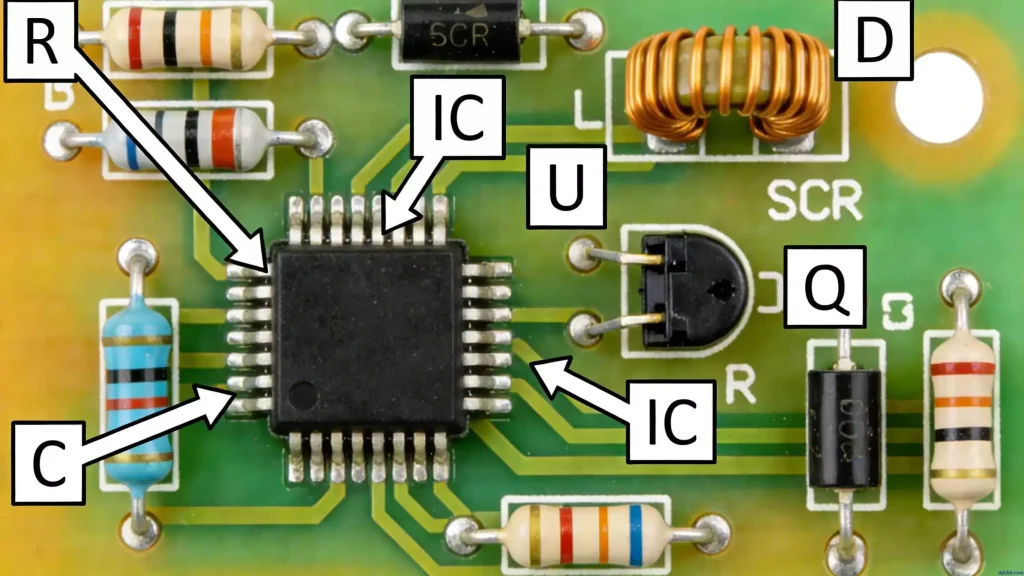
To understand PCBA, we first start with the PCB: Printed Circuit Board. The PCB is the foundational physical carrier of electronic circuits, providing mechanical support and electrical connections for components.
PCBA is short for Printed Circuit Board Assembly. It is the core process of populating a bare PCB with electronic components through two primary workflows:
- SMT (Surface Mount Technology): Solder paste printing, component placement, reflow soldering, and automated optical inspection (AOI) for surface-mount parts.
- DIP (Dual In-line Package): Through-hole component insertion, wave soldering, pin trimming, and quality inspection for parts that cannot be surface-mounted.
The full PCBA process also includes post-assembly functional testing, firmware programming, and final quality validation to ensure the assembled board works as designed.
The Historical Link Between EMS and PCBA
The EMS industry emerged in the late 1970s, when most electronics manufacturing was handled in-house by OEMs. The shift began with the rise of SMT, which revolutionized PCB assembly by enabling faster, higher-density component placement.
In the early 1990s, OEMs began investing in SMT production lines to meet growing demand for compact electronics. By the mid-1990s, the efficiency and cost benefits of specialized outsourced assembly became clear, and OEMs started scaling up PCBA outsourcing to dedicated providers. By the late 1990s and early 2000s, many OEMs sold off their in-house assembly plants entirely, accelerating the growth of the EMS industry. This triggered a wave of consolidation, as larger EMS providers acquired smaller facilities and niche players to expand their global footprint and service capabilities.
Core Relationship Between EMS and PCBA
The relationship between EMS and PCBA is straightforward: PCBA is a critical, core component of EMS services.
EMS is a full-stack manufacturing solution, while PCBA is a key process within that solution. EMS providers almost always include PCBA as a core offering, and expand beyond it to cover the entire product manufacturing and supply chain lifecycle. In short: all EMS services include PCBA capabilities, but a standalone PCBA provider does not offer the full end-to-end scope of EMS.
Key Differences Between EMS and PCBA
| Dimension | EMS (Electronic Manufacturing Service) | PCBA (Printed Circuit Board Assembly) |
|---|---|---|
| Service Scope | End-to-end: procurement, manufacturing, assembly, testing, distribution, after-sales | Niche, process-focused: bare PCB assembly and post-assembly testing only |
| Project Complexity | High: covers full product build (enclosure assembly, final product integration, compliance certification) | Mid: focused solely on circuit board assembly and functional validation |
| Supply Chain Involvement | Full end-to-end supply chain management, global procurement, inventory management, and logistics | Limited: typically covers component procurement for the PCB assembly process only |
| Technical Requirements | Broad expertise: design for manufacturing (DFM), compliance, product integration, and multi-process manufacturing | Deep, focused expertise: SMT/DIP assembly, soldering quality, and board-level testing |
| Typical Use Case | Full product manufacturing for consumer electronics, automotive, industrial equipment | Board-level assembly for OEMs handling final product integration in-house |
Your Trusted Partner for PCBA and EMS Solutions
Whether you need standalone high-quality PCBA services or a full end-to-end EMS solution, OPCBA has the expertise and capabilities to support your project. We specialize in reliable, cost-effective electronic manufacturing for automotive, industrial, and consumer electronics applications. To discuss your project needs, visit OPCBA to connect with our team.