Aluminum PCBs, also called metal core PCBs (MCPCBs), solve one problem ordinary FR-4 boards cannot: moving heat away from power-dense components. By replacing the fiberglass substrate with an aluminum base, these boards dissipate heat directly into the metal, keeping LEDs, power devices, and high-current traces cool enough to last.
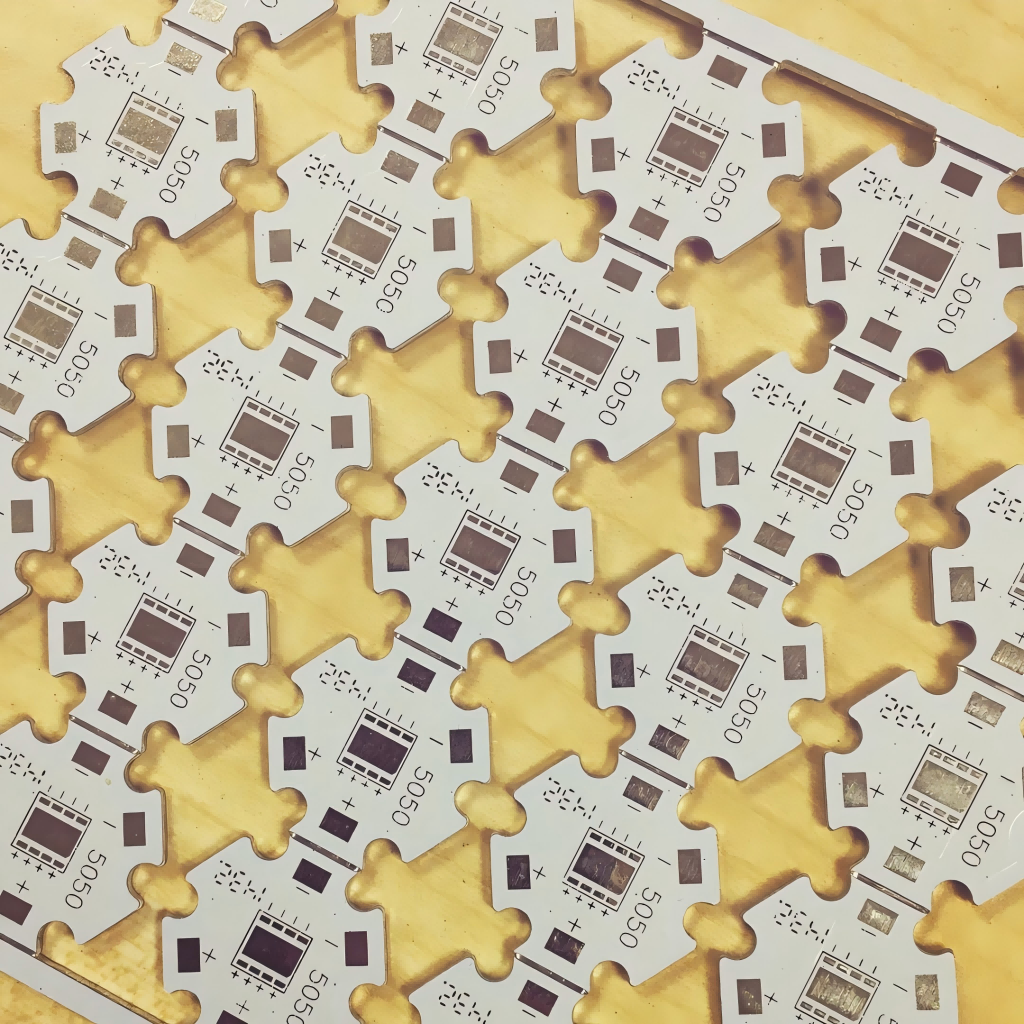
What an Aluminum PCB Is Made Of
A standard aluminum PCB has three functional layers:
- Circuit layer (copper foil): carries the signal and current. Thickness typically runs from 1 oz to 6 oz (35 to 210 µm); heavier copper is used for high-current designs.
- Dielectric (thermal insulation) layer: a thin, electrically insulating but thermally conductive polymer, usually 1 to 3 W/m·K thermal conductivity. This layer decides how fast heat crosses from copper to aluminum.
- Aluminum base layer: the metal core, often a 5052 or 6061 alloy, with thermal conductivity around 200 W/m·K, acting as the heat spreader.
Some boards add a fourth aluminum foil or thermal pad layer between the dielectric and the base for finer thermal control.
Why Engineers Choose Aluminum Substrates
- Thermal performance: the dielectric’s thermal resistance commonly lands at 0.5 to 3.0 °C/W, and an aluminum core spreads heat roughly 8 to 10 times faster than FR-4.
- Smaller footprint: components run cooler, so heatsinks shrink or disappear.
- Lower cost than ceramic: aluminum handles heat well at a fraction of the price of aluminum nitride (AlN) substrates or DBC.
- Mechanical rigidity: the metal base adds strength for vibration-prone environments.
- EMI shielding: the conductive base helps suppress noise.
Where Aluminum PCBs Are Used
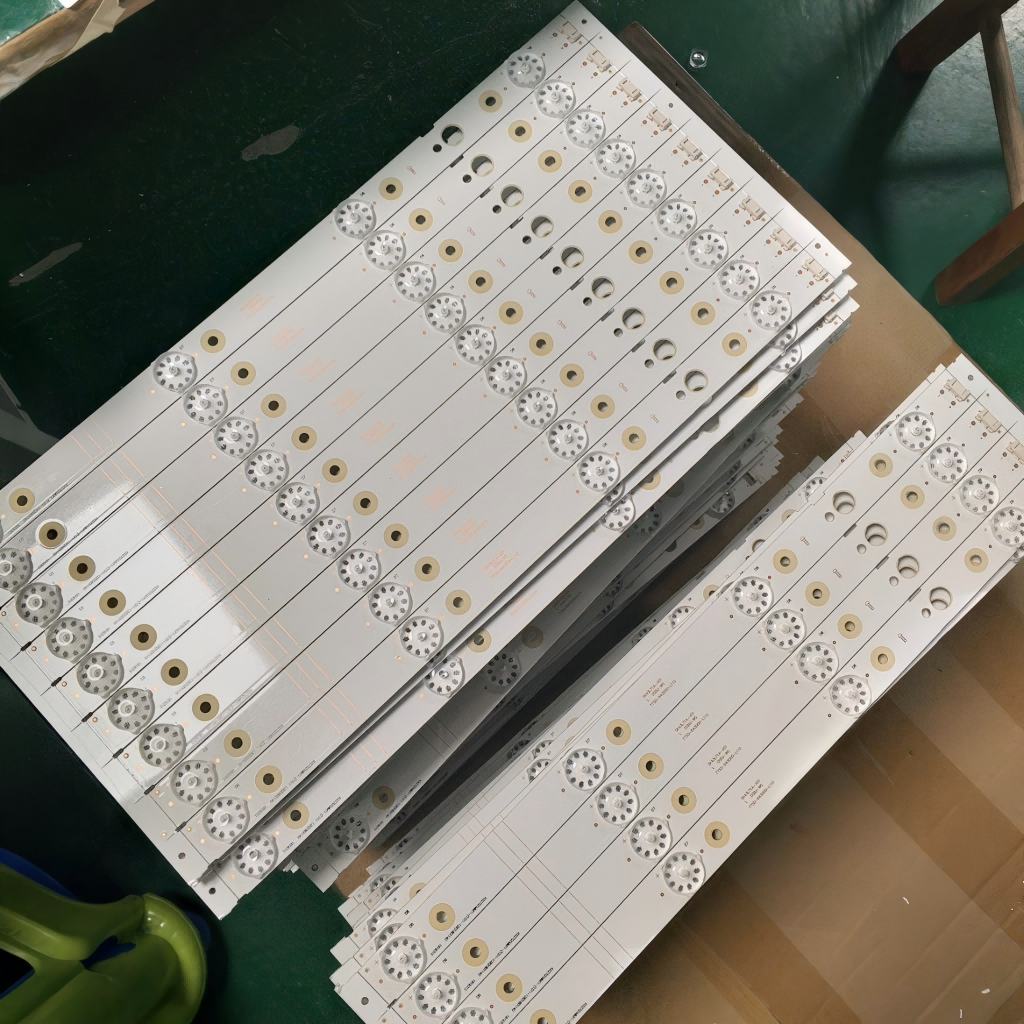
- LED lighting: bulbs, street lights, automotive headlights, and grow lights, the largest-volume application.
- Power supplies and converters: DC-DC, AC-DC, and motor drives.
- Automotive electronics: headlight modules, BMS, and onboard chargers.
- Communication and RF: base-station power amplifiers, where heat and signal stability both matter.
- Industrial control: motor controllers and inverters.
In LED lighting, how long a fixture stays in service comes down to build details such as dielectric choice and copper weight, which we work through in what decides aluminum PCB life in LED lighting. Consumer products add a harder constraint: the board has to shed heat from inside a sealed case with no fan. Our look at aluminum substrates in everyday products covers how that path gets designed.
How It Compares to FR-4
FR-4 has a thermal conductivity around 0.3 W/m·K, roughly one-tenth of a typical aluminum dielectric. For low-power logic that is fine. For anything pushing watts through a small area, aluminum is the safer, longer-lived choice. For the thermal math behind that gap, see our guide to how aluminum substrates move heat at the component level.
Explore OPCBA’s aluminum PCB manufacturing options to see what we build.
Ready to specify a board? Request an aluminum PCB quote with your stack-up, copper weight, and dielectric requirement.